兩聲道
CD機 | MD機 | SACD機 | DAC | CAS | 合拼擴音機 | 前級擴音機 | 後級擴音機 | 接線 | 喇叭線 | 揚聲器 | 耳機 | 耳機擴音機 | LP產品 | 膽機產品 | 開卷式錄音機 | 音響配件 | DIY音響 | 電源 | 家庭影院
電視機 | 投影機 | 錄影機 | DVD影碟機 | Blu-ray影碟機 | 多媒體播放器 | 機頂盒 | 多聲道擴音機 | 多聲道揚聲器 | 多聲道影音組合 | Mini音響組合 | 重低音揚聲器 | 輔助設備 | 同好會
同好會 | Accuphase | B&W | Burmester | Denon | Jadis | KEF | KRELL | Luxman | Marantz | Nuforce | OPPO | Pioneer | TEAC | WEISS | News
News | Blog | 其他
其他 | 所有 |
| 影音天地主旨 ﹝請按主旨作出回應﹞ 上頁 下頁 首頁 尾頁 | 寄件者 | 傳送日期
|
| [#4031] Beatles Song List Pumbaa 兄: 曲目如下: 1. Yellow submarine 2. Let it be 3. Something 4. The fool on the hill 5. Help 6. Yesterday 7. Michelle 8. A hard day's night 9. Norwegian wood 10. Here, there and everywhere 11. Can't buy me love 12. Hey Jude |
邊個邊個 正式會員 正式會員222.xxx.xxx.218 |
2008-04-26 12:15 | |
|
|
|||
| [#4032] More Acid “Here’s an odd-sounding recording! The entire program is played for effect, not for clarity. Passages are ripped off screaming or inaudible, nothing in between…It’s another example of this month’s specialty, exaggerated performances that don’t give an inch to the listener.,,” (Moore also pointed out the numbering error in the Hindemith)  |
doctorjohn 正式會員 207.xxx.xxx.253 |
2008-04-26 23:16 |
| [#4033] More Acid “…Quartet 8 is “dedicated to Her Majesty The Queen on her 80th birthday”…but it’s another suffocating slow movement. It’s a fantasy on Dowland’s “Queen Elizabeth’s Galliard” which makes a brief (very brief) appearance toward the end, before the sun sets again into the unforgiving (Orkney Island?) mists. I can’t help wondering what the Queen must have thought after getting such a dark and dreary birthday present. “Bright and airy”, promises the jewel box, but I hope they are not serious…” (Gimbel) You can sample here: http://www.jr.com/JRProductPage.process?Product_Id=4166053&JRSource=googlebase.datafeed.980334_CD  |
doctorjohn 正式會員 207.xxx.xxx.253 |
2008-04-26 23:18 |
| [#4034] More Acid "...I can’t understand why Elgar is so fond of children; the English are usually more sensible than that…”(Vroon) ... 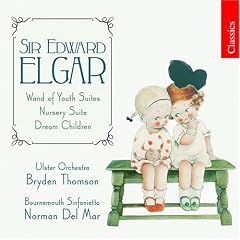 |
doctorjohn 正式會員 207.xxx.xxx.253 |
2008-04-26 23:20 |
| [#4035] More Acid Not acid, but apt comment on this excellent set: “…Both are stylistically wrong, but they sure are exciting. Solti drives the Act 2 duet like a chariot on fire. the final ensemble for Richardo’s death has an intensity and weight worthy of the death of a German God” (Parsons) 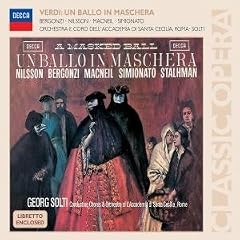 |
doctorjohn 正式會員 207.xxx.xxx.253 |
2008-04-26 23:22 |
| [#4036] More Acid “…He also has an odd hair style that vhas thick well-oiled strands of it going down each side of his head and curling up. I don’t know what effect he was after, but to me it made him look like a water buffalo…” (Chakwin)  |
doctorjohn 正式會員 207.xxx.xxx.253 |
2008-04-26 23:24 |
| [#4037] Rigoletto Listen to excepts of Rigoletto by Sinopoli/ Bruson/ Gruberova/ Shicoff last night. I have the DVD sing by Pavarotti /Gruberova/ Wixell and some excepts from Sutherland, I have to say that this version by Sinopoli have a lot of shortcomings, for example Shicoff's singing lack the exciting of Pavarotti, Gruberova cannot compare with Joan Sutherland in those wonderful effortless high note; but this set have a singer which deserved your undivided attention, he is Bruson. Bruson was a great actor as well as a great singer, he sing the role of Rigoletto most vivdly, from a sensitive father to a cruel killer, his voice can always bring tears to you eyes. Sinopoli's tempo is unsteady, too slow most of the time making the whole opera lacking in excitment, recording are of the highest quality.  |
chankaiming 正式會員 220.xxx.xxx.69 |
2008-04-28 09:28 |
| [#4038] Rigoletto chankaiming: You're not listening to much these days? Or not writing much? Miss your posts. DJ |
doctorjohn 正式會員 207.xxx.xxx.253 |
2008-04-30 04:52 |
| [#4039] Rigoletto doctorjohn, Recently I try to listen to some opera, mostly from Verdi, but sometime I have to listen to it twice before I could comment, another reason is that most opera are quite long, I need two or thre days to finish one opera. Chan Kai Ming |
chankaiming 正式會員 220.xxx.xxx.69 |
2008-04-30 08:59 |
| [#4040] Mozart's paino sonata After some many opera from Verdi, I have to take a short break, listened to Mozart's piano sonata last night, wonderfully played by Uchida. Uchida's touch was featherly and remind me of Kempff, her playing was natural, innoscent and fluent, recorded most truefully by Philips. 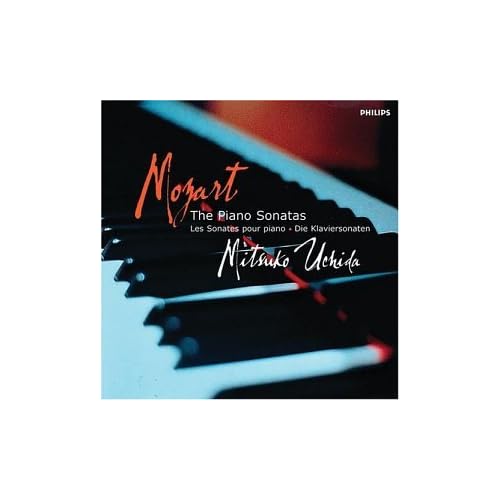 |
chankaiming 正式會員 220.xxx.xxx.69 |
2008-04-30 09:02 |
| [#4041] Russian Masters Bought this album a few days ago. The Haydn is refreshing. Looking forward to the Archduke Trio.  |
wal 正式會員 202.xxx.xxx.5 |
2008-04-30 09:34 |
| [#4042] Russian Masters wal how is the recording quality? |
chankaiming 正式會員 220.xxx.xxx.69 |
2008-04-30 09:41 |
| [#4043] Russian Masters Given that they are mostly recorded in 1951 (others in 1956, 1958), the sound is a very decent mono one. Worth getting. |
wal 正式會員 202.xxx.xxx.5 |
2008-04-30 14:09 |
| [#4044] Aida again, this time by Leontyne Price Listened to Aida again, this time by one of the greatest Aida in the second half of the 20 the century- Leontyne Price. Leontyne Price's protrayal of Aida was a true heroine, she have strong powerful voice, stable high note and perfect technique, although Callas digged deeper into the role of Aida, Price performance was very convincing overall. Jon Vicker was a good Radames, he have a strong voice with a dark tone, my only complain was that his singing doesn't sound like italian, sound like a English song sung by a Chinese. I prefer Bergonzi 's sunny and lyrical voice. Solti conducting was most exciting, the Brass section was most powerful and have a burnish tone that can only be found in Wagner's opera. Compare with Karajan and vienna philharmonic, Solti's team was more exciting but Karajan was more refined and paid more attention to details and have a more lyrical melody line . Recording by Decca was in demonstrative grade. After hearing this version, Overall a Aida recording that bridge the gap between Verdi and Wagner. 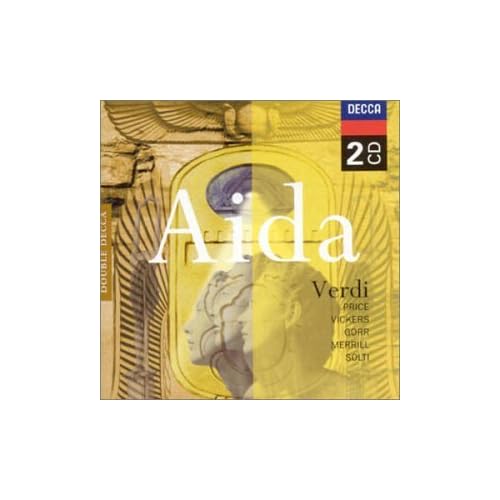 |
chankaiming 正式會員 220.xxx.xxx.69 |
2008-05-01 12:30 |
| [#4045] Russian Legends wal: Is DG issuing other Russian performances of that vintage? I was surprised by the release (many other companies issued the same things). In particular I'd be interested in comparing the "transfers" of DOREMI vs DG. I am pretty sure Doremi's are from LPs (I have a few of these on old cheap and kinda crappy US Monitor LPs). DGs would likely be superior as they were likely from tapes.  |
doctorjohn 正式會員 61.xxx.xxx.223 |
2008-05-04 07:36 |
| [#4046] Schreier 's version of Mozart's Requiem Listened to Peter Schreier's version of Mozart's requiem last night, I feel that everything simply sound right with a appropriate pace. A review from Amazon: The first time I listened to Mozart's Requiem was on the radio ten years ago. My interest in the Requiem was piqued after watching the movie Amadeus (1984). That radio recording was the best version of the Requiem I have heard since and I found out that it was Peter Schreier's. It was hauntingly beautiful--the kind that slips you into a reverie where the contemplation of death becomes at once disturbing, mysterious, yet strangely soothing and awesome. It made me wonder how any mortal could take such thoughts and put them to such sublime music. Only Mozart could compose such a work and Peter Schreier's interpretation is just right. I have made a special point of listening to as many versions of the Requiem since and none come close to Schreier's--not even Karajan's or Gardiner's. John Eliot Gardiner's version would be my second choice, but I think period instruments and razor-sharp digital edge are unsuited for Mozart's Requiem. The musical subject matter is death, and Schreier's version gives proper treatment to it. Voices and orchestra are like a rolling wave: violent when it crashes; soothing when it recedes. It comes at you all at once in a great mass and slips slowly away. The recording is digital, yet the balance of the orchestra is at once forward and blended superbly with the voices. There are frequent and dramatic changes of expression from delicate pianissimo (pp) to thundering fortissimo (ff). No section of the woodwinds, brass, or strings jut out conspicuously; lower-pitched instruments dominate throughout, as is appropriate for a requiem mass. It is like almost hearing the deep calm of rushing waters and underscores, I think, that imminent specter of death Mozart was contemplating. In fact, Mozart died before he could finish the Requiem. (Mozart left instructions for the work's completion to one of his students, who then finished and published it after Mozart's death) The sections which illustrate the masterful balance achieved by Schreier and the Leipzig Radio Orchestra with the Dresden State Chorus are the Lacrimosa and the Confutatis. In the Confutatis, especially, when the movement changes pace with the tantalizing soprano and alto unison sequence after the vigorous frenzy by the bases and tenors--this section is particularly exquisite. The vocalists, however, make this work truly sublime. Kudos to soprano Margaret Price. Her voice ascends into the heights without losing its richness or lustre. The best showcase for Price's ability, I think, is early in the first section (Introduction) where she has a short but lovely entrance. Theo Adam has a powerful Tuba Mirum and the Recordare features all four soloists at their best. Mozart conceived of every possible emotion to death and then put it to glorious music. If death is a terrifying nightmare, then the wickedly bone-rattling Dies Irae and Rex Tremendae are unforgettable. If death is bereavement and grief, then the mournful Lacrimosa fits the bill. If death is to be endured with gritted teeth, the intensely austere Kyrie Eleison and roller-coaster Domine Jesu will certainly help. If death is peaceful tranquillity, then Recordare or Hostias bring sweetness. Finally, if death is to be seen as final victory, then Sanctus. I feel that this is the best recording of Mozart Requiem available. I am disappointed that other recordings of the work have surpassed this one in popularity. If you have not heard this recording or are looking for just one version of Mozart's Requiem, then this one is it. Please do not let the relative obscurity of the conductor (Peter Schreier), the orchestra (Dresden State Orchestra) or the chorale (Leipzig Radio Chorus)take away from what an exceptional performance.  |
chankaiming 正式會員 220.xxx.xxx.69 |
2008-05-04 10:25 |
| [#4047] Shostakovich: Lady Macbeth Regarding Shostakovich's Lady Macbeth (mentioned by Brother Kei on 08-04-24 16:57), I note the following from the record sleeve while revisiting this Shostakovich Cello Sonata LP this afternoon. See if we need to "tune" our mindset politically before listening the Opera. :) ...Ostensibly, Shostakovich's life was evolving successfully. His opera Lady Macbeth was the hit of Moscow and Leningrad. Shostakovich began to be called Russia's number one composer, and the older Prokofiev receded into the background. .... Shostakovich read in the official communist party newspaper "Pravda": a long editorial attacking his opera Lady Macbeth. Stalin, having heard the opera in Moscow, was infuriated: he dictated the editoral for "Pravda" and called it "Chaos instead of Music". From this moment on, Shostakovich's life changed forever. 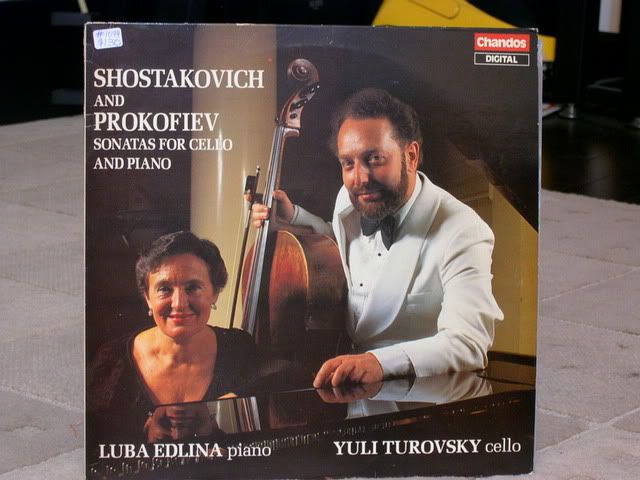 |
erictang 正式會員 203.xxx.xxx.162 |
2008-05-04 18:24 |
| [#4048] Shostakovich, Schnittke Cello Sonata http://www.hyperion-records.co.uk/details/67534.asp http://www.hkclassical.com/20071208/ Despite the number of positive comments in the Hyperion webpage (are the lengthy ones from Germany to support the German cellist Alban Gerhardt?), the Yuli Turovsky/Luba Edlina all Russian pair under Chandos label is still my preference for Shostakovich Cello Sonata. Perpetual motion (resemble to the ones in his Symphony No.8 third movement) by cello that opens the 2nd movement is ear-catching. The piano joins with brittle playing which subsequently shift to the higher register, all the way supported by the repeated pattern on the cello. In the middle of the piece, there is the use of cello glissandi. Apart from pieces by Shostakovich, pieces by Schnittke are also ear-catching, in particular the 2nd movement of his Cello Sonata No.1, a piece dedicated to Natalia Gutman. The movement is opened by series of softly rumbling quavers in the lower register of cello with two footstep like bass notes at the piano. These two notes, in minor third, are played repeatedly to create an atmosphere of strain. Here, you can take a look at Rostropovich’s virtuosity in the 2nd movement of Shostakovich Cello Sonata http://hk.youtube.com/watch?v=Q350N0Y9KyE&feature=related  |
erictang 正式會員 203.xxx.xxx.162 |
2008-05-05 00:19 |
| [#4049] Shostakovich, Schnittke Cello Sonata Continue with "Mendelssohn – Music for Cello and Piano – Antonio Meneses & Gérard Wyss" CD after cello works by Shostakovich and Schnittke. http://www.classicalsource.com/db_control/db_cd_review.php?id=5310 Antonio Meneses, a cellist you may have encounter but forget. He’s the partner of Mutter in Brahms Double Concerto with BPO conducted by Karajan under DG label. http://ecx.images-amazon.com/images/I/51S3XAHJB2L._SL500_AA240_.jpg  |
erictang 正式會員 203.xxx.xxx.162 |
2008-05-05 00:49 |
| [#4050] Shostakovich, Schnittke Cello Sonata My all time favourite  |
lowther_chan 正式會員 61.xxx.xxx.219 |
2008-05-05 04:13 |