兩聲道
CD機 | MD機 | SACD機 | DAC | CAS | 合拼擴音機 | 前級擴音機 | 後級擴音機 | 接線 | 喇叭線 | 揚聲器 | 耳機 | 耳機擴音機 | LP產品 | 膽機產品 | 開卷式錄音機 | 音響配件 | DIY音響 | 電源 | 家庭影院
電視機 | 投影機 | 錄影機 | DVD影碟機 | Blu-ray影碟機 | 多媒體播放器 | 機頂盒 | 多聲道擴音機 | 多聲道揚聲器 | 多聲道影音組合 | Mini音響組合 | 重低音揚聲器 | 輔助設備 | 同好會
同好會 | Accuphase | B&W | Burmester | Denon | Jadis | KEF | KRELL | Luxman | Marantz | Nuforce | OPPO | Pioneer | TEAC | WEISS | News
News | Blog | 其他
其他 | 所有 |
| 影音天地主旨 ﹝請按主旨作出回應﹞ 上頁 下頁 首頁 尾頁 | 寄件者 | 傳送日期
|
| [#8482] 評鄧陵鶦S的捷克作品現場錄音 有日本樂評認為,鄧陵鶦S在現場演出的魔力,足以將聽眾帶入催眠的狀態,這種氛圍很難在錄音室灌錄出來的唱片體現。 鄧陵鶦S(Klaus Tennstedt,1926-1998)在任職倫敦愛樂期間,讓樂團成2英國音樂皇冠上的一顆寶石。我清楚地記得現場聆聽他們演出馬勒第六號交響曲的經歷,音樂會上沒有其他的作品,地點也是在節日音樂廳。我坐在合唱團的席位上,直接面對指揮家,可以看到鄧陵鶦S的每個面部表情,每個指揮動作。鄧陵鶦S指揮的時候,運用整個身心的能量,來獲得他需要的效果。在這場相對通俗的捷克作品音樂會上,倫敦愛樂樂團有超一流的表演。 史麥塔納的《被出賣的新娘》序曲是個強力的、喜氣洋洋的演出,洋溢一種實際的劇院氛圍,樂曲的大部分段落聽起來比劇院樂池中的表演更清晰,木管演奏有濃郁的捷克鄉村風味。序曲之後,我們聽到的熱烈喝彩聲,在倫敦是不常見的。 在史麥塔納作品熱烈的尾聲後,德佛札克第八號交響曲登場,開頭大提琴和法國號聲音,聽來相當溫暖。很難想象這樣長線條的旋律,可以演奏得如此親切。這個錄音的細節很豐富,也不乏宏偉的氣勢。 鄧陵鶦S對慢板的處理有一點華格納的味道,以此來描繪出波西米亞人特有的音響畫面。這個樂章有很多情緒的變化,鄧陵鶦S戲劇化的處理予人興高采烈的快感。 快板很優美,鄧陵鶦S營造出尖銳的節奏外型,甚至一些有鑒賞力的portamenti,引出經指揮家深思熟慮的終樂章—開頭的小號中氣十足,但法國號的聲音有些笨拙,樂曲的尾聲顯示了巨大的能量。 鄧陵鶦S再次走上指揮台時,似乎體力有些透支。這裡的揚納捷克少了光彩,特別是第二樂章,鄧陵鶦S幾乎無法掌控樂團。不過,小提琴聲部應得到特殊的褒獎,他們的演出比很多錄音室的版本要好。第三樂章漸入佳境,鄧陵鶦S的處理不是很浪漫,可惜法國號在4:00到4:10的階段失去平衡,讓人有些鹵翽恁C (轉載自古典音樂資訊網)  |
george1977 正式會員 正式會員58.xxx.xxx.208 |
2008-05-11 14:32 | |
|
|
|||
| [#8483] 評鄧陵鶦S的捷克作品現場錄音 在學生時代,托斯卡尼尼 (Toscanini)曾把貝多芬的四重奏各樂器的樂譜謄寫在一起,他不願通過某個理論或者某個傳統獲得音樂表演的資訊,只想求助於樂譜文獻。他說過:「我只演奏作曲家寫出的東西。」這句話不幸被後人誤解,還成2一種時尚。實際上,人們永遠不能只演奏寫出的音符,而是需要演奏出音符所要表示的內容。可以說,托斯卡尼尼在舞台上所做的,絕對超過了樂譜本身,他也在尋找樂譜背後的真諦。但是他的金口玉言被年輕人廣泛採用,變成了災難。音樂的意義,在於它的節奏,在於建立在節奏之上的速度感。指揮家給出的節拍,與節拍器控制的節奏有本質的不同,就像人的走動不同於機器人的走動一樣。 我們應該注意,托斯卡尼尼的音樂感覺是義大利式的。他出生在「真實主義」歌劇盛行的年代,後來通過Martucci學習德國的交響樂。他不可避免地以歌唱的角度看待交響樂,把交響樂當作是歌曲的複雜結構形式。從這裡#生了他與福特萬格勒 (Wilhelm Furtwangler)及我們這個時代其他偉大指揮的不同之處。可以說,托斯卡尼尼是在交響樂中尋找表情,福特萬格勒則是在表現一種不斷發展的表情。 簡明地說,托斯卡尼尼指揮的器樂作品是件浮雕,清晰明朗、輪廓鮮明,而福特萬格勒指揮的作品則是充滿亮點和暗影圖畫,在同一個時間,整體的不同部分或對立、或關聯。因此,把這兩位偉大的指揮家進行比較是徒勞的。他們兩人都留下體現自己觀念的錄音。人們只可以考慮:在特定情況下,他們的視角哪個更接近作品本質。即使那樣也很難讓他們分出高下,因2每種視角忽略的某些東西,往往恰好被另一方所重視。 (安塞美 Ansermet 著,轉載自古典音樂資訊網)  |
george1977 正式會員 58.xxx.xxx.208 |
2008-05-11 14:37 |
| [#8484] 卡拉揚的《悲愴》(2) 40年前,卡拉揚也曾在NHK交響樂團客演《悲愴》,並留下錄音(日本DG發行CD),地點在東京日比谷公會堂(Hibiya Kokaido),卡拉揚的實況錄音,總是有錄音室版沒有的「魔力」,這兩個版本就是最佳的印證。  |
george1977 正式會員 58.xxx.xxx.208 |
2008-05-11 14:41 |
| [#8485] 卡拉揚的《悲愴》(1) 1984年,晚年的卡拉揚帶領維也納愛樂,留下最後的《悲愴》正規錄音,但在這個錄音中,卡拉揚顯然太過雕琢美聲,營造華麗、旋律兼備的氣氛,使他陷入失控的自溺而不可自拔。正因如此,卡拉揚1988年5月2日,帶領柏林愛樂訪日,在東京三得利大廳(Suntory Hall)的演出,就更顯珍貴。這個錄音至今並無正規發行,有的是日本PANDORA'S BOX出版的CD-R。但音質在可接受的範圍,演出卻是充滿感人的能量。  |
george1977 正式會員 58.xxx.xxx.208 |
2008-05-11 14:42 |
| [#8486] 流浪指揮家Jascha Horenstein @ 古典音樂沙龍 霍恩斯坦(Jascha Horenstein,1898-1973)過著漫遊者般的生活,然而儘管沒有屬於自己的樂團,他卻以馬勒和布魯克納的頂尖詮釋者而著稱於世。 霍恩斯坦在英美兩國的名聲建立在兩個完全不同的基礎上。在英國,從五十年代末期一直到他逝世的1973年期間的無數場公開演出,奠定了他作為指揮大師的地位;而在美國,Vox公司1952年發行他的首批唱片,使他成為美國人心目中的錄音先驅。美國聽眾通過這些早期的密紋唱片,欣賞到一位偉大指揮鼎盛時期的傾力之作,而霍恩斯坦本人也從一開始就被公認為是與崇尚旋律主義的布魯諾華爾特和具有嚴謹的紀念碑風格的克倫培勒並駕齊驅的馬勒與布魯克納的詮釋權威。 霍恩斯坦廣泛的保留曲目在他的唱片中可略窺一二:除了他最為出名的馬勒和布魯克納,還有荀伯格、巴爾托克、揚納捷克、史特拉汶斯基、普羅高菲夫、蕭斯塔高維奇,當然還有莫札特、海頓、貝多芬、布拉姆斯和巴赫。唯一的例外是尼爾森,1927年霍恩斯坦首次指揮尼爾森作品,隨後便將他束之高閣,直到1960年代後期才重新指揮他的作品。這也反映了指揮家早期所受重要的音樂影響和學徒時代的各種經歷。 霍恩斯坦最初是個作曲家兼小提琴家,直到20世紀1920年代才開始指揮生涯。1916年起就讀於維也納音樂學院,1920年來到柏林。 首場演出在1922年,他與維也納交響樂團合作,曲目包括馬勒第一交響曲,這部作品的詮釋直到指揮家去世後的十幾年仍然具有爭議性。他在柏林也與合唱隊總指揮Siegfried Ochs一起工作,並成為其助手。 霍恩斯坦的合唱指揮吸引了1922年新上任的柏林愛樂掌門人福特萬格勒。他們的合作不僅對霍恩斯坦今後的職業生涯意義重大,而且對他的指揮風格產生了深遠影響。1927年福特萬格勒指派霍恩斯坦在法蘭克福ISCM節期間給樂團進行演出排練。演出曲目有尼爾森的第五交響曲和巴爾托克的第一鋼琴協奏曲。這次音樂會,和其他20年代後期柏林愛樂的演出一道,為霍恩斯坦日後的一些先入之見埋下了早期的根源。在柏林他指揮了馬勒第五和布魯克納第九,還有Karol Rathaus, Max Butting, Kurt Weill和貝爾格的新作。 1928到1929年間,霍恩斯坦他錄製了自己的首批唱片:在慕尼克,他與Heinrich Rehkemper合作灌錄了馬勒的《亡兒之歌》—這也是該作品的世界首錄音;與柏林愛樂錄製了布魯克納第七號交響曲,海頓的《驚愕》,舒伯特的第五號,兩首莫札特的序曲,還有荀伯格的兩首巴哈眾讚歌前奏曲的改編曲(作於1922年,這也是該作品的首錄音)。從這些演出中,我們可以發現這位年輕的指揮家對長篇結構具有驚人的掌控力;管弦樂的音響清澈透明,而又不失細節與重點,這成了他日後的顯著特徵。 福特萬格落的保薦,幫助霍恩斯坦贏得杜塞爾多夫歌劇院首席指揮的職務,隨後他又被提升為音樂總監—這也是他僅有的終生任職。1933年3月因受納粹對當權猶太人的排擠,他被迫離開德國。而事實上從在杜塞爾多夫任職伊始他就一直受到不友好的對待。他在常規曲目中加入了釵h當時的新作,包括值得紀念的1930年杜塞爾多夫版貝爾格的《伍采克》,1931年揚納捷克的《死屋》,再加上他個人那時對標準曲目的處理方式,在當時普遍存在的反猶主義的煽風點火下,給他帶來的是媒體充滿敵意的尖刻評論。 在這般情況下,繼1929年和1930年分別走訪法國和俄羅斯之後,霍恩斯坦與1933年遷往巴黎,從那裡他開始了在華沙,莫斯科和列寧格勒任客席的指揮生涯。在那兒他進一步提升由Oscar Fried和馬勒本人於一次世界大戰前,就已經奠定的作曲家在俄國的崇高威望。他也和熱衷於馬勒的肖斯塔克維奇建立了私人友誼。 他的足跡也遍及巴勒斯坦,1938年他主動承擔帶領巴勒斯坦交響樂團(現為以色列愛樂)整年演出季的工作。也是因為這一破天荒的巧合,使霍恩斯坦成了在歷史事件將華格納驅逐出門以前,最後一位與此樂團合作演出這位元德國偉大作曲家作品的指揮家。 1940年霍恩斯坦來到美國,起初執教於社科研究所(New School of Social Research),該所所謂的「移民」音樂教研室因為集中了諸如塞爾,克倫培勒,萊因斯朵夫,艾斯勒,史托爾曼這批音樂家而聲名顯赫。儘管霍恩斯坦1940年代初就成為了美國公民,他卻很少在美國指揮。即便如此,當美國歌劇迷在參加2001年1月大都會歌劇院的布梭尼Doktor Faust的首演時,也不應該忘記霍恩斯坦早在1964年就在卡內基音樂廳指揮了這部作品的美國首演(由費雪迪斯考唱主角)。 1967年他與安德列·普列文(Andre Previn)共同指揮了倫敦交響樂團在佛羅里達的夏季節慶系列音樂會,同時他也指揮學生管弦樂團。1966年11月他與三藩市歌劇院合作上演了《費加洛婚禮》和揚納捷克的《馬克羅波洛斯案件》。1969年11月他又與斯托科夫斯基的美國交響樂團合作馬勒第九。在1971年的一次與明尼蘇達交響樂團的音樂會上,指揮在尼爾森第五交響曲開頭,就因心臟病突發而當場昏倒。 1947年他返回法國繼續歐洲的職業生涯。1948年他正好在以色列建國前夕出現在巴勒斯坦,1950年他指揮了馬勒的《大地之歌》(巴黎最早的演出之一),緊接著為法國廣播以音樂會的形式上演了《沃采克》的法國首演。1953年一個類似編排的揚納捷克的《死屋》反映了大師試圖以這些自己的拿手曲目重現戰前有過的輝煌。他在巴黎時代最重要的錄音是1954年與EMI錄製的LP。這張錄有施特勞斯《變形曲》和斯特拉文斯基《詩篇交響曲》這樣怪癖曲目的LP在其發行當年即被授予了年度最佳唱片大獎(Grand Prix de Disque)。 在從1952年Vox於維也納製作了首批唱片直到1959年期間,指揮和維也納交響以它自己的名稱和其他一系列化名錄製唱片;隨後在巴黎是與科隆管弦樂團,班貝格管弦樂團;在巴登-巴登是與SWDR樂團。 霍恩斯坦的歐洲職業生涯隨著同交響樂團和歌劇院的簽約進一步擴展到了德國,義大利和英國。他與倫敦交響樂團的密切聯繫始於1956年,那時他接替了在南非巡演中病倒的約瑟夫克利普斯(Joseph Krips)。他出人意料地返回德國也是因為一個最後關頭的取消安排;在毫無準備和排練的情況下他指揮了RIAS樂團演出了荀伯格的《昇華之夜》,受到觀眾的熱烈歡呼和輿論的一致好評。可是在德國工作終究是意氣不投,他也很少再回去過。 然而1959年在阿爾伯特音樂廳與倫敦交響合作的馬勒第八號那傳奇般的演出確立了他在英國音樂界的崇高地位。音樂會非官方的海盜版唱片在市場中流傳了將近40年,直到第一批BBC傳奇(BBC Legends)系列唱片正式問世。唱片以BBC早期卓越的身歷聲錄製,優異的聲音超出任何人的想像。而音樂會本身也對促進1960-1961年作曲家百年誕辰紀念期間英美兩國馬勒音樂的復興起了舉足輕重的作用。 那時候霍恩斯坦仍未簽訂什麼主要的錄音合同,但在他接下來的職業生涯中優秀唱片層出不窮——為美國《讀者文摘》錄製的權威的標準曲目,兩張獨立的EMI唱片,一張Decca,還有自1970年起為John Goldsmith旗下的Unicorn唱片公司灌制的一系列精彩的唱片,包括與新愛樂的尼爾森第五,馬勒第一和第三,一張與倫敦交響帕努夫尼克(Panufunik)和羅伯特辛普森(Robert Simpson)的第三交響曲專輯,兩張指揮家死後出版的唱片:1966年與斯德哥愛樂合作的馬勒第六,1972年3月為丹麥廣播製作的哥本哈根版尼爾森的《掃羅與大衛》。 霍恩斯坦的指揮生涯中始終如一,保持不變的不僅有從早期就已彰明較著的獨具風格的特徵,而他那種能對音樂中的細枝末節明察秋毫的可靠直覺,更是將他的整體指揮藝術風格提升到全新境界。他在1920年代與柏林愛樂合作時,就有內在對音響的嚮往,而若干年後又能以超乎尋常的精確度將理想變為現實,重現音響的完美。他還有一種不達目的,誓不甘休的隋茪ㄙ椌犖諯哄C 我無從知道在我們的時代是否還存在著另一位世界級的指揮家,既能擁有如此廣泛的噢,又能取得如此顯赫的成就。我之所以在他逝世後30幾年,仍將他形容為「我們的時代」,不僅僅是因為我個人對他的崇拜與懷念,或是他給我的鼓舞激勵的緣故,更是因為我深深地體會到無論是普通的音樂愛好者,還是專業的音樂工作者,都能從他那裡學到很多很多! (轉載自古典音樂沙龍)  |
george1977 正式會員 58.xxx.xxx.208 |
2008-05-11 14:45 |
| [#8487] Carlos Kleiber: Not a great conductor Carlos Kleiber: Not a great conductor By Norman Lebrecht / July 30, 2004 An exclusive new clique has formed in the world’s concert foyers. Following the sad death of the conductor Carlos Kleiber, a notoriously elusive performer, a silken cord of snobbishness now separates the few of us who witnessed the master in the flesh from the multitudes who merely heard his achievements on record. Those who saw him in action have something to tell the grandchildren, the others don’t. So there. Obituarists last week drove themselves into a frenzy of hyperbole, describing Kleiber as the ‘greatest’ of all conductors, whatever that overworked superlative might mean. Certainly, he was a meticulous interpreter who elicited intricate, often essential detail from densely written scores. At his Covent Garden debut in June 1974, he spent three hours rehearsing 80 seconds of the Prelude to Der Rosenkavalier – an object lesson to musicians everywhere that structure stems from the phrasing of the opening passage. Kleiber had a knack for striking a tempo that felt ‘just right’, nowhere more so than in the Beethoven Fifth Symphony where, in a Vienna Philharmonic recording for Deutsche Grammophon in 1975, he struck a perfect balance of the ominous and the numinous. Remarkably, he did so at a metronome marking that was just eight points off the head-over-heels 108 which the composer had erratically inscribed in his score, a lickety-split misguidance that commonly dashes literalist interpreters onto the rocks of musical ridicule. In a century of symphonic recording, only Toscanini, Giulini and Kleiber have ever got away so fast in the Fifth. Of the three, Kleiber sounds measurably the most relaxed and correct. He got what he wanted out of an orchestra by means of intense self-preparation, rather than intensive rehearsal. While he demanded more time than most, he scorned the likes of Sergiu Celibidache who required 15 sessions to prepare a Bruckner symphony and once lampooned the mystic Celi in a letter to Der Spiegel, submitted pseudonymously. Kleiber, after rehearsal, would leave polite notes on players’ desks: ‘This bit I think could be a bit more forceful and audible. Many thanks and kind regards, C. Kleiber.’ Such courtesies, among many gentle anecdotes, established his image as an intuitive conductor of a severely restricted repertoire. At the height of his activity, in the mid-1970s, he confined himself to eight operas, two dozen symphonies and some out-of-the-way pieces like Dvorak’s uneven piano concerto, which he recorded unforgettably with the Russian pianist, Sviatoslav Richter. He spent the next 30 years reducing his range. In his final decade - and he was a vigorous-looking 74 at the end - Kleiber averaged less than one gig a year. He was not a recluse, as was widely misreported on the basis of his lifelong refusal to give a media interview. On the contrary, he maintained a wide network of musical friendships, cordially refusing all invitations Carlos Kleiber was therefore famous not so much for conducting, as for not conducting. He liked to say that he worked only when his deep-freeze was empty and he did not have to work much to fill it. Aware of his scarcity value, Kleiber stuck out for record fees – a million dollars, reputedly, for his last trip to Japan. He cancelled more than he conducted and was quickly bored. At his last London appearance, a 1986 Verdi Otello at Covent Garden, he seemed to me to be marking time. The phrasing was exquisite but the Moor’s jealous rage was never musically aroused. Some who knew Kleiber thought he no longer liked music, maybe actively hated it. Speculation aside, one cannot ignore the chilling influence of his formidable father. Erich Kleiber, a demanding man, went through 126 rehearsals before he conducted the premiere of Alban Berg’s Wozzeck in 1925, an event that marked the dawn of operatic modernism. Erich left the Berlin State Opera in 1934 in principled protest at Nazi policies (he was not Jewish) and spent the war years in Argentina, where young Karl became Carlos. The family returned to the Soviet sector of Berlin, where the State Opera now stood, and suffered western suspicion in consequence. In the early 1950s Erich brought professional rigour to Covent Garden and made some superb Decca recordings but he was only 60 when he died in Switzerland, embittered and unfulfilled. Carlos, who had been warned off conducting by his father, took up the baton regardless and proceeded to perform Erich’s favourites – Beethoven's fifth symphony, Brahms’ fourth, Der Rosenkavalier, La Boh鋗e and Wozzeck. He was music director for a couple of years at the Stuttgart Opera, but he held no major posts and made his name by word of mouth. Unfortunately, it was a name he shared with his father. Freud would have had a field day. Whatever conditioned his attitude towards music he kept his feelings to himself. He lived on a mountain slope outside Munich, unreachable by phone. He had (like his father) a son and a daughter; his wife, Stanka, was a Slovenian ex-ballerina. Her death earlier this year plunged him into depression and he arranged to be buried beside her, in Konjsica. It took almost a week for the world to become aware of his passing, a lapse that would undoubtedly have pleased this most taciturn of men rather more (one suspects) than the immediate issuance of a DG souvenir album. A maestro dies, a myth is born. Among the posthumous flowerings is the icon of Carlos Kleiber as a perfectionist who could not allow himself to conduct a work in which he might trangress a composer’s sacred intentions. The source of this theory is Harvey Sachs, a biographer of Toscanini and Solti, who recalled in the New York Times meeting a distressed Kleiber during rehearsals for a 1978 Tristan and Isolde at La Scala. ‘Why do I keep trying to conduct?’ Kleiber exclaimed. ‘I can’t get them to understand what I want. I shouldn’t be conducting at all… I can’t bear to let the errors go uncorrected...’ That agony of self-doubt has been experienced by everyone who ever raised a baton above an open page and a seated mob. I have heard variations on it from Tennstedt and Solti, Jansons and Gergiev, Muti and Abbado. It’s an occupational wail. Those who mythologise such moments misunderstand the musical process. Every conductor knows that if perfection were attainable we would never want to hear another performance and there would be no further need for conductors. What a conductor does is his or her best to get close to a composer’s intentions. What the composer intends is for the music to be heard, faults and all. No composer would agree to wait a lifetime for an error-free performance. I don’t believe that Carlos Kleiber, a decidedly practical man, imagined otherwise. Kleiber was a magnificently gifted conductor who chose, for reasons known only to himself, to deny himself to music. He gave very little, and then he took it away. He was the greatest non-conductor we have ever seen. http://www.scena.org/columns/lebrecht/040730-NL-kleiber.html  |
george1977 正式會員 58.xxx.xxx.208 |
2008-05-11 21:56 |
| [#8488] Virtuoso Vengerov Gets Bored, Retreats Virtuoso Vengerov Gets Bored, Retreats: Norman Lebrecht Commentary by Norman Lebrecht April 16 (Bloomberg) -- The only ones who may have been shocked by Maxim Vengerov's snap announcement that he is giving up the violin were his record company, EMI Group Plc, and half the world's top concert halls. Friends of the virtuoso, along with some music critics, had detected early signs of disaffection in his frequent cancellations and several had been wondering whether he would be the next victim of creeping ennui on the high-flying classical circuit. Anne-Sophie Mutter, the icy elegance of German music, has let it be known that she aims to quit in the next few years, before she turns 50. Nigel Kennedy, the unshaven British iconoclast who plays his violin in bovver boots and a Jimi Hendrix headscarf, has taken breaks of several years at a stretch. Playing the same concertos night after night on a flight path from Oslo to Osaka can pall after a few years at the top. There must be more to life, some conclude, than the next ovation. Vengerov, 33, is a special case. Raised in the Siberian austerity of Novosibirsk, he moved with his parents to Israel in 1990, the year he won the Carl Flesch International Competition in London. A record deal followed with Warner, along with a close working friendship with the Russian cellist and conductor Mstislav Rostropovich. Slick Wizard By the mid-1990s Vengerov was pick of the pack, a status that Itzhak Perlman held 20 years before and Jascha Heifetz 20 years before that. He could play any piece of music faster and slicker than his nearest rival, a wizardry that placed him top of the fee scale, reputedly commanding $40,000-$50,000 for each appearance. Coming from a backdrop of arid deprivation, he embraced his fortune with open arms. When I first met him at Verbier, Switzerland, a decade ago, he was giving 120 performances a year. ``Aren't you afraid of burnout?'' I wondered. ``No. I'm young. It's great,'' he grinned. But there is a price to be paid for excess, and he was soon aware of it. Dropped by one record label he found another, though no fresh strategy. He toyed with baroque violin, then electric. In 2004, he took a six- month sabbatical and came back dancing tangos to his own playing. He commissioned a rock concerto. Then, last year, he fell in the bathroom and damaged his shoulder. He has not played in public since June 2007. Will to Play Vengerov told the Times of London in its April 5 edition that he is fully healed but that he has lost the will to play. ``I have decided to leave my violin to rest for some time, in order to give my undivided attention to conducting,'' he said. He has a happy new relationship, with the British trumpet player Alison Balsom, and enjoys teaching small children at a school in Migdal, near the Galilean seaside town of Tiberias. ``There comes a time when you need to stop flying all over the world,'' Vengerov said, citing an urge ``to give something back.'' What, exactly, is unclear. The concert world has less need of a callow conductor than it does of a hot-ticket fiddle player. Vengerov says he'll be back some day. When is up to him. Friends say he's having ``a bit of a holiday'' after getting ``thoroughly sick'' of the stuffy concert circuit. ``It often happens to violinists in their 30s,'' says a shrewd insider. ``They look around and see that life has more to offer.'' The Korean violinist Kyung Wha Chung took a year out at that point in her career to go to Paris and learn French. Kennedy, too, has played more winningly than ever since taking time out. Forward Line With Vengerov, though, there are doubts. This ought to be peak time in his career, a period when he is testing new repertoire and engaging new audiences. His absence will prove costly in more than just monetary terms. A footballer who takes a gap year at 22 cannot expect automatically to return to the forward line. More alarmingly, Vengerov's withdrawal may be symptomatic of a deepening malaise in concert life. Other soloists have complained to me that they should not have to fix schedules three years ahead so that by the time they arrive on the platform they have lost interest in the music they are expected to play. When a star like Vengerov drops out, it signals that something is seriously wrong with the state of classical music. Lessons need to be learned, and fast, if the art is to recover its magnetism for those who perform it at the highest level. (Norman Lebrecht is a critic for Bloomberg News. The opinions expressed are his own.) http://www.bloomberg.com/apps/news?pid=20601088&sid=a6Eg5um6utM8&refer=muse  |
george1977 正式會員 58.xxx.xxx.208 |
2008-05-12 01:35 |
| [#8489] 被遺望的小提琴大師---Eduard Grach digimode: Where is your CD store? Thanks, |
dyquem18 正式會員 222.xxx.xxx.215 |
2008-05-12 09:24 |
| [#8490] Jascha Horenstein Since Horenstein was mentioned, and as I have long been a fan, I'd like to say grab all of his recordings. Most of them are available now in really cheap editions, and nothing is not worthwhile. While his Mahler 1, 3 and 6 on Unicorn (now resurrected???) was much discussed, the Mahler that was truly neglected was his 4th, now available on cfP: http://www.musicweb-international.com/classrev/2001/Nov01/Mahler4_Horenstein.htm Anyone who thinks EdW as a great conductor and had gone to his concert this weekend should listen to this recording.  |
doctorjohn 正式會員 116.xxx.xxx.23 |
2008-05-12 23:55 |
| [#8491] Jascha Horenstein This Unicorn 6th had long been controversial. Many did not like the playing of the Stockholm PO, but no one doubted Horenstein's conception. This recording also marked the few convergence between kh33 and me. This was out-of-print for a long time, but seems to be available again. (note: his Unicorn 3rd is in a Brilliant Classics box. Not sure about the 1st) 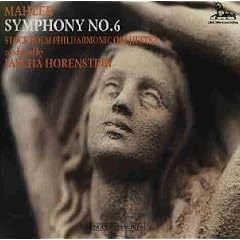 |
doctorjohn 正式會員 116.xxx.xxx.23 |
2008-05-13 00:00 |
| [#8492] Schuricht/Bruckner EMI has 3 recordings of Schuricht's Bruckner, all with the VPO. george showed the excellent box set of 8+9. The 9th is my top choice, in mystery and grandeur yielding to none (not even Walter can match it). The slow movement is definitive to me. The ultra-cheap Seraphim LP is not difficult to get. Unjustly neglected is the 3rd, also on cheap Seraphim LP. I rank this version with Jochum/DG at the top, bar none. EMI Japan has issued it before, not sure about now. On the JP HMV website I saw this Euopean "Testament Classics" release. Not sure whether it's the EMI recording. The PREISER one also looks like the same thing. 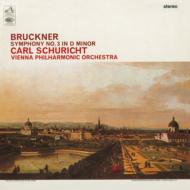 |
doctorjohn 正式會員 116.xxx.xxx.23 |
2008-05-13 00:14 |
| [#8493] Tennstedt Ever since I heard his Mahler live with the NYPO, I have been a Tennstedt fan, This CD mentioned by george I bought at full price, but when I saw a second-hand copy at $40 I bought it too. This is a fantastic recording in great sound. george, do you have it? If not I shall give you a copy. |
doctorjohn 正式會員 116.xxx.xxx.23 |
2008-05-13 00:19 |
| [#8494] Tennstedt I picked up this CD in Taiwan and used it at Usher Audio for test. Excellent live recording!  |
doctorjohn 正式會員 116.xxx.xxx.23 |
2008-05-13 00:21 |
| [#8495] Tennstedt Doctorjohn I feel interesting of your second-hand copy though I have quoted the article from another source, not written by me indeed! Surely we could not forget the glowing and upfront performance of Tennstedt, a domicile of eastern-german conductor, in his final cycle at EMI, his mahler 4th, 5th, 6th and 8th are simply an evergreen treasure which reflects the perception of german conductors toward Mahler, extravagantly monumental with epic dimensions, overwhelming volume of sound in climax and a moving intimacy . As if Tennstedt and LPO has fully internalised the Mahler eighth as if representation of their will and artistic quality. Schuricht's Bruckner third is another underrated and gigantic recording which deserve our attention. Should you need a recent alternative, Gunter Wand's reading with NDRSO is simply immaculate and convincing. BTW, the reissue LP of Schuricht's Brucker third has just been released by Testament at HK$ 280, you can also find Preiser reissue CD instead! 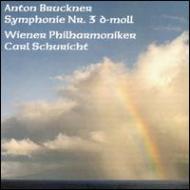 |
george1977 正式會員 58.xxx.xxx.52 |
2008-05-13 01:22 |
| [#8496] Barenboim 錄製貝多芬鋼琴協奏曲DVD版 Daniel Barenboim ( 1942-)曾分別以鋼琴家和指揮家的身分,灌錄過貝多芬的鋼琴協奏曲全集唱片版。現在這些年來,專職指揮的他,似乎仍為忘情於鋼琴領域,並於2007年5月在魯爾區鋼琴音樂節中,再次身兼兩職,與柏林國家交響樂團共同錄製貝多芬鋼琴協奏曲全集的影像版。如果他活得夠久,又繼續錄下去,可能會打破貝多芬鋼琴、交響曲的錄音(錄影)紀錄。 比起先前Scala的全場Liszt,這次有表現精彩的Staatskapelle Berlin烘托,連帶Barenboim本人水準也提昇不少。由於手指技術退化之故,雖然也參合了Brendel富技巧性的分句掩飾,但早期的兩首協奏曲 (No.1 & No.2)還是難免有下手過重與節奏拖沓的缺失;而第3號以後,凶猛直率的觸鍵加上銳利的琴音與略顯激動的處理,反而有不錯效果。現在的 Barenboim和當年與Klemperer合作時已經差很多,技術上當然不乏模糊帶過的痕跡,論完善度也略遜 Gilels/Masur、 Serkin/Bernstein,但有些地方倒讓人想起早年的德國鋼琴流派前輩如 Gieseking, Fischer等人,尤其是那些重視輪廓與整體推進,但不拘小節的風格。  |
george1977 正式會員 58.xxx.xxx.55 |
2008-05-14 00:23 |
| [#8497] Barenboim 錄製貝多芬鋼琴協奏曲DVD版 http://www.review33.com/chat/forum_message.php?topic=26080513163658 |
trazom 正式會員 58.xxx.xxx.198 |
2008-05-14 00:25 |
| [#8498] 薑是老的辣! x 2 日本人對卡拉揚的熱愛數十年不減, 薑是老的辣!世界首次CD化卡拉揚最後的日本公演!20年後是否再讓聽過或錯過現場實況的樂迷,重新感動,令人拭目以待。 1988年5月,卡拉揚生平最後一趟赴日公演,5月4日的一場在三得利大廳(Suntory Hall)的現場實況留下錄音。曲目包括布拉姆斯第四號交響曲以及Mussorgsky 的 “畫展"。日本環球透過最新技術將廣播母帶進行處理,將在5月21日當天,以最高音質的呈現向卡老致敬。 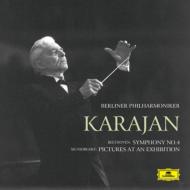 |
george1977 正式會員 58.xxx.xxx.55 |
2008-05-14 00:33 |
| [#8499] Otto Klemperer 最後音樂會 Testament即將推出 Otto Klemperer 1971年9月26日最後音樂會實況(Otto Klemperer - The Last Concert),演出曲目包括貝多芬《Stephen King》序曲、與以色列鋼琴家Daniel Adni(1951-)共演的貝多芬第4號鋼琴協奏曲,以及布拉姆斯第三號交響曲,這張珍貴唱片的封面已在日本HMV現身,此外,Klemperer 1968以演奏會形式演出的華格納《飄泊荷蘭人》全曲錄音,也將在7月份與最後音樂會同步登場。 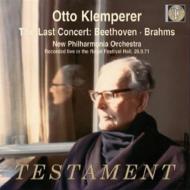 |
george1977 正式會員 58.xxx.xxx.55 |
2008-05-14 00:46 |
| [#8500] Otto Klemperer 最後音樂會 一定要買!!!!! ... 雖然之前隻Missa Solemnis都未找到(賣斷?!). |
wal 正式會員 202.xxx.xxx.5 |
2008-05-14 10:37 |
| [#8501] Kondrashin 布拉姆斯全集在Venezia 名指揮Kirill Kondrashin (1914-1981)在1960年代末、1970年代初錄製的布拉姆斯交響曲全集,去年底由俄國廠牌Venezia再版復活,4張CD還包括小提琴奏鳴曲等室內樂曲(David Oistrakh + Sviatoslav Richter)、協奏曲(Oistrakh 與 Kondrashin 1949年版),這套專輯在日本HMV一度被列入「困難入手」,其音響質量都比多年前的Dante雙碟盤優異釵h,從Venezia盤可以聽出Kondrashin營造的綿密張力。  |
george1977 正式會員 218.xxx.xxx.28 |
2008-05-15 22:00 |