兩聲道
CD機 | MD機 | SACD機 | DAC | CAS | 合拼擴音機 | 前級擴音機 | 後級擴音機 | 接線 | 喇叭線 | 揚聲器 | 耳機 | 耳機擴音機 | LP產品 | 膽機產品 | 開卷式錄音機 | 音響配件 | DIY音響 | 電源 | 家庭影院
電視機 | 投影機 | 錄影機 | DVD影碟機 | Blu-ray影碟機 | 多媒體播放器 | 機頂盒 | 多聲道擴音機 | 多聲道揚聲器 | 多聲道影音組合 | Mini音響組合 | 重低音揚聲器 | 輔助設備 | 同好會
同好會 | Accuphase | B&W | Burmester | Denon | Jadis | KEF | KRELL | Luxman | Marantz | Nuforce | OPPO | Pioneer | TEAC | WEISS | News
News | Blog | 其他
其他 | 所有 |
| 影音天地主旨 ﹝請按主旨作出回應﹞ 上頁 下頁 首頁 尾頁 | 寄件者 | 傳送日期
|
| [#8962] Sein letztes konzert Trollope, This should be a new reissue by UMG Japan, I dun think that I have this live account for his last concert. What makes his last concert so special was his rare reading in Schubert Moments Musicaux D780 and Schumann (especially my favourite recital piece Schumann Fantasiestucke op12 (excerpt), and his only once collaboration with Gunter Wand and VPO playing Schumann Piano Concerto which I recently bought in HK Records). Backhaus is a last generation of old German-Austro school, you can hear his genuine command in fingerwork and comprehension in these piano masterpieces. I am looking forward to listen this precious account if I can order it successfully from Japan. So fruitful this weekend morning! George1977  |
george1977 正式會員 正式會員222.xxx.xxx.52 |
2008-08-17 09:23 | |
|
|
|||
| [#8963] Sein letztes konzert Trollope, Your new Decca Japan reissue should be the third reissue after London Japan and German Emritage. george1977 -------------------------------------------------- 這兩場最後音樂會唱片公司留下了錄音紀錄,這個巴克豪斯 (Wilhelm Backhaus) 的「天鵝之歌」由日本London首度CD化。 1996 年德國Ermitage/Decca另發行單張CD,他和日版差別在於Ermitage將26日及28日兩場演奏會集合成一張,但刪掉部分26日的演出曲目、編排上也與日版不盡相同(內頁的日期標示是錯誤的,其實是包括26、28日兩場,但該廠僅標示28日)。 而日版則是全部的兩場演奏會忠實紀錄。錄音方面,Ermitage版忠實地捕捉了28日那場音樂會,巴克豪斯 (Wilhelm Backhaus) 與觀眾間的互動,甚至在最後一首舒伯特即興曲後,長達五十秒的鼓掌和聽眾的交談也都收錄進去。以收藏價值來看,日版遠高於Ermitage版,除了收錄完整的兩場演奏會外,也沒有Ermitage版的製作失誤的尷尬(標錯日期),不過,日版經多次再版,價格一路下滑,最新的2004年版在製作上未如第一版精美。 另外,遺憾的是,Decca國際版竟然至今未曾發行過CD。 兩個CD版本比較: 德國 Ermitage 1-3 Mozart Sonata K331 4-6 Beethoven Sonata No.21 7 Schubert Impromptu Op.142 No.2 8-10 Beethoven Sonata No.18 11-12 Schumann Fantasiestucke Op.12 13 Schubert Impromptu Op.142 No.2 (5:20) Japan London CD1 1-3 Beethoven Sonata No.21 4-9 Schubert Moments musicaux D.780 10-12 Mozart Sonata K331 13 Schubert Impromptu Op.142 No.2 CD2 1-3 Beethoven Sonata No.18 4-5 Schumann Fantasiestucke Op.12 6 Schubert Impromptu Op.142 No.2 (4:51) (圖為1996年德國Ermitage/Decca發行的單張CD封面)  |
george1977 正式會員 222.xxx.xxx.52 |
2008-08-17 09:30 |
| [#8964] Venezia ... cause Venezia is still unavailable in Hong Kong! > 之所以呢,我拿拿聲平平地求求其其執左d咁話lor. 此其一.  |
Trollope 正式會員 202.xxx.xxx.237 |
2008-08-17 10:03 |
| [#8965] Venezia 都米話吾 '料-ful' 嫁!  |
Trollope 正式會員 202.xxx.xxx.237 |
2008-08-17 10:06 |
| [#8966] Venezia 呢套仲平 d tim  |
Trollope 正式會員 202.xxx.xxx.237 |
2008-08-17 10:18 |
| [#8967] Venezia 吾洗二千 yen arm 我射程 (有活動 遲些兒再談)  |
Trollope 正式會員 202.xxx.xxx.237 |
2008-08-17 10:21 |
| [#8968] Venezia Trollope So envious of your fruitful yield in Japan! Please enlighten me how about its sound quality coz I am intending to order a Brahms Symphonies full cycle boxset (Venezia) from HMV Japan! I got a crush of Krill Kondrashin's reading recently after listening his full reading of Shostakovich symphonies George1977 --------------------------------------------------- 名指揮孔德拉辛(Kirill Kondrashin,1914-1981)在1960年代末、1970年代初錄製的布拉姆斯交響曲全集,去年底由俄國廠牌Venezia再版復活,4張CD還包括小提琴奏鳴曲等室內樂曲(大衛王 David Oistrakh + Sviatoslav Richter )、協奏曲(大衛王與孔德拉辛1949年版),其音質都比多年前的Dante雙碟盤優異釵h,從Venezia盤可以聽出孔德拉辛營造的綿密張力。 Venezia攙入較多的迴音 聽起來稍微沒BMG時代那麼乾!!  |
george1977 正式會員 222.xxx.xxx.52 |
2008-08-18 01:35 |
| [#8969] Venezia Surely how can we miss another great russian conductor Rozhdestvensky if we would like to unleash the Shostakovich's complete symphonies and Prokofiev works. Venezia CDVE04233  |
george1977 正式會員 222.xxx.xxx.52 |
2008-08-18 01:43 |
| [#8970] Shostakovuich Symphonies Full Cycle [ Kondrashin] Dmitri SHOSTAKOVICH (1906-1979) Kondrashin conducts the Fifteen Symphonies No. 1 in F minor (1925) No. 2 in B, To October (1927) No. 3 in E flat, The First of May (1929) No. 4 in C minor (1935) No. 5 in D minor (1937) No. 6 in B minor (1939) No. 7 in C, Leningrad (1941) No. 8 in C minor (1943) No. 9 in E flat (1945) No. 10 in E minor (1953) No. 11 in G minor, The Year 1905 (1957) No. 12 in D minor The Year 1917 (1961) No. 13 in B flat minor, Babi Yar (1962) No. 14 (1969) No. 15 in A (1971) Artur Eisen, bass (13); Evgenia Tselovalnik (sop) (14); Evgeny Nesterenko, (bass) (14) Choirs of the Russian Republic/Alexander Yourlov (2, 3, 13) Kondrashin presents grainy but shockingly mesmeric performances. These Aulos recordings represent a true integrale? a cycle by a single utterly involved and absorbed conductor with a deeply dedicated and often possessed orchestra. In these qualities Kondrashin is rivalled most consistently by Mravinsky who (sadly) did not record a complete Shostakovich cycle and by Barshai (Brilliant Classics). I first reviewed these recordings in 1999 when they were issued by BMG-Melodiya (74321 19839/48-2). Before that they had been issued by Chant du Monde in the late 1980s and previously in the LP-moribund era by EMI (1985) on 12 LPs. Some of the Kondrashin performances were included in the 1975 complete HMV (SLS5025) LP set of the Shostakovich symphonies. That box is still in my collection. Kondrashin's recordings formed the core of the set although Maxim Shostakovich's account of 5 and 15, Barshai's 14, Mravinsky's 12 and Svetlanov's 7 and 10 took the place of the other Kondrashins now restored here. Listening to these Korean discs it is clear that the Soviet engineers of the period 1962-1975 had no inhibitions about spotlighting of instruments. For example, listen to the larger than life clarinet in the first and second movements of No. 1. Nothing here is permitted to be bland. Everything has a considered colour or mood. Those who hanker for the final word in refined recorded sound should however opt elsewhere; perhaps for Haitink's distinguished cycle of which I confess to having heard very little. However Kondrashin's way with the symphonies is overpowering and I prefer it over the smooth-chamfered approach even when eloquently conveyed - as it certainly is with Haitink. Aulos, using DSD technology, have here produced a much more cleanly focused sound than BMG-Melodiya were able to do in 1994 when the discs were last issued. The transfer has also been done at a much higher level. It is a joy to hear and is surely the best CD account of those original tapes now between four decades and a quarter century old. The coupling on each disc is the same as for the BMG Melodiya discs except that Aulos have reversed the order of play so that, for example, CDs 2 and 3 have symphony 2 before 14 and 3 before 5 unlike the BMGs. Another difference, this time in favour of the BMG set (deleted but copies may still be found here and there), is that Aulos has each of the 10 CDs in a flimsy light paper sleeve. BMG provide full background notes for each symphony individually where Aulos have a single booklet with a brief overview essay on the symphonies and on Kondrashin. As already indicated the orchestra playing for Kondrashin is exciting even when it is not subtle. What it lacks in fine tones it gains in sheer pain, acidic expression, devastating concentration and the sense of blood coursing through the veins and arteries. The First Symphony is vividly done with the finale especially red in tooth and claw. Kondrashin's No. 2 is rather rushed. No. 3 suffers in much the same way although both works communicate well, if in a typically driven way. I seem to recall another Melodiya set (conducted by Igor Blazhkov) of these intriguing early revolutionary/modernistic symphonies. Comparing the sound of the first few bars of the first movement of the Fourth between the BMG disc and the Aulos results in a clear recommendation for the latter. The BMG sound is shredded and lacks close-up grip. Aulos has done an outstanding job with the 1962 vintage master-tape. This was the team's most testing assignment and it is passed with flying colours. String sound remains strident though not shrill and the brass choir is very forward. Through all this (or perhaps because of it) the performance positively throbs with life. The Fifth is not so much haunted by time's winged chariot as hunted down by it in a breathless death-chase. Possession and ferocity may have gone a degree more than the ideal here. However there is no denying the power of this performance. My old LP from the EMI set (as conducted by the composer's son) is more balanced but Kondrashin is unlikely to disappoint. Also benefiting from the Korean company's audio-recovery technology is the Sixth Symphony with its great largo gaining in bass foundation and overwhelmingly deep stability. The high strings remain secure and clean-sounding - a distinct improvement on the BMG. In the massed sonorities and spectacle of the Leningrad the gains are also apparent. In the BMG at tr.1 0.06 there is a tape falter which has been eradicated completely by Aulos. Kondrashin's Leningrad in all its finesse and flaming emotion is amongst the arterial strengths of the box. Grim and poetic qualities light up this work in a way you probably would not have expected from this conductor and especially not in this work. The long first movement is notably well done with the performance successfully conveying the remorseless steel-tracked march. No. 8 is an old recording. It is a pity that the master tapes could not be reconstructed?as their distressed state rather showed through on BMG. It does sound better on Aulos. While still by no means perfect it has more torque and sheer grunt than the BMG. Smoothness is gained and distortion is soothed without bleaching out the essential rasp whether in the solar plexus punch of the brass and double basses or in the scalpel and sabre slicing of the high violins. There is no denying the sense of searing penetration communicated by conductor and orchestra; desperately impressive stuff. The Ninth Symphony was recorded in 1965 and sounds broader and deeper and at least a decade better than the recording of the Fourth. It is a possessed performance driving forward harder and harder. The slow movement is notable for a sense of emptiness rivalled only by Vaughan Williams?Sixth. The Tenth is distinguished by a dashing though almost gabbled scherzo. The Allegretto dances along blithely and the finale is intensified by the knockabout recording quality. It successor is most successfully conveyed by the Helsinki PO conducted on Delos by James de Preist. I write from memory and I recall an extremely impressive Berglund-conducted performance on EMI (Bournemouth SO, EMI) which outpoints the Kondrashin. The gains are also palpable in the minatorily aggressive Allegro (CD5 tr. 5) of the Twelfth Symphony. This is joyously exciting. Did this music inspire Waxman in his music for the Ride to Dubno for the film Taras Bulba. The unanimity of the double bass attack in Revolutionary Petrograd in No. 12 is staunchly remarkable - full of a determination that is palpable. Time after time the recording turns up trumps - listen to the gripping playing of the brass in the finale of No. 12 and the high piping woodwind - all captured with unflinchingly and undistorted fidelity. I now know exactly who I would choose to remaster the Kondrashin Rachmaninov Symphonic Dances. The chattering half distanced horns at 5:40 in the finale of symphony No. 12 - outstanding sonics and the gut-wrenching thud of the bass drum at 6.27 are remarkably vivid. In No. 13 Kondrashin's Arthur Eisen is a tower of interpretative strength seemingly responding with sense and emotion to the words as a linked shadow and reflection. Kondrashin's Thirteenth is reckoned to be the finest studio recording but there is also supposed to be a live recording on Russian Disc reputed to be well worth tracking down. Kondrashin's BMG recording communicates commitment and fury as does the bleakly expressive chorus. Kondrashin's version of the Fourteenth is in the front rank as an interpretation and the sound is by no means as crude as you may fear or anticipate. The conductor is typically devil-may-care but this contrasts rather poignantly with Evgeny Nesterenko's way with the words. Evgenia Tselovalnik is rather less impressive than Nesterenko whose bass voice is all ebony and sepulchral gloom. The Moscow Philharmonic Orchestra play their hearts out for Kondrashin: white hot dedication. The final symphony remains an enigma but a compulsive one. The parodies, infernally ticking clocks, graveyard humour and drama are ardently articulated. Not to be missed. In this set there is nothing of caution or routine. Instead there is a giving up to the emotional flame of Shostakovich's inspiration. This Aulos set is startlingly good. If you demand the best of Shostakovich a single box with one orchestra and conductor spanning fifteen symphonies is not the ideal way to add to your collection. The ideal would be to pick and choose carefully among the many recordings out there. However if you are attracted by the convenience of a single cycle Kondrashin's has undeniably memorable musical strengths. You must accept some slight technical deficits but the musical rewards patently carry the day. Meticulous care has been taken by Aulos's engineering team and it really shows. The DSD transfer and remastering has been accomplished by Byeong-Joon Hwang and Sang-Wook Nam of Sound Mirror Korea. Practically speaking there is no choice if you are looking for Kondrashin's Shostakovich symphonies. You will be very lucky at this stage to be able to find the complete BMG-Melodiya series. And if you did find it and were confronted with a choice which way should you jump? Go for the Aulos. It's worth it. The sound problems commented on by many commentators in relation to the BMG have now been substantially ameliorated without bleeding out the gripping music-making. What about the choice between Kondrashin, Rozhdestvensky (Olympia if you can find this set), Barshai (Brilliant) and Haitink (Decca)? Rozhdestvensky has a good sense of fantasy and brilliance and is aided by 1980s Russian sound. Barshai is excellent and in very good modern sound - German Radio originated. Haitink always strikes me as having knocked some of the rough edges from Shostakovich. I'd prefer mine with those jagged corners still in place. Haitink is at the bottom of my recommendation list. I'd rate Rozhdestvensky at about the same level as Barshai but would recommend Barshai as the best modern-sounding version. However if you want Shostakovich raw and rasping, red in tooth and claw, smarting with vitriolic humour, and do not have a problem with the gloriously distinctive sound of the Soviet brass then there is now no choice - Kondrashin on Aulos. Snap it up before it disappears. Ideally you should have both Barshai and the Kondrashin. Individually there are other discs to supplement Kondrashin: Ancerl in 10 (DG), Berglund in 7 and 11 (EMI), Sanderling on Berlin Classics, Mitropoulos (Sony), Ormandy in 4 and 10 (Sony), Mravinsky in 6 and 9 (BMG), Maxim Shostakovich in 5 and 15. For a complete single conductor-orchestra survey Kondrashin and Aulos set the gold standard. The music and the performances speak for themselves. These are exemplary recordings presented in raging colours and with a compulsive tragic power. Rob Barnett A Note from John Shand I bought the 2006 Melodiya Kondrashin set. And now I've just come from comparing the opening of the 4th and 10th symphonies with their counterparts in the 1994 BMG-Melodiya set, and there's a definite improvement! The level is higher, the sound clear - the 1994 set sounds muffled in comparison - and the sound has far more weight and depth. In case I thought I was imagining it, I got my wife to listen, who hasn't followed any of this, and played her the disks blind - I have a very understanding wife! - and she agreed without a qualm that the sound on the 2006 set was noticeably better. I've just played the opening of the 8th. That's much improved too in the Melodiya 2006 set over the BMG-Melodiya 1994 set. Where as before it was clear but painful, the sound now has more depth and body and isn't so unbearably shrill, without losing any of the excitement. He whole improvement is really quite thrilling. The set has come up sounding fresh. And, by the way, the first note on the double basses at the opening of the 10th is restored, which on the BMG-Melodiya set was chopped off, or at least started half way through - although no-one seems to have to commented on this before. I found a page on Amazon where someone had compared the 2006 Melodiya set with the 1999 Aulos one, and he thought the 2006 Melodiya set a definite improvement over that too. All one has to do is get used to the quaint packaging of the 2006 set. But there's no question about the improvement in sound. I wonder what they did? Whatever they did the Russians have come up trumps! John Shand -------------------------------------------------------------------------------------------------------------------------------------------------------------------------------------------- 作曲:Dmitri Shostakovich 指揮:Kirill Kondrashin 樂團:Moscow Philharmonic Orchestra 合唱團:Choirs of the Russian Republic, Alexander Yourlov, Conductor 錄音時間:Moscow, 1962 - 1975 CD編號:AMC 2-043-1-10 (Aulos Music), Melodiya 7432119839~48-2 Kondrashin's Shostakovich cycle Kyrill Kondrashin (left, with Shostakovich) was principal conductor of the Moscow Philharmonic Orchestra from 1960 to 1975. A friend of the composer for 40 years, he saw him as "the moral conscience of music in Russia" and made a close study of his symphonies, which he insisted were "inseparable from the events of the composer's life". (For Kondrashin's views on Shostakovich's symphonies, see the accompanying) Formerly available on Le Chant du Monde and now reissued on Melodiya, Kondrashin's cycle offers a vital insight into Shostakovich's world 專輯介紹: 蘇俄指揮大師康得拉辛(1914-1981)年青時就學於莫斯科音樂院,是著名教授凱金的高足。他擔任過波修劇場、蘇聯國家交響樂團和莫斯科愛樂的音樂總監,首演過肖斯塔科維奇《第4號交響曲》、《第12號交響曲》和《第13號交響曲》,1978年投奔自由獲荷蘭政治庇護,出任阿姆斯特丹大會堂管弦樂團首席指揮,可惜在接掌巴伐利亞廣播交響樂團音樂總監前夕因心臟病去世。 康得拉辛是蘇俄指揮學院派的代表人物,也是肖斯塔科維奇的同代人,對作曲家的經歷及生活環境有深切的瞭解。因此他以粗獷、厚重及充滿戲劇化的手法詮釋出來的音樂有讓人身臨其境之感,他對肖氏交響曲中釵h弱音和強音的處理相當獨特,也善於運用內在具體意象來達成特殊情調和效果。 本輯取自1962-75年間康得拉辛擔任莫斯科愛樂音樂總監時的著名錄音,由於演出錄音精彩異常,蘇俄 Melodiya(旋律)與Aulos Classics(韓國Saehan Media獲Melodiya正規野i,挂名製造的CD商品)唱片公司特別將之出版?全集紀念盤。與海廷克(Bernard Haitink)的全集版比較,康得拉辛給人更多的是感官的體驗;海廷克的詮釋則是留下更多讓人思索的空間。同樣的作品,因各自的切入點不同,最後都能殊途同歸用音樂對人生作出了深刻的揭示,或陶o就是古典音樂唱片版本比較的奇妙魅力所在。 (魔術號角)  |
george1977 正式會員 222.xxx.xxx.52 |
2008-08-18 21:06 |
| [#8971] Shostakovuich Symphonies Full Cycle [ Kon 專輯介紹: 蘇俄指揮大師康得拉辛(1914-1981)年青時就學於莫斯科音樂院,是著名教授凱金的高足。他擔任過波修劇場、蘇聯國家交響樂團和莫斯科愛樂的音樂總監,首演過肖斯塔科維奇《第4號交響曲》、《第12號交響曲》和《第13號交響曲》,1978年投奔自由獲荷蘭政治庇護,出任阿姆斯特丹大會堂管弦樂團首席指揮,可惜在接掌巴伐利亞廣播交響樂團音樂總監前夕因心臟病去世。 康得拉辛是蘇俄指揮學院派的代表人物,也是肖斯塔科維奇的同代人,對作曲家的經歷及生活環境有深切的瞭解。因此他以粗獷、厚重及充滿戲劇化的手法詮釋出來的音樂有讓人身臨其境之感,他對肖氏交響曲中釵h弱音和強音的處理相當獨特,也善於運用內在具體意象來達成特殊情調和效果。 本輯取自1962-75年間康得拉辛擔任莫斯科愛樂音樂總監時的著名錄音,由於演出錄音精彩異常,蘇俄 Melodiya(旋律)與Aulos Classics(韓國Saehan Media獲Melodiya正規野i,挂名製造的CD商品)唱片公司特別將之出版?全集紀念盤。與海廷克(Bernard Haitink)的全集版比較,康得拉辛給人更多的是感官的體驗;海廷克的詮釋則是留下更多讓人思索的空間。同樣的作品,因各自的切入點不同,最後都能殊途同歸用音樂對人生作出了深刻的揭示,或陶o就是古典音樂唱片版本比較的奇妙魅力所在。 (魔術號角)  |
george1977 正式會員 222.xxx.xxx.52 |
2008-08-18 21:07 |
| [#8972] Last Recording of Jacqueline Du Pre 1973年,女大提琴家 Jacqueline du Pre (1945-1987)被診斷出罹患綜合硬化症(Multiple sclerosis),退出演奏舞台的她,在1979年重返錄音室,為DG公司錄下普羅高菲夫的《彼得與狼》,在錄音中,Du Pre當起講故事的旁白員 (Narrator),而此張非大提琴演奏的唱片,竟成了 Du Pre 的最後錄音。 如此奇特的最後錄音,Eloquence於上月再版,目前,也只有這個澳洲的環球副廠首次將這個特殊「演出」CD化。  |
george1977 正式會員 222.xxx.xxx.52 |
2008-08-19 00:05 |
| [#8973] DGG再版1970年代卡拉揚在DG所灌錄的重要作曲家交響曲集 DGG 將在秋天陸續再版1970年代卡拉揚在DG所灌錄的重要作曲家交響曲集,全部38碟。 布魯克納九首交響曲  |
george1977 正式會員 222.xxx.xxx.52 |
2008-08-19 00:08 |
| [#8974] DGG再版1970年代卡拉揚在DG所灌錄的重要作曲家交響曲集 布拉姆斯交響曲全集 (1977-78) 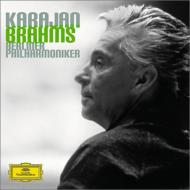 |
george1977 正式會員 222.xxx.xxx.52 |
2008-08-19 00:10 |
| [#8975] DGG再版1970年代卡拉揚在DG所灌錄的重要作曲家交響曲集 舒曼交響曲全集當中的第四號,還加入卡拉揚與維也納愛樂的現場轉播的名演。 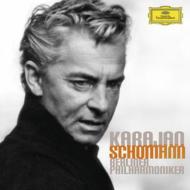 |
george1977 正式會員 222.xxx.xxx.52 |
2008-08-19 00:12 |
| [#8976] DGG再版1970年代卡拉揚在DG所灌錄的重要作曲家交響曲集 海頓交響曲集  |
george1977 正式會員 222.xxx.xxx.52 |
2008-08-19 00:13 |
| [#8977] DGG再版1970年代卡拉揚在DG所灌錄的重要作曲家交響曲集 孟德爾頌四首交響曲 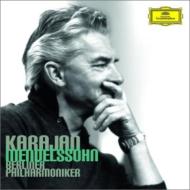 |
george1977 正式會員 222.xxx.xxx.52 |
2008-08-19 00:15 |
| [#8978] DGG再版1970年代卡拉揚在DG所灌錄的重要作曲家交響曲集 柴可夫斯基交響曲全集 (1975-79)  |
george1977 正式會員 222.xxx.xxx.52 |
2008-08-19 00:16 |
| [#8979] DGG再版1970年代卡拉揚在DG所灌錄的重要作曲家交響曲集 莫札特後期交響曲集 (1965,75-77)  |
george1977 正式會員 222.xxx.xxx.52 |
2008-08-19 00:17 |
| [#8980] DGG再版1970年代卡拉揚在DG所灌錄的重要作曲家交響曲集 貝多芬交響曲全集 (1975-77)  |
george1977 正式會員 222.xxx.xxx.52 |
2008-08-19 00:19 |
| [#8981] Sein letztes konzert hello trollope, So now you're back with a full basket of great discs from jp; the Tower Records and HMV there are really a blessing for classical fans. Well, i am not aware of this album of Backhaus. has it ever been issued on int'l version? Though i am not familiar with 1/2 of the programme, i will probably get it during my next trip to jp at end of year. Any more highlights from your hunt? |
wal 正式會員 202.xxx.xxx.5 |
2008-08-19 10:09 |