兩聲道
CD機 | MD機 | SACD機 | DAC | CAS | 合拼擴音機 | 前級擴音機 | 後級擴音機 | 接線 | 喇叭線 | 揚聲器 | 耳機 | 耳機擴音機 | LP產品 | 膽機產品 | 開卷式錄音機 | 音響配件 | DIY音響 | 電源 | 家庭影院
電視機 | 投影機 | 錄影機 | DVD影碟機 | Blu-ray影碟機 | 多媒體播放器 | 機頂盒 | 多聲道擴音機 | 多聲道揚聲器 | 多聲道影音組合 | Mini音響組合 | 重低音揚聲器 | 輔助設備 | 同好會
同好會 | Accuphase | B&W | Burmester | Denon | Jadis | KEF | KRELL | Luxman | Marantz | Nuforce | OPPO | Pioneer | TEAC | WEISS | News
News | Blog | 其他
其他 | 所有 |
| 影音天地主旨 ﹝請按主旨作出回應﹞ 上頁 下頁 首頁 尾頁 | 寄件者 | 傳送日期
|
| [#9482] Dr Daniel Barenboim Music, Barenboim has written, "provides the possibility, on the one hand, to escape from life but, on the other, to understand life much. It is one of the best ways to learn about human nature." When piano virtuoso Daniel Barenboim received his first-ever Honorary DMus degree awarded by SOAS, he remarked that if he weren't so busy professionally, he'd like to come and study at School. The award, presented by Baroness Helena Kennedy QC, SOAS President and leading human rights lawyer, was only the School's fifth honorary degree. For the award ceremony on 1 February, Barenboim broke off from his London programme of eight recitals in which he played all 32 Beethoven Piano Sonatas entirely from memory. But his honorary DMus recognizes far more than his virtuoso status. Barenboim is a cultural diplomat and a statesman. He holds – uniquely – both Israeli and Palestinian citizenship, and both practises and argues for tolerance in the Middle East. (by Professor Keith Howard, Music Department, School of Oriental and African Studies, University of London) *** My first Barenboim CD – which has in it one of my top 3 to 5 favourite readings of the Hammerklavier Sonata. Poetry (in a coherent whole) abounds in the air, and the made-in-West Germany CD benefits from a recording that has tremendous clarity.  |
Trollope 正式會員 正式會員202.xxx.xxx.233 |
2008-12-20 23:50 | |
|
|
|||
| [#9483] Dr Daniel Barenboim 請 我 一 個 感 動 的 力 量... http://www.southaudio.com.tw/Music%20ACY01.htm 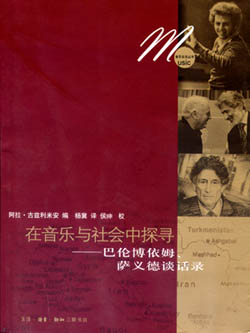 |
george1977 正式會員 61.xxx.xxx.107 |
2008-12-21 01:21 |
| [#9484] Dr Daniel Barenboim Is Barenboim talking with Edward Said? |
8po 正式會員 221.xxx.xxx.56 |
2008-12-21 01:33 |
| [#9485] 德奧鋼琴大師 布蘭德爾告別舞台 【中國時報 林采韻台北報導】 七十七歲的奧地利鋼琴大師布蘭德爾(Alfred Brendel)將在歐洲時間十八日於維也納愛樂協會黃金大廳,彈下自己職業生涯最後一個音符,正式告別舞台。他說自己在世界舞台馳騁六十年,現在正是畫下句點的時候,「我想在急流時勇退,而不是等到我身體官能開始退化後才離開。」 布蘭德爾彈奏的最後一首作品,是與維也納愛樂、指揮馬克拉斯(Sir Charles Mackerras)合作莫札特第九號鋼琴協奏曲《潔諾米》(Jenomy)。布蘭德爾解釋,之所以選擇這首曲子,因為它是一首完美的作品,也是莫札特作曲生涯的一大突破。 布蘭德爾以詮釋莫札特、貝多芬、舒伯特、李斯特作品為名,在國內外眾多鋼琴家眼裡,布蘭德爾的地位,在於傳承德奧鋼琴學派詮釋作品的精神,稱得上最後一位德奧大師。旅德鋼琴家葉綠娜指出,「德奧的鋼琴教育,教的不是技藝,而是對音樂思考的方式,重視對戲劇、文學等其他藝術的認知與體認,甚至將炫技視為非常丟臉的事情。」 布蘭德爾的指尖下,內藏的詩意與清新,充分反應他在鋼琴家之外的另一個身分─作家。他說,離開舞台後,將投入更多時間寫作、演講,及提拔後進。 http://news.chinatimes.com/Chinatimes/newscontent/newscontent-artnews/0,3457,112008121900037+110513+20081219+news,00.html  |
george1977 正式會員 61.xxx.xxx.107 |
2008-12-21 06:49 |
| [#9486] 德奧鋼琴大師 布蘭德爾告別舞台 Although based in London, Brendel chose to say farewell in Vienna's glittering Musikverein, 90 miles away from Graz, where he began his career. He has played in the hall more than 120 times  |
george1977 正式會員 61.xxx.xxx.107 |
2008-12-21 06:50 |
| [#9487] 德奧鋼琴大師 布蘭德爾告別舞台 His choice of repertoire was a peculiarly Brendel-ish joke: on the programme was Mozart's Piano Concerto No 9 in E flat, K271, nicknamed the Jeunehomme ('Young Man')  |
george1977 正式會員 61.xxx.xxx.107 |
2008-12-21 06:51 |
| [#9488] 德奧鋼琴大師 布蘭德爾告別舞台 Alongside him on the podium was conductor Charles Mackerras, a longtime collaborator  |
george1977 正式會員 61.xxx.xxx.107 |
2008-12-21 06:52 |
| [#9489] 德奧鋼琴大師 布蘭德爾告別舞台 Also there on the night were some of Brendel's star pupils: (from left) Paul Lewis, Kit Armstrong, Imogen Cooper and Till Fellner  |
george1977 正式會員 61.xxx.xxx.107 |
2008-12-21 06:54 |
| [#9490] 德奧鋼琴大師 布蘭德爾告別舞台 Brendel announced his retirement just over a year ago. The news raised some eyebrows because the 77-year-old pianist is widely considered to be at the peak of his powers  |
george1977 正式會員 61.xxx.xxx.107 |
2008-12-21 06:55 |
| [#9491] A master bows out @ Imogen Cooper The great pianist Alfred Brendel performs his last concert this week. His former pupil Imogen Cooper salutes a musical colossus] I first heard Alfred Brendel perform in the late 1960s, in a tiny room in the Austrian Institute in London. I was 19. He played Schubert and Chopin, and was sensational. I marched up to him afterwards and said: "I must work with you or I'll die." He invited me to Vienna the following spring. So off I went, for six weeks. He was a wonderful teacher. He is extremely articulate and very demanding. He made no concessions to my age. In my first lesson, I was playing a Schubert piano sonata, and the first chord took 20 minutes. I played it again and again, and Brendel wandered around the room saying: "No, balance of sound wrong ... Too much bass ... Not quite the right colour." I started hearing from inside his head. Eventually, I played the chord and he turned around and said, "Thank you," and I knew it was right. But then, so help me God, I had to play the next chord. On the platform, Brendel can come across as an austere figure. He is somebody for whom playing the piano hasn't come as easily as it has for other great names. He has to practise a lot - at least, he believes he has to practise a lot. He would be the first to say that he doesn't have a phenomenal memory, so when he walks on to the platform it is probably as much of a challenge for him as it is for the rest of us. He has always had a tremendous sense of vocation, a mission to transmit what he knows and what he feels. To call Brendel cerebral would imply too much coldness. He has always been very thoughtful: he is a fully rounded musician, not just a pianist. Listening to him play Schubert, Mozart, Beethoven, Liszt, you have a sense of his deep understanding of the idiom of these composers. He is aware of every marking, and understands what that marking means - what Schubert marks as a dot and what Mozart marks as a dot isn't always the same thing. Brendel's programmes are very organic. For him, it's a question of making connections: he is a brilliant programmer. I remember, in November 1973, a concert at the Royal Festival Hall where he played Haydn sonatas interspersed with Bart鏦's first concerto and Schoenberg's piano concerto, which he played an important role in bringing to the mainstream repertoire. To hear him play Haydn is to hear him at his most cheeky. Quite often, when he finishes a piece, he turns to the audience with a wicked grin on his face and they erupt into laughter - as they should. When he is stressed and tense, Brendel can be closed and caught up in his own world, but when he is relaxed and happy, his humour is very much to the fore. He enjoys opening up to whatever is around him. We were in Minneapolis together earlier this year, and we went to the Institute of Arts. I couldn't keep up with him. He was running from room to room, telling me about every painting, what it reminded him of, what school it came from, what painting it was paired with. He was just throwing out this information, and there was this tremendous energy and lightness. We've only once performed a duet together in public. It was several years ago, in Paris - the Schubert F minor Fantasy. Playing four hands can present an actual physical problem: we're both very tall and generally one partner gets massacred by the other. No prizes for guessing who that was.  |
george1977 正式會員 61.xxx.xxx.107 |
2008-12-21 06:59 |
| [#9492] Brendel bows out: Master quits stage with shrug an Alan Rusbridger in Vienna The Guardian, Saturday 20 December 2008 At 8.13pm on Thursday night, one of the greatest pianists of his, or any, age sat down to play in public for the last time. Alfred Brendel spread his tails behind him, adjusted the stool and, for the final time, beamed his readiness to the conductor. Two weeks before his 78th birthday, he was ready to bring down the final curtain while still at something like the peak of his powers. To choose such a moment of finality is, for a pianist, a comparatively rare thing. Arthritis gets some in the end; others die in harness; for some, the phone gradually stops ringing. Brendel decided he would rather be in control of the moment. His chosen exit was characteristic. Not for him a last Prospero-style pronouncement - not Beethoven's Op 111 or Schubert's D960, but instead, a youthful Mozart piano concerto, K271 in E flat. And he chose the Musikverein in Vienna, that gilded, white-tied and chandeliered temple to high culture. Brendel may love living in London, but it was to Vienna that he returned to mark the journey that had begun 60 years previously, 90 miles away in Graz. He has played in this hall more than 120 times during those years: it was here that it had to end. Brendel has described this Mozart concerto as "a wonder of the world", quoting Busoni, who said that it is both "as young as a youth" and "as wise as an old man". The first of the piece's startling breaks with tradition is that the piano enters in the second bar, before the orchestra has had a chance to describe the landscape. Brendel kept his hands on his lap for the first bar and a half, as if trying to trick even this most knowing of audiences. It was a typical moment of pure theatre. The performance was everything we have come to expect of Brendel: technically assured and unshowy; surprising in both small and large ways; sensitive and intensely thoughtful. If the occasion got to him at all, it showed only in the quiet passages, when he vocally willed himself to capture the pathos, the flashes of humour and the serene beauty of the melodic line. The slow movement was an extended dialogue with the Vienna Philharmonic Orchestra, under the baton of his 83-year-old friend Sir Charles Mackerras - the piano sometimes passive, sometimes urgently assertive, sometimes imploring and plaintive. Some may have expected a playful finale, but we didn't get it. There was a tone of gentle, elegiac acceptance; though a hint, too, of not wanting the music to end quite yet. Nor did it. The hall rose to thunder out such respect that Brendel returned to play the haunting arrangement by Busoni of Bach's chorale Nun Komm, der Heiden Heiland. The orchestra and audience listened in total silence, then demanded more. Brendel shrugged. He waved a coquettish goodbye. He crossed his arms over his heart and bowed. After half a dozen returns, he played - for one last time - Liszt's Au Lac de Wallenstadt. In an irony that would not have escaped him (he has written a poem on the subject), he played to the accompaniment of a ghostly mobile phone ringtone for a few bars. He had first played Liszt in this hall 51 years ago. These last minutes marked not only the end of his career, but the severing of the thread that links generations of the great instrumentalists. At the end of all the appplause - perhaps 20 minutes in all - Brendel smiled with what looked like a surge of relief and gestured down into the audience, which included all four of his significant pupils: Kit Armstrong, Imogen Cooper, Paul Lewis and Till Fellner. He seemed to be saying, "That's me. Now it's over to you." And so the baton was passed on to the next generation. For Brendel, the rest is - in public, at least - silence. http://www.guardian.co.uk/music/2008/dec/20/classicalmusicandopera-germany |
george1977 正式會員 61.xxx.xxx.107 |
2008-12-21 07:07 |
| [#9493] Six of the best Is there life after Brendel? Andrew Clements picks today's other unmissable pianists Piotr Anderszewski, 39 The Polish-born Anderszewski first attracted attention by not winning the Leeds piano competition in 1990, after he had abandoned his semi-final recital because he felt he wasn't playing well enough. That fierce self-criticism persists - he recently repeated a Bach partita in a recital because he felt he'd delivered it so badly the first time. Yet there's a buoyancy and rhythmic clarity that give his performances a special charge. His repertoire includes Bart鏦 and Szymanowski, but Bach has become a speciality recently, alongside his limpid accounts of Mozart piano concertos. • At Perth Concert Hall, March 18; Queen's Hall, Edinburgh, March 19; City Halls, Glasgow, March 20. Stephen Hough, 47 There must be something in the psychology of British audiences that requires their musical icons to be acquired from abroad. Otherwise Hough would already be acclaimed as a national treasure, for over the past decade or so he has consistently produced performances that place him in the top flight of international pianists. Perhaps the variety of his programming tells against him, too - as well as Mozart, Beethoven and Schubert, he also revels in the flashy late-Romantic repertoire, and includes salon pieces in his recitals, all of it delivered with immaculate polish and unerring style. • At Wesley Chapel, Harrogate, January 3; Royal Festival Hall, London, January 18. Mitsuko Uchida, 59 For London audiences, the Japanese-born Uchida is a firm favourite. She took second prize in the 1995 Leeds piano competition, and quickly established her reputation as an interpreter of the Viennese classics and of Mozart in particular, going on to demonstrate a huge range of musical sympathies in a repertoire that ranges from Bach to Birtwistle, and seems to expand every season. Her insatiable curiosity and enthusiasm make her a wonderful chamber musician, too, but it's the intensity and honesty of her solo performances that make her such a compelling favourite. • At the Hexagon, Reading, January 15; the Sage, Gateshead, January 19. Andras Schiff, 54 In some quarters the Brendel-style canonisation of Schiff has already begun, with his performances of Beethoven, in particular, greeted with a similar hushed reverence. Schiff can be a remarkable interpreter, especially in the Viennese classics, where his pure tone and phrasing produce performances of emotional directness, and his recitals are put together with great imagination and attention to detail. At other times, though, his point-making and expressive moulding can seem so mannered and arch that the flow of the music is all but destroyed, and one longs for him just to play with his natural, instinctive intelligence. • At the Steven Isserlis birthday concert, Wigmore Hall, London, tomorrow. Murray Perahia, 61 Already awarded an honorary KBE, the New York-born pianist, who won the Leeds piano competition in 1973, has a devoted following. Because of a recurring hand problem, Perahia's concert appearances and recordings have been sporadic over the past decade. His repertoire ranges up to Bart鏦, but it's in the Viennese classical repertoire especially that Perahia remains such a rewarding interpreter. In recent years, too, Bach has become a regular feature of his programmes, played, like everything else, with an immaculate sense of style, honeyed tone and punctilious attention to detail. • At Symphony Hall, Birmingham, January 31; Barbican, London, February 5 Radu Lupu, 63 Another Leeds winner, in 1969, Lupu is an enigma, a reclusive artist who for 30 years has refused to play the publicity game, and, in Britain at least, has preferred to appear in smaller concert halls around the country rather than high-profile London venues. His repertoire has remained confined within Mozart, Beethoven, Schubert and Schumann, with occasional forays into the later 19th century. Yet in the right mood and on the right occasion, he is a priceless, unique artist, whose ability to illuminate music from within places him apart from his contemporaries as one of the greatest musicians of our time. • At the Steven Isserlis birthday concert, Wigmore Hall, London, tomorrow. http://www.guardian.co.uk/music/2008/dec/15/classical-pianists-music-alfred-brendel |
george1977 正式會員 61.xxx.xxx.107 |
2008-12-21 07:20 |
| [#9494] 'I've had a lot of fun' Alfred Brendel talks to Stephen Plaistow about inspirations, aching limbs and mastering Mozart How do you feel about retirement? I wanted to stop while I am still in pretty good shape, the difference with my colleagues being that I'm not addicted to giving concerts. I've never been just a pianist, or even just a musician; there is actually a lot I want to do. I wanted to stop two-and-a-half years ago, aged 75, but friends persuaded me to go on. I started giving recitals 60 years ago, in Graz. One year later, I went in for the Busoni [pianists'] competition and carried off one of the prizes. But for me, a musical career was always a long-term proposition. I had an idea that I wanted to achieve certain things by the time I was 50. Fortunately, it has gone on from there - there was still plenty to learn. [But] now it shouldn't be drawn out until some of my faculties deteriorate, or until I become a glorification of arthritis. Will you miss giving concerts? What I will miss, probably, is the adrenalin - its medical benefits. It takes away some pain, from nerves, muscles, joints, so I shall have to see how I can replace that. As to the public, I am most grateful - in spite of all those obnoxious coughers and the mobile telephones and hearing aids going off. They have kept faithful when I changed the diet of my concerts about 15 years ago, when I had some trouble with my left arm. For quite a few years I have been one of the pianists who sells out halls, wherever [they] may be. It made me wonder if my playing was really as cerebral as some people made out. These farewell concerts have turned out to be enlightening. When I have been told, "You are leaving a big hole in the lives of so many people," I felt glad that I could leave something behind, even if it's a hole. I always also had a literary life, and I shall pursue this quite a bit more. I shall give lectures, readings of my poetry - and I will have more time to look after a few young pianists. At the moment, there's Kit Armstrong, a 16-year-old boy who is a real prodigy. He has composed since he was seven. He is also a mathematical wizard, the most natural Bach player I have ever met. He has a phenomenal memory. Watching this boy, I understood much better how the mind of somebody like Mozart or Schubert or Bach worked. The mind simply works 10 times faster than ours, and with complete concentration. You have always been a great concerto player, and are ending your playing career with two of the Mozart concertos, the early one in E flat, K271 - "Jeunehomme" (which you like to refer to as one of the wonders of the world), and the C minor, K491. I started playing Mozart in my teens but I had a hard time with his piano music. And then, as an 18-year-old, I went to the great Swiss pianist Edwin Fischer's masterclass and played the A minor Sonata there, and that opened the door [to his music]. I played Mozart's concertos for years in Vienna and Salzburg. That was my early Mozart period. Later, there was another Mozart period, starting 12 or 15 years ago, where I dared to tackle the sonatas, too. [Pianist Artur] Schnabel's remark about them is still the best: "Too easy for children, too difficult for artists." One couldn't say it more concisely. In my young years, the notion that Mozart was predominantly graceful was widespread. But there were people who were of the other camp, people such as Fischer, Bruno Walter and Schnabel, who let the demon in when the music was demonic. I think in my 1960s period, I was more on the graceful and poised side, and only later began to perceive Mozart's full range. The violinist S嫕dor V嶲h once asked what I thought constituted good Mozart playing, and I said a combination of singing and speaking. I still think this is so. The ninth piano concerto, K271, has one of Mozart's greatest cadenzas, and a movement in C minor - one of my favourite keys, which was as important to Mozart as it was to Beethoven. I once wrote a poem in which Beethoven murders Mozart in order to take full possession of the key of C minor. The Ninth is the concerto where everything is written out, every note, every lead-in and decoration, which didn't happen in the later works, since they were not finished for print. Thanks to musicologists we now know more about the so-called "Jeunehomme" Concerto. It used to be thought Mozart couldn't spell the name, and, in fact, it was [written for a pianist] called Jenomy or Jenom, the daughter of a famous dancer. I haven't seen a picture of her and there are no accounts, but I like to think she must have been very good-looking to have inspired him to write this phenomenal piece. It is as if his earlier concertos are by another composer. Suddenly there is a structure and the most wonderful ideas, formal ideas, and a vision of everything the classical piano concerto could become, in subtlety and richness. For me, it is a perfect work, with that special freshness of something done for the first time and succeeding at the same time. As a pianist, do you work more by intellect or instinct? I have never been somebody who analyses a piece and then plays it. I want to know the piece well and for it to tell me what it is about, and what is special about it. Structures are relatively easy to get, [but] some people maintain, particularly in Germany - following the writings of the composer and critic Theodor Adorno - that when you have grasped the structure, the character will come by itself, it is implied; but that is not at all the case. I have always felt actors to be an inspiration. On stage, they have to turn into a character, to impersonate many different characters: I feel they are my colleagues. Some musicians do not appear to have thought about it, or maybe it is not taught that you cannot sit there starting the Moonlight Sonata with a smile on your face. What I want to get is the message from the piece, which doesn't mean that I block myself out. There is always this simplification: "Oh, you know, Brendel is the most modest of people." But I don't expect to get directions from heaven. I've found it possible to talk about music without talking nonsense, and I think you should always be a little witty. And I want to say this about music in general - I've also had a lot of fun. I was never a tortured person. • A fuller version of this interview appears in Gramophone magazine, published today. Essential Brendel Beethoven: Complete Piano Sonatas, Philips (11 CDs) Pared down to the bare bones of musical truth. Schubert: Piano Sonatas D 575, 894, 959 & 960, Philips (two CDs) Later performances - memorable A major and B flat sonatas. Beethoven: Piano Concertos, Philips (three CDs) With Simon Rattle in the late 1990s. Haydn: Piano Sonatas, Philips (four CDs) Few have championed this music more persuasively. Mozart: Piano Concertos K271, 450, 482, 503, 595, Philips (two CDs) With Neville Marriner in the 1970s. Liszt: Ann嶪s de P鋩erinage, Third Year etc, Philips (one CD) One of his finest discs. Andrew Clements http://www.guardian.co.uk/music/2008/dec/15/alfred-brendel-pianist-classical-music  |
george1977 正式會員 61.xxx.xxx.107 |
2008-12-21 07:27 |
| [#9495] Brendel bows out: Master quits stage with shrug an MERRY CHRISTMAS & HAPPY NEW YEAR :-) http://hk.youtube.com/watch?v=MUlOMc-2QvA&feature=related :-)  |
lascalawong 正式會員 220.xxx.xxx.94 |
2008-12-24 09:50 |
| [#9496] Merry Christmas & Happy New Year ! Silent Night ....  |
trazom 正式會員 58.xxx.xxx.66 |
2008-12-24 15:05 |
| [#9497] Merry Christmas & Happy New Year ! A question on music of primary 3 level (according to TVB program "係咪小兒科"). What language is the original lyrics of Christmas carol "Silent Night" written in ?" Answer: from http://en.wikipedia.org/wiki/Silent_Night Silent Night (Stille Nacht, heilige Nacht) is a popular Christmas carol. The original lyrics of the song Stille Nacht were written in German Merry Christmas |
erictang 正式會員 203.xxx.xxx.242 |
2008-12-24 16:01 |
| [#9498] Merry Christmas & Happy New Year ! Stille Nacht  |
Trollope 正式會員 202.xxx.xxx.233 |
2008-12-24 16:44 |
| [#9499] Merry Christmas & Happy New Year ! 每年拿出來播一次的 CD  |
Trollope 正式會員 202.xxx.xxx.233 |
2008-12-24 16:48 |
| [#9500] Merry Christmas & Happy New Year ! Merry Xmas and Happy New Year to all classical friends at Review33  |
george1977 正式會員 61.xxx.xxx.107 |
2008-12-24 17:07 |
| [#9501] Giulini 另一個《德意志安魂曲》錄音 1978年在愛丁堡音樂節與倫敦愛樂合作演出的布拉姆斯《德意志安魂曲》,已經在BBC現身,這個實況錄音與 Giulini 1987年在DG的正規錄音,時間相隔9年,演奏時間差了近5分鐘,兩者的獨唱陣容也不同,BBC版多了男中音 Dietrich Fischer-Dieskau (1925-)及女高音 Ileana Cotrubas 的加持,Giulini 迷不會錯過。  |
george1977 正式會員 61.xxx.xxx.107 |
2008-12-24 17:10 |