兩聲道
CD機 | MD機 | SACD機 | DAC | CAS | 合拼擴音機 | 前級擴音機 | 後級擴音機 | 接線 | 喇叭線 | 揚聲器 | 耳機 | 耳機擴音機 | LP產品 | 膽機產品 | 開卷式錄音機 | 音響配件 | DIY音響 | 電源 | 家庭影院
電視機 | 投影機 | 錄影機 | DVD影碟機 | Blu-ray影碟機 | 多媒體播放器 | 機頂盒 | 多聲道擴音機 | 多聲道揚聲器 | 多聲道影音組合 | Mini音響組合 | 重低音揚聲器 | 輔助設備 | 同好會
同好會 | Accuphase | B&W | Burmester | Denon | Jadis | KEF | KRELL | Luxman | Marantz | Nuforce | OPPO | Pioneer | TEAC | WEISS | News
News | Blog | 其他
其他 | 所有 |
| 影音天地主旨 ﹝請按主旨作出回應﹞ 上頁 下頁 首頁 尾頁 | 寄件者 | 傳送日期
|
| [#9563] Why do so few classical musicians take jazz ? Several years ago, I gave a pre-concert talk at the Purcell Room in London with an eminent fellow composer who, in response to an audience member's question, declared that "jazz is all cliche". He honestly believed jazz musicians simply repeated a series of stock, prelearned phrases when they were improvising. It is an opinion that, to this day, makes my blood boil, one that completely misunderstands the spirit and the philosophy of jazz improvisation. Sadly, it is a view that permeates so much of the classical/contemporary music world. Jazz has been a big part of my life since my mid-teens. I grew up in Essex, which in the 1970s was the heartland of Britain's jazz-funk scene. I used to visit clubs such as the Lacy Lady and the Goldmine and go to the Caister Soul Weekenders in Great Yarmouth, where they would play music by Roy Ayers and Lonnie Liston Smith and Herbie Hancock. From there, I worked my way backwards, via Hancock and Wayne Shorter and Weather Report, until finally I got into Miles Davis, Duke Ellington, and backwards further to Bix Beiderbecke and Jelly Roll Morton. During my spell at the Royal College of Music, which started as a 15-year-old in 1975, I immersed myself in jazz. I listened to as much as I could, absorbed an understanding of its theories, and became obsessed with Miles Davis, who became my ultimate musical hero. Partly, I suppose, it was a form of working-class rebellion against the strictures of the conservatoire, but another part of my interest in jazz was an interest in musical hybridity. A lot of my favourite classical music had borrowed from other forms of music. Stravinsky is my favourite composer, and I loved the way he incorporated elements of Russian folk music in his compositions. Listening to him, you start to notice how different folk musics around the world link up, be it from eastern Europe or the Mediterranean or Africa, all sharing the use of bent notes and pentatonic scales, and so on. Stravinsky also drew from jazz, especially when he wrote the Ebony Concerto for the Woody Herman band. The clarinet concerto that Aaron Copland wrote for Benny Goodman in 1948 is another favourite of mine, and I'm a big fan of the French composer Darius Milhaud, who borrowed from jazz. I love in particular Milhaud's ballet La Creation du Monde, which showed that, even as early as 1922, he had absorbed some of the harmonic and rhythmic sophistication of the form and put it through his own filter. That said, I have a suspicion of the way in which many composers try to incorporate jazz into their work. Much as I love Sir Michael Tippett, for instance, there's something very clumsy about the way he uses ride cymbals playing swung quavers to signify "jazz". It's the same with Leonard Bernstein, another composer whose music I love, but someone whose use of jazz idioms can be very superficial. It reminds me of that excruciating feeling you get when you hear opera singers trying to sing jazz. So, when I first started working with jazz musicians in my 1996 piece Blood On the Floor, I was terrified. I was working with two great American jazz musicians - guitarist John Scofield and drummer Peter Erskine - and I knew I was moving into territory that would be viewed with a great deal of suspicion by jazz and classical musicians alike. It turned out to be the most rewarding period of my composing career to date. The collaboration process was a particularly interesting one. In my straight classical works, I had always scored everything to the nth degree, always maintaining total control of what happened in my pieces compositionally. The biggest lesson for me was letting go of this, and allowing musicians to compose on top of what I had already written. Having someone like Scofield or the tenor saxophonist Joe Lovano playing my work also changed the way I write. My work now is less fussily notated and gives more space for the performers to express themselves. The more space I gave to the improvising musicians, the more effective it would sound and the more comfortable they would be playing it. The pieces also change and develop as they're performed. What also impressed me was how open-minded so many jazz musicians are. Having worked with Scofield or Erskine or Lovano, or the bassists John Patitucci and Dave Holland, or the British pianist Gwilym Simcock, you notice how knowledgeable they are about other forms of music, even contemporary classical composition. If you're an improvising artist, I suppose it's natural that you're going to be absorbing new ideas in order to aid creativity. Jazz musicians will know about Xenakis, for instance. But it doesn't really work the other way around. That's a huge resource for contemporary composers - something that wasn't available to orchestral composers, say, 50 years ago. I'm always surprised there aren't more contemporary orchestral composers borrowing from jazz. But then, in a way, I don't mind - it gives me a clean sweep of the saxophonists and guitarists I want to work with. But it's sad how uncomfortable a lot of classical musicians seem when they try to improvise. I remember once going to a clarinet recital. The clarinettist said: "And now, for a lighter moment, I'm going to play some jazz." I wanted to go on stage and hit him - he seemed to regard jazz as more trivial than the other stuff he was playing. And, of course, he was shit. He bent every single note and completely misunderstood the subtleties of improvisation. A lot of classical musicians, when they try to play jazz, think you have to "swing" on every single note. You don't. When you really listen to Miles Davis or Gil Evans, it's often quite rhythmically straightforward. "Swinging" is much more complex. Sometimes it might mean laying back on the beat, playing relaxed and lagging behind; sometimes it might mean playing slightly fast, finishing your phrases too early. And that's something you can't train anyone to do - you only really understand it by listening to jazz and playing with other jazz musicians. It can be a challenge when you're trying to get an orchestra to play in that style, because it's not part of their makeup. It can just sound stilted or stiff - you sometimes have to get the jazz musicians to actually play certain phrases to illustrate the sound to the rest of the orchestra. I'll admit that's sometimes the case with my work - there are elements of Blood On the Floor that don't really work, and that irritates me. It has made me want to get it better each time. I'm hoping to incorporate a large element of improvised jazz into the piece I'm working on for the Royal Opera House, an opera about the life of Anna Nicole Smith. I'm collaborating with Richard Thomas (who co-wrote Jerry Springer the Opera, with Stewart Lee), and I hope it's going to be funny. I'm sick of going to see angsty stuff. What I hope to achieve with my improvised pieces is a seamless transition between the written-down parts and the improvised sections. These collaborations are not only a journey for me and the jazz musicians involved: I've noticed how the attitudes of the accompanying orchestras change, as well. Initially, there are looks of horror when they arrive to the first rehearsal to find Pete Erskine setting up his drum kit amid the middle strings, or John Scofield plugging his guitar into a bank of effects pedals. By the end of the week, they are sitting in during breaks to watch the jam sessions. The collaborative process is always rewarding. I like the fact that everyone learns from each other: the classical musicians can see how these players communicate close up, and can appreciate their rhythmic unity; the jazzers enjoy being in different venues, playing to new audiences who may not be regular visitors to jazz clubs, and most importantly the camaraderie of being accompanied by a symphony orchestra. If I can be part of bringing these two worlds together, I feel as if I have succeeded. I only wish I could be up there playing with them. Believe me, I have tried to play jazz - both on the piano and, for a few years of delusional behaviour, on the saxophone. Luckily for you all, I now only do that in the privacy of my own home. >> Igor Stravinsky ... his Ebony Concerto drew from jazz. Photograph: Ray Fisher/Getty http://www.guardian.co.uk/music/2008/nov/07/jazz-classical-music-turnage 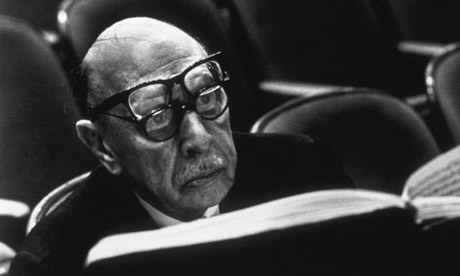 |
george1977 正式會員 正式會員61.xxx.xxx.107 |
2009-01-09 22:50 |
| [#9564] 由Medici Masters首度發行Klemperer的貝多芬第九號現場錄音 在這幾年來Testament等獨立廠牌的努力下,克倫培勒 (Otto Klemperer) 的貝多芬交響曲錄音、錄影突然變多了。1958年1月6日,克倫培勒與 K闤ner Rundfunk-Sinfonie-Orchester的貝多芬第九號現場錄音,也將由Medici Masters首度發行CD。 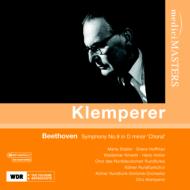 |
george1977 正式會員 61.xxx.xxx.107 |
2009-01-09 22:57 |
| [#9565] Perahia 貝多芬鋼琴協奏曲 DVD 全集 Murray Perahia與指揮家 Sir Neville Marriner錄製的貝多芬鋼琴協奏曲影像版全集,即將由Euroarts發行DVD,過去,這個1988年的演出,是個精緻、平衡的詮釋。  |
george1977 正式會員 61.xxx.xxx.107 |
2009-01-09 23:03 |
| [#9566] 誰說聽 Pablo Casals 的巴赫無伴奏,選什麼版本都可以? Pablo Casals (1876-1973)著名的巴赫大提琴無伴奏,從早年EMI的初版CD,到ART系列、GROC系列,歷經多次 reissue 再版,其中還包括日本東芝EMI的2088系列發行,但2000年Naxos版的推出,將EMI官方版本比下去,Naxos版不像聽Pearl版,不但更為悅耳,且有更強的低頻延展。 2003年,日本Opus5也推出這個名盤的新復刻,強烈的競爭幾乎讓EMI版招架無力。  |
george1977 正式會員 218.xxx.xxx.227 |
2009-01-09 23:10 |
| [#9567] 值得期待的 Otto Klemperer的 reissue 繼推出克倫培勒 (Otto Klemperer)的貝多芬第五、第七號交響曲後,Naxos發行他著名的1955年第三號(另含兩首序曲)名盤也緊跟著再版。Remastering 工程師仍是 Mark Obert-Thorn,對追求更佳復刻音質的樂迷同好,這樣的再版和低廉售價,是值得期待的  |
george1977 正式會員 218.xxx.xxx.227 |
2009-01-09 23:15 |
| [#9568] 當食物撞上音樂 @ 焦元溥 焦元溥/聯合晚報 去年是法國作曲家梅湘 (Oliver Messiaen)百年紀念,倫敦上演整整一年的梅湘音樂節慶祝。在梅湘生日當天,他當年最喜愛的學生,今日英國乃至全世界最傑出作曲家之一的班傑明 (George Benjamin)特別舉辦演講,談這位大師的作品與為人。 當年他和梅湘學習時不過十六、七歲,梅湘每週竟花十五小時指導,師生無話不談。一日班傑明問老師,為何他從不討論英國作曲家和作品?想不到梅湘誠實且直接回答:「我的確對英國作曲家不感興趣,因為我實在不相信一個食物那麼糟糕的國家,能夠培養出什麼優秀作曲家。」 食物和音樂的關係,也反應在梅湘對班傑明的「機會教育」。班傑明在巴黎「發現」中國菜,方知天下竟有如此美味食物。他興奮地告訴老師自己的發現,細說各式菜色與風味。梅湘聽完,面帶微笑,欣慰地對這位來自英國的學生說:「太好了!你真是在進步!」 班傑明曾在1980年來過台灣。不用說,自然也大讚台灣美食,認為口味勝過他所品嚐過的所有中國菜。他不忘向梅湘報告自己在台灣的佳餚見聞,而大師也不忘再一次提醒:「英國人能懂食物,那還真是難得!你既然已經懂得吃,希望你更要好好努力,我想你作曲也一定會不斷進步!」 身為在場唯一台灣學生,聽到梅湘百年冥誕演講居然以台灣美食結尾,自感與有榮焉。而每次我聽到英國鋼琴家、作曲家賀夫 (Stephen Hough)和我推薦英國食物,我總百感交集—真按他建議去找了些傳統英國菜,在擬]還能勉強嚥下;若是買回家烹調,沒嚐幾口也就只能分送鄰居。 但賀夫自己的鋼琴演奏甚具格調,作曲也頗有水準,為何還能忍受英國食物?這是我完全無法理解之事。不過話說回來,說不定正是如此背景,方能磨練出他的過人修養與正向思考能力。比方說,賀夫就是我所認識音樂家中,唯一能從郎朗表演中說出些鹿u點的人—自身藝術出淤泥而不染,又能從垃圾裡看到回收之價值,或陪^國食物培養出的音樂家,反而能有不一樣的能耐吧! 祝福大家新年快樂。不用吃爛食物,更該有好品味。 http://paper.udn.com/udnpaper/PIC0002/148892/web/  |
george1977 正式會員 61.xxx.xxx.107 |
2009-01-10 14:14 |
| [#9569] Schumann's Frauenliebe und Leben 舒曼聯篇歌曲-女人的愛情與生活(Frauenliebe und Leben) op.42 作於1840年,共八首,譜自Adelbert von Chamisso的詩作,道出女子一生從邂逅,鍾情,訂盟,下嫁,為母,至喪偶的不同階段. 歌詞英譯 http://www.recmusic.org/lieder/assemble_texts.html?LanguageId=7&SongCycleId=70 第四首, 關於訂盟 Du Ring an meinem Finger (Thou ring on my finger) Thou ring on my finger, my little golden ring, I press thee piously upon my lips piously upon my heart. I had dreamt it, the tranquil, lovely dream of childhood, I found myself alone and lost in barren, infinite space. Thou ring on my finger, thou hast taught me for the first time, hast opened my gaze unto the endless, deep value of life. I want to serve him, live for him, belong to him entire, Give myself and find myself transfigured in his radiance. Thou ring on my finger, my little golden ring, I press thee piously upon lips, piously upon my heart. 女高音 Elly Ameling 演唱, Dalton Baldwin 鋼琴伴奏 http://tw.youtube.com/watch?v=KG_lkbv_ik8&feature=related 賣飛佛 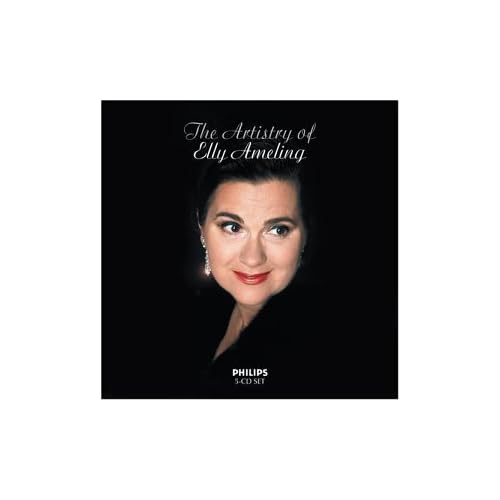 |
JT 正式會員 202.xxx.xxx.196 |
2009-01-12 16:54 |
| [#9570] Schumann's Frauenliebe und Leben 速度稍慢, 卻溫婉動人. (圖書館有得借) 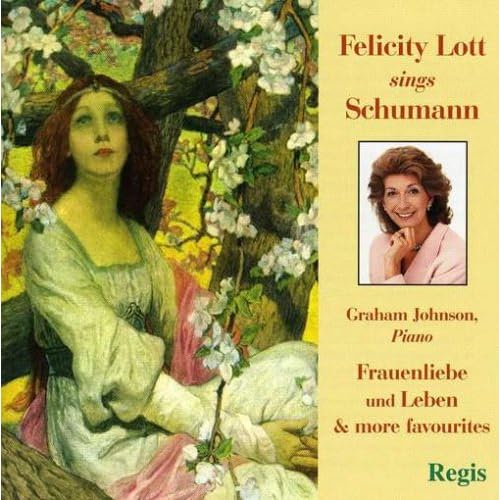 |
JT 正式會員 202.xxx.xxx.196 |
2009-01-12 16:55 |
| [#9571] Schumann's Frauenliebe und Leben 女中音之選, Christa Ludwig芳華正茂. 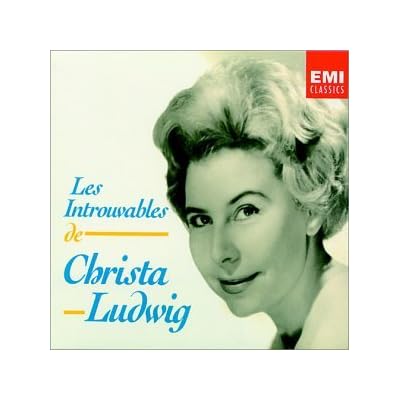 |
JT 正式會員 202.xxx.xxx.196 |
2009-01-12 16:56 |
| [#9572] Schumann's Frauenliebe und Leben 女低音版本, 這應該是你的唯一選擇. (圖書館有得借) 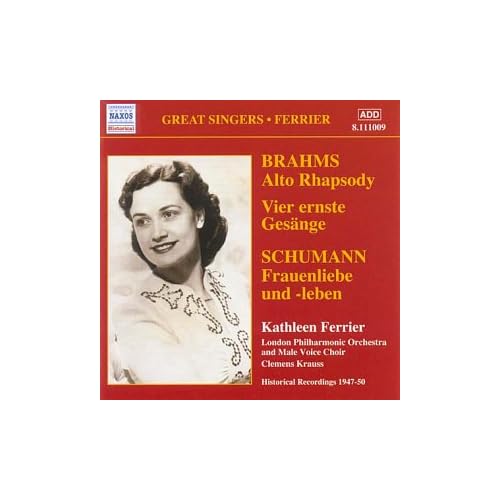 |
JT 正式會員 202.xxx.xxx.196 |
2009-01-12 16:57 |
| [#9573] Schumann's Frauenliebe und Leben 常青的 janet Baker 是長駐 EMI 的當家花旦. 她的氣質及音樂修養高,唱什麼都有該有的味道, 對 Schubert, Schumann 的歌曲更有深入的了解,但被忽略了 。 youtube 可聽到 Janet Baker: youtube 也可聽到著名的 Lotte Lehmann: 但好像沒有 Elizabeth Schumann. 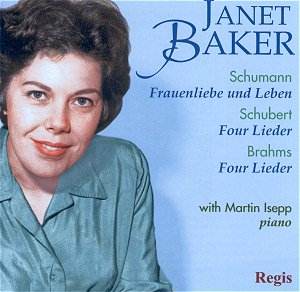 |
doctorjohn 正式會員 218.xxx.xxx.157 |
2009-01-14 10:04 |
| [#9574] 把鋼琴踢出家門的法國鋼琴王子 - Alexandre Tharaud Tharaud 彈奏 Couperin 的“Tic Toc choc”MV 則加入了極潮的Hip Hop的動感元素,豐富活潑的生命力,現代舞蹈的姿勢動作足以令人會心微笑,原來巴洛克 (Baroque) 音樂都可以同街頭Hip Hop做 Crossover! 以前我僅僅喜歡 Cziffra 和 Sokolov 的演奏,現在聽完 Tharaud , Cziffra 和 Sokolov 的演奏可以 Forget about it! ^.^ 錄音質素是示範等級, 同DGG比較,DGG應歸入close-mike,細節極多; Harmonia Mundi 屬於反射出豐富的堂音,可以聽到琴弦震動的清澈泛聲,和諧又悅耳! 好似置身錄音場地之中! 好正!  |
george1977 正式會員 218.xxx.xxx.87 |
2009-01-15 09:08 |
| [#9575] 把鋼琴踢出家門的法國鋼琴王子 - Alexandre Tharaud Tharaud 詮釋的蕭邦 (Chopin)音樂,既能展現音樂的柔媚面(圓舞曲 Waltzes),卻也可以不落俗套的大膽澎湃(前奏曲 Preludes),Tharaud 特別注入妖豔的風格,具有見樹亦見木的觀點,足以成為近年代表性的演奏錄音之一。前奏曲錄音,Tharaud 特地選擇一部聲音近似1950年代的STEINWAY 鋼琴來錄音,所呈現出的聲音感受,似乎也有幾分向前人世代致敬的意味。同樣是蕭邦,他的《前奏曲》可以冷靜優雅,《圓舞曲》卻又延續過往大師 Alfred Cortot 等人的自由風格,在21世紀重現百年前富於浪漫色彩的詮釋風華。他強烈的自我風格巧合地與 Arthur Rubinstein 雄性陽剛的 “健康” 詮釋方法大異相趣! 但兩者都是合理而有有說服力的演奏! Arthur Rubinstein傾向使用樂譜中所指示的平穩速度和乾脆利落的技藝指法; Tharaud 則相對使用彈性速度,自由的風格和纖細精巧的指法! 猶如微妙的琴音是唱出來的, 真真正正睡眠前“餘音繞樑,三日不絕”的絕妙樂曲! 我很好奇,如果他下手處理Ballad (敘事曲)、Scherzo (詼諧曲),又會可能展現何種詮釋方法?  |
george1977 正式會員 218.xxx.xxx.87 |
2009-01-15 09:09 |
| [#9576] 把鋼琴踢出家門的法國鋼琴王子 - Alexandre Tharaud 法國鋼琴王子?! 不是Richard Claydermann 啊?! 開玩笑! 但是小弟並非屬於賓妹們所著迷的那個 “名過其實”的法國鋼琴王子! 是誰?! 不就是我新鮮發現的型男鋼琴家 - Alexandre Tharaud!! 十年前,法國鋼琴王子名家Alexandre Tharaud把鋼琴踢出家門,至今尚未把鋼琴搬回家。他說,自己這種超乎常理的舉動,是為了解救自己:「有鋼琴在側,我每分每秒都忍不住想觸碰它,無法過正常人的生活。」Tharaud 強調想練琴就去敲朋友家的門。「,有時還會不同的地區加強了作品的特質。例如彈奏蕭邦作品時,他就盡量打擾住在巴黎第九區的朋友,因為蕭邦住在巴黎期間落腳於此,住過的房子達20多個。「這區暱稱做蕭邦區,每當我彈奏時,就會想像蕭邦走在附近的情景,頓時感覺特別親切。」 Tharaud給人略帶神經質而敏感的印象,他巧妙揉合影像與音樂靈巧,公冶一爐的特殊風格,Tharaud是從Poulenc、Schubert (Appregione Sonata) 、Ravel、Rameau、Couperine、Chopin等音樂入手,選曲品味確與Marcelle Meyer神似。  |
george1977 正式會員 218.xxx.xxx.87 |
2009-01-15 09:10 |
| [#9577] 有15秒左右空白的馬勒第二號交響曲 馬勒第二號前兩個樂章的氣氛對比很強烈,據說作曲家在樂章間特意安排一個很長的停頓(5分鐘),伯恩斯坦 (Leonard Bernstein)的DGG版確實有尊重馬勒指示辦理,以新版(The Leonard Bernstein Collectors Edition)的安排,第二樂章剛好是整張CD的開頭,但直到音樂開始,足足有15秒左右的空白。其他的錄音版本,多半因演奏時間的關係,將兩個樂章用兩張唱片截斷,不過,像伯恩斯坦版在第二樂章開頭刻意留空的形式,是相當少見的。 此外,觀察馬勒第二號的錄音史,柏林愛樂 (BPO)甚少出現在這個曲目的錄音清單中,除了巴畢羅里 (John Barbilorri) 和海汀 (Bernard Haitink)外,似乎找不到其他的指揮帶領這個偉大樂團演出馬勒第二號留下錄音足跡?  |
george1977 正式會員 218.xxx.xxx.87 |
2009-01-15 09:20 |
| [#9578] HKPO China Tour 2009 的 Dress Rehearsal 你試過單身一個人坐在文化中心聽 HKPO? 座位任坐? 通過朋友 Ray的安排及 HKPO的特別批准, 小弟在星期三(7/1)上午出席香港管弦樂團的 Dress Rehearsal (意思是指揮及樂團從頭到尾演奏當晚節目上的曲目一次, 屬於正式音樂會前的最後排練, 期間指揮可以根據樂團的整體演奏水平調整拍子的速度, 糾正各聲部的錯誤, 傳達指揮想表達的演奏效果及詮釋概念) ; 排練的次序是貝多芬的 Coriolan Overture - 馬勒的第五交響曲 - 最後是貝多芬的第三鋼琴協奏曲. 噢小弟亦有榮幸參與佈置2支收錄鋼琴的話筒 (Mircophone), 好好玩! Edo De Waart 要求港樂樂手將貝多芬的 Coriolan Overture由頭到尾演奏一次, 最後依照總譜糾正各聲部的錯誤, 大師有耐心向樂團傳達他需要的演奏效果, 小弟在當時認為樂團各聲部的水平一流( 特別是銅管樂表現出色), 木管樂組明顯有些不一致, 經過 Edo De Waart 的糾正, 至少小弟接受當晚的演奏, 唯獨是欠缺戲劇性的激情 (況且Edo de Waart 決不是 Carlos Kleiber 或者 Herbert von Karajan, 情有可原!) , 有點平鋪直敘的味道! 其後是馬勒的第五交響曲, 樂團成員駕輕就熟, Edo De Waart 僅僅集中排練第1-2,4及5樂章的某幾個短的樂段, 樂團不斷演奏不斷在分譜上做 notes, 氣氛雖然輕鬆悠閒, 但樂手態度均認真嚴肅, 指揮 Edo De Waart要求 bass drum及 Horn Solo樂手在第3樂章 (Scherzo)重複演奏, 不斷修正拍子及音色, 細微差別亦難逃 Edo De Waart的法眼! 港樂在第4樂章從頭到尾演奏一次, 音色動聽, 但是美感尚未達到一流世界級樂團如 VPO或者 RCOA的水平, 但比較數年前 HKPO的演奏, 已經有巨大的進步! 我部分地贊同居住在紐約的 Tanuski 的評論, 弦樂組始終缺少華麗的美感 (特別是第4樂章) , 亦贊同 Minpin的意見評論: 第3樂章有點散亂, 缺少第1-2樂章輪廓鮮明的味道! 但是 Minpin 喜歡當晚的弦樂演奏, 總的意見都是 “great show!”! 如果 Edo de Waart 可以讓香港管弦樂團 “唱”起來, 減少樂手技巧上的機械性, 就真是 “perfect show”! 最後是貝多芬的第三鋼琴協奏曲, 漂亮而動人的陳薩, 外表身材突出,舉止有禮而謙恭, 當她的琴音響起, 小弟感覺猶如返回19世紀的歐洲宮庭, 滿室芬芳 , 音色純潔美極了, 猶如 CHANEL No.5 的香水! 高雅精緻而不落俗套的古典美! 管弦樂團的伴奏壯麗而貫通天地, 小弟我特別喜歡她彈琴第2樂章的慢板, 起承轉合, 無懈可擊的鋪陳, 第3樂章有板有眼的造句, 靈敏而輕快, 風格自成一級, 品味高超, 絕對不下於 Clara Haskil! 如果多點 Viennese Charm 就確實 Bravo! 同當晚現場音樂會唯一的差別在於陳薩加多2錢肉緊, 琴音比較響亮, 但是音色仍舊和諧一致, 成為明日之星, 指日可待! 借這個 blog感謝我的朋友Ray, 香港管弦樂團的 Personnel Manager (Ambrose Yeung)& Stage Manager (Steven Chan) 為了小弟所作的安排 http://hk.myblog.yahoo.com/georgefung1977  |
george1977 正式會員 218.xxx.xxx.87 |
2009-01-15 09:25 |
| [#9579] 貼近 Klemperer內心的交響曲 喜歡馬勒音樂的人,總是沉迷在他那揉合神秘與神經過敏的特質,無比華麗的管絃色彩;不過對於嫌惡馬勒音樂的人 (好似小弟的女友)來說,大而無當的冗長論述,加上震耳欲聾的煽情音響效果,馬勒簡直是一位無可救藥的自戀狂。 與華爾特 (Bruno Walter)一樣,克倫培勒 (Otto Klemperer)也是馬勒入室弟子,但是兩個人的詮釋觀點卻是完全不同,1961年BBC的專訪中 Klemperer指出,「華爾特是一位好指揮,他是一位品行端正者,而我卻素行不良。」然而,Klemperer 卻在一次訪談中表示,再也沒有任何音樂比「復活」交響曲更貼近他的內心,為此他還改編過「復活」的鋼琴版呢!Klemperer 在1905年在柏林第一次遇到作曲家,當時正是這首「復活」交響曲演出時,當時的指揮Oscar Fried任命 Klemperer擔任後台指揮;而最後一次彩排時馬勒到場聆聽,Klemperer問作曲家聽起來如何?馬勒回答,「太可怕,太大聲了,你必須聽起來像從後面般的安靜。」經過作曲家要求並解決問題之後,馬勒到後台握著 Klemperer的手向他致意說,「非常好」。這件事,他日後一直引以為傲。 這一回推薦馬勒第二號交響曲的是「不死鳥」的克倫培勒(Otto Klemperer)的EMI版本。他的錄音聲音聽起來都偏瘦,更好與他本身所要傳達的厚重基石感有所出入。此錄音製作人是大名鼎鼎的Walter Legge,錄音時間為1962年,當時他指揮正處顛峰的愛樂管絃 (Philharmonia Orchestra),搭配上女高音Elisabeth Schwarzkopf以及次女高音Hilde Rossl-Majdan。再加上知名的合唱指揮 Wilhelm Pitz,組成史上最強的「復活」陣容! 他顯然對此曲的低音部相當看重,無論是低音弦樂或者是定音鼓敲擊,都要求表現出低沉紮實的聽感,再加上各聲部的交疊緊湊,音樂呈現出的陰霾氛圍相當濃郁。低頻能量甚至出現捲動你褲管的情況,低音大鼓重量感敲擊,既深又沉,實在令人不敢想信1962年的 Analogue錄音,幾乎具備了 Digital錄音大動態、聲部清晰的特質,連弦樂群背弓敲擊的細微差異都十分鮮明,想必 Remastering環節費了不少的心血。當然在Kingsway Hall灌錄也要加分的! 本版嚴格說來,高音質感雖然算不上是飄逸絕美,但是至少整體而言不會吵雜,尤其在樂團大音量總奏時。聲部層次感相當分明,無論是遙遠的小喇叭、法國號齊奏聲音、弦樂群奏都十分穩定;在音場規模方面,音場縱深較佳,樂器充實飽滿,樂器群奏少的時候連細微聲音也聽得到。 音樂的速度 (Pace)很穩健,氣氛掌握相當深刻,沒有投機的情緒化反應。除了嚴謹的製作外,居當首左煽N是 Klemperer不譁眾取寵,拒絕浪漫的詮釋手法,不僅注意到音樂的流動性 (Flow)同時兼顧深度 (Breadth),GROC 24-bit版 remastering呈現極佳的中低音,因此能夠將馬勒「復活」的重量感顯現出來。多數人認為Klemperer的音樂死硬、緩慢,單調,但是聽過他在「復活」某些樂段的細膩表現後,保證您對他刮目相看!尤其是法國號搭配撥弦 (Pizccato)、法國號搭配低音鼓 (Bass Drum) 輕擊等,Klemperer十分用心處理馬勒精巧的配器,音樂因此呈現相當強的昇華感。最後出現彷彿荒漠甘泉般的合唱令人感動,Pitz將合唱團控制得相當好,雖然音量略小,但味道對極了!尤其是兩位女聲若有似無、氣如游絲的演唱,呈現出的超級氣質更令人難忘,清晰嘹亮的樂團音量更被完全精準地控制著。兩位女聲重唱,營造「復活」最後的昇華高潮,雖然比較其他版,這裡最後管風琴的量感並不明顯,但是 Klemperer卻是以極莊嚴的手法來詮釋,透過一點都不毛躁的速度,讓自己內心的感動發洩出來;頓時之間我個 10ftx 11ft聆聽室都散發著超脫世俗的光芒,扣人心弦的的收尾更是漂亮到令人喘不過氣。 http://hk.myblog.yahoo.com/georgefung1977/article?mid=259  |
george1977 正式會員 218.xxx.xxx.87 |
2009-01-15 09:29 |
| [#9580] The earliest recording for Mahler Symphonies Pearl 翻出1923年的馬勒第二號交響曲老古董錄音(一說1924年),這套2CD 裝馬勒專輯發行於1991年,那時候Naxos還沒進場分食Historic reissue 大餅。跑在時代尖端灌錄馬勒第二號交響曲的是指揮家Oskar Fried(1871-1941),因為他的嘗試,其名聲在CD時代仍廣為人知,而在所有馬勒交響曲裡,也只有第二號的錄音時間最早。  |
george1977 正式會員 218.xxx.xxx.87 |
2009-01-15 09:38 |
| [#9581] 譚盾新作 苗女為馬友友飛歌 【聯合報╱記者李玉玲台北報導】 為紀念李國鼎百歲冥誕,大陸作曲家譚盾下周將來台巡演發表創作。譚盾昨天透過視訊指出,科技的真諦就是與自然天衣無縫的結合,這個世界是「一加一等於一」,一個世界,一個夢想。 「紀念李國鼎百歲音樂會」十二日在台北國家音樂廳舉行,除了台北售票演出,二十日、二十二日在台中市市民廣場、高雄市美術館戶外廣場還有兩場免費欣賞,演出時間皆為晚上七時三十分。 三場音樂會譚盾都要親自指揮,台北場將發表譚盾結合故鄉湖南湘西民間音樂與交響樂的「地圖」、以紙為創作元素的交響協奏曲「紙」,及譚盾與YouTube合作的網路交響曲「英雄」。由於紙樂不適合戶外表演,中南部將以電影配樂「臥虎藏龍」取代。 譚盾說,這次演出的是二胡版「臥虎藏龍」,連導演李安都沒聽過,他很期待李安有時間也來聽聽。 譚盾以他為大提琴家馬友友、波士頓交響樂團創作的「地圖」為例,原本是湘西苗族男女隔山隔水對唱的「飛歌」,他請苗女能否為地球另一端的馬友友也飛一首歌,透過影像科技,「飛歌」不只能隔山隔水,還能跨時空、跨生死,永遠對歌下去。 最近,譚盾也為YouTube「網路交響曲」計畫創作一首「英雄」交響曲,邀請新生代好手將演奏上傳到網路,譚盾也將在台灣指揮試演「英雄」,譚盾說,這首曲子也是傳統延伸,不只有貝多芬「英雄」交響曲影子、還有柴可夫斯基「天鵝湖」、比才「卡門」的節奏,取名「英雄」意喻要獻給網路時代所有幕後的英雄。 【2009/01/06 聯合報】 http://www.udn.com/2009/1/6/NEWS/READING/REA8/4674081.shtml  |
george1977 正式會員 218.xxx.xxx.87 |
2009-01-15 09:46 |