兩聲道
CD機 | MD機 | SACD機 | DAC | CAS | 合拼擴音機 | 前級擴音機 | 後級擴音機 | 接線 | 喇叭線 | 揚聲器 | 耳機 | 耳機擴音機 | LP產品 | 膽機產品 | 開卷式錄音機 | 音響配件 | DIY音響 | 電源 | 家庭影院
電視機 | 投影機 | 錄影機 | DVD影碟機 | Blu-ray影碟機 | 多媒體播放器 | 機頂盒 | 多聲道擴音機 | 多聲道揚聲器 | 多聲道影音組合 | Mini音響組合 | 重低音揚聲器 | 輔助設備 | 同好會
同好會 | Accuphase | B&W | Burmester | Denon | Jadis | KEF | KRELL | Luxman | Marantz | Nuforce | OPPO | Pioneer | TEAC | WEISS | News
News | Blog | 其他
其他 | 所有 |
| 影音天地主旨 ﹝請按主旨作出回應﹞ 上頁 下頁 首頁 尾頁 | 寄件者 | 傳送日期
|
| [#9682] The destruction of Dresden @ Lotuseater 1945年2月13日,在二戰結束的前夕,盟軍決定轟炸位於東德的德勒斯登。多數人至今仍爭議不休:德勒斯登究竟值不值得這樣大規模的攻擊。有些人同意:這裡有工業、有交通運輸與鐵路、有德國的後勤支援;有些人痛斥這個行動:這裡多半是平民、沒有太多國防建設、歷史文化價值遠大於軍事價值。無論爭辯的結果為何,結果永遠不會再改變-1300架轟炸機在那天晚上,於德勒斯登上空進行了四次空襲,總共投下3900噸的炸藥與助燒劑,把這座城市34平方公里的面積夷為平地,並於市中心引起大規模火警。當晚共計約25000至40000人喪生。 http://blog.chinatimes.com/lotuseater/archive/2009/02/19/377054.html 1945年2月13日後的Dresden  |
george1977 正式會員 正式會員210.xxx.xxx.97 |
2009-02-24 12:22 | |
|
|
|||
| [#9683] 樂癡代號:「華爾奇麗雅」@ 焦元溥 焦元溥/聯合晚報 日前和法國鋼琴家羅傑於倫敦小聚,見其手不釋卷,問所讀為何,曰:「華爾奇麗雅」。 難道是湯姆克魯斯的新片嗎?非也,他看的是歌劇《女武神》劇本和介紹。(「華爾奇麗雅」是音譯,「女武神」是意譯)「歌劇大導申克(Otto Schenk)1986年在大都會歌劇院製作的《指環》要停演了,本季是最後一次,當然要好好看一次。」 《尼貝龍指環》是華格納《萊茵黃金》、《女武神》、《齊格菲》與《諸神黃昏》四部史詩樂劇之合稱,講述驚心動魄的北歐眾神故事。即使已隨DVD風行全球,申克的經典製作二十多年來仍然歷久不衰,也是大都會的鎮院之寶。如今竟要下檔,怎不令人感嘆時光飛逝呀! 其實,我也看過這個製作,看的就是《女武神》。 當年在波士頓讀書,遇上大都會搬演《指環》,那是我第一次有機會現場看到此劇,當然非去不可。只是誰都想看《指環》,連演三輪還是一票難求,而我也買不起高價票。最後只得請紐約好心同學幫忙排隊,總算搶了張《女武神》站票才得以成行。 我永遠不會忘記那是週一晚上的演出。中午拿了國際貿易期中考成績後,立刻飛奔至中國城搭十美金的巴士南下,坐了四個多小時到紐約。歌劇七點開始,演出加休息共五小時,只見左右鄰人紛紛不支倒地,興奮的我卻精神滿滿地站著看完。謝幕方歇,馬上又是飛奔車站,搭凌晨一點半的灰狗巴士再坐四個多小時返回波士頓,等首班地鐵回到學校——指導教授十點發期中考考卷,非得回來不可。 室友完全不敢相信,我竟然坐了九個小時的車,罰站五小時就為了一齣《女武神》。看我亮出票根,大呼自己和怪胎住在一起。唉,要怎麼和他說呢?那月光下閃閃發亮的諾頓神劍?山頂上熊熊燃燒的魔法烈燄?盪氣迴腸的生死訣別?還是那女武神天馬行空的呼嘯高歌(其實是一排胖女人拿著長矛扯嗓子)?聽了《女武神》唱片,阿湯哥都熱血沸騰,不惜一死也要刺殺希特勒,還把《女武神》當作行動代號,我去趟紐約又有什麼了不起呢? 就這樣,我看了《女武神》,我的「華爾奇麗雅」。 http://paper.udn.com/udnpaper/PIC0002/151087/web/  |
george1977 正式會員 210.xxx.xxx.97 |
2009-02-26 15:03 |
| [#9684] 美如天籟 珠落玉盤/「愛沙尼亞」獻唱聲樂珍品 日前筆者在本欄表示,如果只准從今屆藝術節的音樂節目中挑選一兩個節目,筆者一定首選沈洋獨唱會,次選愛沙尼亞愛樂室樂合唱團。前者本欄已有解說,而且已經演完;後者則將於二月下旬登場。 選唱國寶帕特的歌曲 究竟「愛沙尼亞」有什麼獨特之處,致令筆者推為次選?首先,香港樂迷很少有機會欣賞來自這個國家的藝團,何況這個無伴奏的合唱團,實力十分雄厚,並且享譽國際樂壇,上至中古時期歌曲及巴洛赫歌曲,下至二十世紀歌曲,都有上佳演繹。其次,合唱團將會選唱愛沙尼亞當今國寶級大師帕特(Arvo Part)的一些著名作品。由愛沙尼亞的合唱團選唱愛沙尼亞國寶的歌曲,當然意義倍添。 一九三五年九月,帕特生於愛沙尼亞首都塔林東南五十哩的小鎮Paide。父母雖然在他三歲時分開而他與媽媽遷往另一小鎮生活,但他不單有機會上學,在常規學校接受教育,更可以在課餘上一所兒童音樂學校,在該校學習鋼琴、樂理及音樂文學。他家裡也有一台俄國製造的名牌鋼琴。他不只是用來練琴,更用來嘗試作曲。 服役期間練習作曲 一九五四年他去了塔林唸音樂「中學」(按照該國學制,那所音樂「中學」相當於一般的大學本部)。他修習作曲、樂理、鋼琴、音樂文學與分析,以及民族音樂。可惜,入學後幾個月,他就奉召入伍,開展了兩年的軍旅生涯。服役期間,他在軍人樂團又吹又打。他雖然視那兩年為受苦的歲月,但同時承認,那是一個作曲的造就期。 服完兵役,他在五七年秋天進入塔林音樂學院。他在學院裡受到更完整的訓練,並且成為當時名宿H Eller的愛徒。他上課的地點,不是校園,而是老師的家。每次上課,老師都是單對單授課。他在學院簡直鶴立雞群。同學都稱讚他,甚至誇張地說:「帕特只消抖一抖長袖,音符彷彿就會從衣袖掉出來。」 合唱音樂成就最大 他的鋼琴小品(作品一)在一九五八年面世。此後,他的其他作品相繼出爐,當中有器樂,例如鋼琴、管風琴,也有管弦樂,包括交響曲與協奏曲。不過,國際音樂界公認,他的合唱音樂成就最大,而且是近幾十年的一股清流,深具古典風韻。 很多人以為,帕特既然是愛沙尼亞的音樂翹楚,他的音樂必定蘊含豐富的愛沙尼亞色彩。其實,帕特習慣上不以本國民俗音樂作為素材,而主要參考德國以至俄國風格。此外,由於他是虔誠教徒,他最擅於寫宗教合唱歌曲。「愛沙尼亞」今次來港所選唱的歌曲,例如《聖母頌》、《西緬頌》、《尊主頌對經》以及《勝利之後》,都是帕特的宗教名曲。 《聖母頌》獻給劍橋大學 《聖母頌》是帕特在一九九○年為英國劍橋大學英皇學院合唱團而寫,用以歌頌聖母。這首樂曲的和聲特質,完全借鑑俄國傳統合唱音樂。《勝利之後》雖然首演於一九九七年意大利,但素材卻是來自俄國。至於《西緬頌》,這是另一首取材自聖經福音書的歌曲,由蘇格蘭愛丁堡某教會委約,首次獻演於○一年八月愛丁堡節。 值得樂迷慶幸的,是帕特歷年的絕大部分作品,某廉價唱片公司都有錄音。上述的三首合唱聖樂,亦收錄於該系列的其中一張唱片裡。至於參考書,筆者推薦「牛津作曲家研究系列」的《帕特》(一九九七年)。此書作者P Hiller是研究早期音樂的權威,亦是帕特的專家。此書是音樂學生及樂迷認識帕特的上佳門徑。唯一美中不足,是成書太早(一九九七年),帕特其後的作品,難免無法觸及。 除了帕特的宗教合唱作品,「愛沙尼亞」亦會以半個音樂會的時間,選唱孟德爾遜的聖樂,並以另一場音樂會選唱托米斯、塔凡納、西貝流士等人的歌曲。很多樂迷都知道孟德爾遜的聲樂巨作是《以利亞》,但很少人知道他還有一些小型的合唱作品。單是取材自聖經《聖詠》(即基督教版本的《詩篇》),就有十多首。 選唱孟德爾遜合唱曲 「愛沙尼亞」今次選唱的其中三首聖詠,是作品七十八之一至之三,依次是聖詠第二、第四十三及二十二首。以作品七十八之一(即聖詠第二首)為例,原先版本是一個編給兩個合唱團及管風琴的作品,寫於一八四三年十二月。作曲家並把韓德爾《彌賽亞》其中一句:「有一小孩在我們當中出生」連於曲內。不過,根據一八四五年修訂並於作曲家逝世後才出版的版本,這首聖詠變成一首無伴奏的歌曲,由雙合唱團的八個聲部對唱及聯唱。 上述三首聖詠以及作曲家另外三首歿後才出版的歌曲,都頗為冷門,一般合唱團不一定經常選唱。適逢今年是孟德爾遜誕辰二百周年紀念,能夠聽到這幾首合唱歌曲,當然是賞心樂事。 ○九年香港藝術節導賞系列之六 編者按:愛沙尼亞愛樂室樂合唱團定於二月二十六日在香港聖約翰座堂及二十七日在香港文化中心舉行音樂會。 嘉 嫻 http://www.takungpao.com/news/09/02/25/MFTX-1038366.htm  |
george1977 正式會員 210.xxx.xxx.97 |
2009-02-26 15:23 |
| [#9685] 沈洋 一鳴驚人 踏音樂康莊大道 瑞信專訊〕2007年,在英國廣播公司 (BBC) 卡迪夫世界歌唱家大賽會場上,一名年僅23歲,來自中國,就讀上海音樂學院聲樂系本科4年級的年輕人,舉起了唯一的水晶獎杯。年輕人的名字是沈洋,今天已成為備受多位歌劇泰斗讚賞的明日之星。 學藝7年 成功非只憑天賦 BBC卡迪夫世界歌唱家大賽是全球最重要的歌唱比賽之一,每兩年在威爾士首府卡迪夫舉辦一次,是全球年輕歌唱家夢寐以求的表演舞台,而能夠獲得唯一的大獎,更標誌著踏上國際頂尖歌唱家的康莊大道。 可是,當時只有23歲的沈洋,想不到原來16歲才正式開始學習聲樂。在短短7年間就能獲得如此成就,令不少人視他為百年一遇的音樂天才。 要成為一位歌唱家,必須天生一副好嗓子,那的確是一種天賦,但沈洋卻認為,具有優美雄厚的嗓音,只是成為優秀歌唱家的必備條件之一。「好嗓子是來自父母的,功勞不是我的。我認為出色的歌唱技巧、對作品的充分理解、準確生動的語言表達、恰到好處的情感投入等,才能反映歌者的實力和修為。」 但他表示,這些才能不能靠死背硬記,需要對文化有深入的了解,透徹的體驗。沈洋刻苦學習的動力,源自對音樂的渴望,他平日熱愛音樂之餘,也喜歡研究不同範疇的學問──哲學、歷史、文學、戲劇,這讓他的歌聲更有血有肉、更有靈魂。只要聽過他的歌聲,就會感受到這不限於歌藝層次,那是一種藝術,一種歌者文化修養的自然流露。 得獎象徵新起點 踏上國際舞台 年少得志,並沒有改變沈洋的內心,他仍謙虛如昔,沒有絲毫自滿。「優勝只是一剎那的,之後更多的是對未來藝術事業的一種追求,以及拓展歌唱事業需要背負的責任,這些可說是一種壓力。現在,朝著成為優秀歌唱家的路上,我會更堅定的走下去。」 得獎後,沈洋隨即前往美國紐約茱莉亞音樂學院深造,同時在紐約大都會歌劇院演出,朝著成為頂尖歌唱家的目標努力。在國際上展開音樂事業新一頁,生活一下子變得不一樣,相信難忘的事情一定不少。 「有次為準備演出,從下午1時排練至6時,感到十分疲倦。當我步出大都會歌劇院時,剛巧碰到同樣綵排完畢的國際著名男高音杜明高,閒談間他說早上10時便到場排練。那時我意識到,一個年屆60多歲的老人仍如此敬業,我們這些年輕人怎能說累呢!後輩日後若希望成為優秀的歌唱家,更重要的是對音樂事業的責任感。」沈洋說。 首次香港演出 向偶像致敬 談起音樂前路,沈洋說到他的兩位偶像。一位是已故德國歌唱家Hans Hotter,他一生對藝術嚴謹而認真的態度,一直是沈洋的榜樣。另一位偶像是德國指揮家Wilhelm Furtwängler,沈洋說他是「用音樂來思考人生」。「他們不求名利,一生熱切追求音樂的精神和責任感,對我有很大的啟發。」成為像他們一樣流芳百世的音樂家,就是沈洋的奮鬥目標。 事實上,沈洋這次香港藝術節獨唱會,其中一個目的就是向偶像Hans Hotter致敬。「也許國際間沒有任何一個藝術節,能夠給予我這樣大的自由度,去呈現我心目中的想法。這次獨唱會結合詩歌與音樂的表演形式並不多見,而且上下半場表演的都是同樣的詩歌,可說是一次大膽嘗試。」沈洋成功打造了一次獨樹一幟的藝術歌曲獨唱會,傾情演繹由偉大詩人歌德詩詞譜成的樂曲,特地挑選舒伯特和胡爾夫的名作,帶給香港樂迷一次難忘體驗。 歌劇源自西方,東方年輕人要像沈洋一樣,在西方打響名堂,當然不容易。「比起演奏樂器的音樂家,歌唱家要成功更難。因為不論東或西,彈奏的都是一樣的樂器。可是,歌唱家的語言和聲音就是樂器,要運用西方的語言詮釋音樂,並達到國際級水平,需要付出更多的努力。」 沈洋雖然年紀尚輕,但目標很遠大。他今後的努力方向希望在演唱的形式和內容上作出突破,融入中國的文化特色。「中國人要唱得比外國的歌唱家還好,一定要演繹中加入不一樣的東西,那就是中國文化的特色。因此,中國年輕歌唱家首要了解自己的文化,再與西方的音樂相比較,找出自己的方向。」沈洋心繫中國的音樂發展,今年5月將在上海舉行一場「沈洋與他來自大都會歌劇院和茱莉亞音樂學院的朋友們」,邀請幾位大師前來中國交流,推動內地音樂事業的發展。 作為「瑞信新晉藝術家系列」3位藝術家之一,沈洋對商業機構贊助藝術,也有一套獨特見解:「贊助藝術表演不是很難,但要與藝術相輔相成卻不簡單。據我所知,瑞信負責藝術贊助方面工作的人員,曾在外國藝術節工作,非常了解和精通音樂,對音樂家很有幫助,是很好的合作夥伴。」 後記:不一樣的24歲 24歲的沈洋,談吐在誠懇謙虛之中,表現出適度的自信。他的心智和思想,早已超越了實際年齡。因此,這次專訪帶給筆者很特別的感想,因為第一次在比自己還年輕的訪問對象身上,學到許多人生哲理。 http://www.mpfinance.com/creditsuisse.htm  |
george1977 正式會員 210.xxx.xxx.97 |
2009-03-04 09:31 |
| [#9686] 李垂誼 成就音樂傳信人 〔瑞信專訊〕在香港出生的年青大提琴家李垂誼,出身自音樂世家,但回顧他的音樂之路,卻與他的琴音一樣跌宕起伏、柔腸百轉。今天,李垂誼演奏時成熟與聰慧的風範和深刻敏銳的音樂感,以及矢志把音樂傳遞至社區的使命感,使他被譽為當今國際年青音樂家中的典範。 出身音樂世家 堅決實踐夢想 與不少著名音樂家的經歷相似,李垂誼出生於一個音樂世家,9歲在母親的安排下開始學習大提琴。筆者好奇問他,為甚麼是大提琴?「因為大提琴加上姐姐們的鋼琴和小提琴,剛好就是一組三重奏!」李垂誼展露他親切的招牌笑容。 可是,李垂誼小時候的志願,卻不是音樂家。「那時的我想當董事長,賺好多好多錢。」不是口裏說說而已,他16歲時選擇赴波士頓升讀哈佛大學經濟系,一完其生意人的夢想。 哈佛畢業後,李垂誼在華爾街當上企業顧問,那段時期縱使被金錢財富所圍繞,但沒有使他變得勢利,反而令他了解到甚麼才是自己的最愛。那時,彷彿身體裏有個聲音跟他說:「你還是最喜歡音樂。」終於,放下琴弦後,李垂誼發現自己一直鍾情大提琴,最後決心重踏未完的音樂之路,遠赴歐洲各地尋訪名師,進修學藝。 要追回幾年的音樂空白期,少不了刻苦的鍛鍊,但李垂誼強調,對於當年的決定絕無半點後悔。「如果我當時沒有嘗試向商界發展,現在我就真的會很後悔。我認識不少傑出的音樂家,他們人生唯一的後悔,就是沒有趁年輕時,嘗試在音樂領域以外做自己想做的事。所以我已很幸運,當年有機會一完夢想。」 足跡踏遍全世界 視香港為家 回歸音樂後,李垂誼印證了付出定有回報的道理,2004年他已盡攬國際大提琴比賽桂冠,成為古典音樂界耀眼的新星。得獎後,李垂誼巡迴世界各地全身投身音樂事業,曾到過世界各大著名音樂廳公開表演,與眾多世界知名樂團合作,也推出古典音樂個人唱片,透過各種渠道向世人推廣他的音樂。 可是,這幾年來足跡遍全球的他,至今仍覺得無論走在海外那個國家,都覺得自己未能融入當地,唯獨香港才能給他一種「家」的感覺。「我很喜歡回到香港,有時候我會尋訪兒時居住的地方,回憶一下兒時的生活。」現在,李垂誼還很懷念讀小學時,放學後在街邊「篤」魚蛋的時光。 身為年輕音樂家中的表表者,李垂誼是不少有志在音樂界發展的年輕人的目標。李垂誼就以自身經歷為例:「年輕音樂家要成功,良好的音樂根底必不可少,因此靠的仍是毅力和自律。音樂家平日練習非常刻苦,必須要有過人毅力,另一方面音樂家因為要不斷練習,必須犧牲很多私人時間。」 培育年輕藝術家 拓表演機會 年輕音樂家除了要努力與實力並重外,還需要有公開表演的機會。李垂誼認為,現今不少商業機構贊助藝術表演活動,對培育年輕藝術家有所幫助。「年輕藝術家最需要的是表演的機會,讓更多人認識到其才能。以我為例,我很榮幸能夠成為香港藝術節『瑞信新晉藝術家系列』的其中一位藝術家,能夠藉此機會向更多樂迷呈現我的音樂。」 在是次瑞信冠名贊助香港藝術節「新晉藝術家系列」中,李垂誼將在情人節晚上,假元朗劇院夥拍英國北部交響樂團,為樂迷帶來一場難忘的表演。「雖然我曾多次在港演出,但今次能夠在一個位於新市鎮的場館演出,對我來說具新鮮感,我很期待當晚與樂迷見面。」 曾在各大音樂廳及音樂節演出,又為古典音樂界最受矚目年輕音樂家之一,李垂誼的下一個目標是什麼?「這次香港藝術節的演出,就是我下一個目標!」他表示,最喜歡是舉行演奏會,因為面對樂迷,呈現屬於自己的音樂,就是他的人生目標。 後記:還是與大提琴一起最自然 音樂家以音樂為生命,視樂器如自己的手足。這次筆者有幸能與他進行訪問,發現對廣東話不太熟稔的他,平時說話並不很多。在採訪過程中,相比雙手空著,站著做訪問,他還是較喜歡抱著心愛的大提琴,手執琴弦與筆者坐著談,那時的他才感覺最輕鬆自然。 http://www.mpfinance.com/creditsuisse.htm  |
george1977 正式會員 210.xxx.xxx.97 |
2009-03-04 09:33 |
| [#9687] 港 少 女 敲 入 You Tube 交 響 樂 團 【 本 報 訊 】 自 幼 厚 臉 皮 在 家 叮 叮 噹 噹 查 篤 撐 , 不 單 止 妨 礙 家 人 看 電 視 , 還 惹 來 鄰 居 投 訴 深 宵 擾 人 清 夢 ; 17 歲 敲 擊 少 女 卻 敲 出 彩 虹 , 替 香 港 人 發 聲 爭 光 。 黎 慧 敏 在 三 千 名 參 賽 者 中 脫 穎 而 出 , 獲 選 加 入 YouTube 環 球 大 樂 團 , 出 席 下 月 在 紐 約 卡 內 基 演 奏 廳 舉 行 的 哄 動 大 合 奏 , 演 奏 著 名 作 曲 家 譚 盾 的 作 品 《 網 絡 第 一 號 交 響 曲 : 英 雄 》 。 短 片 分 享 網 站 YouTube 去 年 底 全 球 招 募 「 YouTube 交 響 樂 團 」 成 員 , 經 過 兩 輪 熱 選 , 昨 日 公 佈 90 樂 手 名 單 , 17 歲 香 港 演 藝 學 院 一 年 級 女 生 黎 慧 敏 獲 選 。 她 演 奏 的 是 譚 盾 作 品 《 英 雄 》 的 敲 擊 樂 部 份 , 需 要 使 用 手 鈸 與 銅 鑼 兩 種 樂 器 。 手 鈸 顯 熱 鬧 銅 鑼 展 清 新 慧 敏 在 演 藝 學 院 主 修 西 洋 敲 擊 樂 , 她 昨 日 接 受 本 報 訪 問 時 說 , 小 學 時 看 見 師 兄 師 姐 表 演 敲 擊 樂 , 開 始 迷 上 這 種 樂 器 。 至 中 學 階 段 , 開 始 正 式 拜 師 學 藝 , 跟 隨 敲 擊 樂 導 師 傅 貝 儀 私 人 授 業 。 去 年 她 16 歲 時 , 憑 敲 擊 樂 獨 奏 奪 得 傑 出 青 少 年 音 樂 家 大 獎 的 小 組 季 軍 。 鈴 鈴 查 查 予 人 吵 耳 拆 天 的 印 象 , 慧 敏 偏 偏 覺 得 敲 擊 樂 的 聲 響 音 效 非 同 凡 響 , 「 好 似 今 次 譚 盾 作 品 咁 , 我 演 奏 手 鈸 可 以 描 繪 出 一 種 繁 榮 熱 鬧 景 象 , 用 銅 鑼 段 , 就 做 出 好 清 新 旋 律 。 」 其 實 中 樂 器 銅 鑼 與 西 樂 器 手 鈸 , 均 非 慧 敏 的 拿 手 好 戲 。 慧 敏 最 愛 的 是 木 琴 。 中 學 時 期 , 她 晚 晚 在 家 中 練 木 琴 , 「 好 嘈 , 嘈 住 屋 企 人 睇 電 視 , 個 木 琴 又 大 個 , 阻 住 佢 食 飯 ; 有 時 會 練 到 夜 晚 十 二 點 過 後 , 試 過 有 鄰 居 向 我 媽 咪 投 訴 。 」 敲 擊 少 女 現 在 終 於 敲 出 一 點 成 績 , 總 算 沒 有 辜 負 家 人 的 支 持 與 鄰 居 的 容 忍 。 年 紀 輕 輕 便 蜚 聲 國 際 , 慧 敏 在 演 藝 學 院 的 導 師 龍 向 榮 認 為 全 憑 慧 敏 勇 於 嘗 試 的 性 格 ; 慧 敏 則 說 是 全 靠 老 師 推 薦 , 「 我 根 本 冇 諗 住 參 加 , 係 龍 老 師 叫 我 先 試 , 我 記 得 錄 短 片 日 係 年 卅 晚 , 要 趕 住 返 屋 企 , 點 知 搞 成 個 朝 早 , 超 晒 時 。 」 她 指 參 賽 者 必 須 依 照 譚 盾 網 上 的 示 範 演 奏 , 但 演 藝 學 院 的 錄 影 室 沒 有 上 網 設 備 , 弄 得 一 頭 煙 , 「 仲 辛 苦 過 正 式 演 奏 。 」 能 夠 與 世 界 各 地 樂 師 在 紐 約 同 台 演 奏 , 慧 敏 既 興 奮 又 緊 張 , 「 我 家 好 驚 , 驚 緊 張 得 滯 會 打 錯 拍 子 。 因 為 以 前 未 試 過 參 加 呢 國 際 表 演 , 仲 係 得 我 一 個 香 港 人 , 要 小 心 , 唔 可 以 失 禮 香 港 人 。 」 媽 媽 已 決 定 與 慧 敏 同 行 , 給 女 兒 壯 膽 紐 約 演 奏 譚 盾 作 品 獲 選 樂 團 成 員 將 在 4 月 中 旬 齊 集 美 國 紐 約 參 與 為 期 三 天 的 古 典 音 樂 高 會 , 4 月 15 日 於 卡 內 基 音 樂 廳 演 奏 由 中 國 奧 斯 卡 金 像 獎 得 主 譚 盾 作 曲 的 《 網 絡 第 一 號 交 響 曲 : 英 雄 》 ( Eroica ) 。 YouTube 交 響 樂 團 的 網 站 已 經 吸 引 了 全 球 1,300 萬 人 次 訪 問 瀏 覽 。 各 入 選 者 的 獨 奏 短 片 , 可 於 http://www.youtube.com/symphony 欣 賞 。 http://appledaily.atnext.com/template/apple/art_main.cfm?iss_id=20090304&sec_id=4104&subsec_id=12731&art_id=12422716  |
george1977 正式會員 210.xxx.xxx.97 |
2009-03-04 10:13 |
| [#9688] 專業的堅持 焦元溥/聯合晚報 法國鋼琴名家巴佛傑(Jean-Efflam Bavouzet)上週在台北演奏拉威爾與松貢(Pierre Sancan)鋼琴協奏曲後,隔天即前往台東縣卑南鄉利嘉國小,在「利卡夢‧梅之宴」戶外音樂節為三千多位聽眾演奏貝多芬、德布西與拉威爾等經典名作。 可想而知,這不是容易的演出,所需鋼琴就是一大挑戰。戶外氣候極可能損傷樂器,主辦單位甚至到最後一刻才從台北借得葛洛蒂安-史坦威演奏型大琴,方圓滿完成音樂會。 一個多月前,美國總統歐巴馬就職典禮上同樣舉行了一場室外演出,處理態度卻大不相同。 一月多的華盛頓特區,氣溫只有零下七度,包括帕爾曼與馬友友在內的四位音樂家卻要現場首演新曲頌讚此歷史盛會。如此環境既傷樂器,音準更難以維持,連收音器材都不見得能完善運作。若明知現場演奏不可行,既然為二百萬聽眾演奏也必得使用收音與播音器材,四位音樂家大可要求在室內進行轉播。然而,他們卻做了最匪夷所思,也最缺乏專業堅持的決定——同意事先預錄,典禮現場對手對嘴演出。講白一點,就是配合造假。 既是造假,許多藉口也就難以自圓其說。一方面聲稱樂器必然走音,甚至有斷弦可能,預錄實為必要;另方面又謂音樂家當天仍現場演奏,鄰近觀眾聽到的還是他們的真實樂音。這是何道理呢?若現場樂音仍屬可聽,何需預錄?若真實演奏慘不可聞,又把附近聽眾置於何地?若琴弦在寒風中不幸斷裂,謊言在鏡頭前被當場戳破,音樂家又該如何自處?若室外演出完全不可行,為何又堅持要弄出這虛假形象來欺騙世人? 無論是首位非裔美國總統就職大典,還是火星人造訪地球歡迎會,這四位音樂家既是以音樂專業成就受邀演出,就應該堅持演奏專業,而不是配合主辦單位虛偽造假,把自己當成雜役。巴佛傑不會不知,在台東的現場演奏不會有他最豐富美麗的音色,但他可曾要求為了好聽,就「播放唱片、對手演出」而「造假」?若是主辦單位的選項,他們又何須費盡千辛萬苦,到最後一刻都不放棄商借演奏大琴? 很高興,至少在這場台東音樂會,我們看到了專業的堅持。 http://paper.udn.com/udnpaper/PIC0002/151398/web/  |
george1977 正式會員 210.xxx.xxx.97 |
2009-03-04 10:23 |
| [#9689] 「四季」最佳代言 I Musici今獻奏 創團超過半世紀的I Musici義大利音樂家合奏團,帶著「命運共同體」─韋瓦第「四季」協奏曲抵台。資深團員帕特諾斯特強調,雖然演奏「四季」已不計其數,但每次演出都當成是第一次,心情上就能永遠覺得新鮮。 睽違台灣10年,I Musici昨天飛抵台灣,今晚在台北國家音樂廳舉行音樂會,除了韋瓦第「四季」經典曲目,還安排「第凡內早餐」、「教父」等電影配樂。 義大利經貿文化辦事處代表馬忠義推崇,I Musici是義大利音樂文化大使。雖然歷經長途飛行,團員還是精力充沛,展現義大利人熱情,他們說,I Musici團員團齡資歷雖然不同,但在團裡的地位是一樣的。 I Musici在1952年由12位義大利籍音樂家組成,創團那年,有一天排練時義大利著名指揮家托斯卡尼尼聽到該團演奏,寫下「音樂因你們而永垂不朽」讚語。1955年,I Musici灌錄全世界首張韋瓦第「四季」協奏曲唱片,至今已有6個不同版本,被認為是「四季」最佳代言。 http://www.udn.com/2009/2/26/NEWS/READING/REA8/4757066.shtml 【2009/02/26 聯合報】  |
george1977 正式會員 210.xxx.xxx.97 |
2009-03-04 10:25 |
| [#9690] Angela Hewitt 生平的第二套巴哈鋼琴平均律全集 加拿大鋼琴家Angela Hewitt (1958- )曾於1997-1999在hyperion錄下巴哈鋼琴平均律全集,hyperion即將於今年四月發行她於2008錄音,生平的第二套巴哈鋼琴平均律全集。這錄音 Angela Hewitt 放棄使用德國的 STEINWAY,而使用音色頗輕快柔和的義大利品牌鋼琴 FAZIOLI ,未知 Angela Hewitt是否有新鮮的藝術視覺或者詮釋觀點與樂迷分享!  |
george1977 正式會員 210.xxx.xxx.97 |
2009-03-05 09:29 |
| [#9691] Angela Hewitt 的巴哈錄音孤本 Angela Hewitt (1958-)曾在DG留下一張巴哈的錄音孤本,曲目是Italian Concerto, English Suites, Duets, Toccata等 (圖中上面是已絕版的原始LP版本, 是 Angela Hewitt 於1985年贏得加拿大多倫多巴哈國際鋼琴比賽後由DG灌錄),這張錄音曾在2000年紀念巴哈逝世250週年時,DG在一個25張《Bach˙Meisterwerke》紀念project中發行 reissue,這系列很快就在 2002年 DG目錄上消失絕版,到2007年底,才由澳洲版Eloquence系列再版,這系列香港環球有引進, HK Records有售。 Angela Hewitt 的巴哈著重凸顯巴哈樂曲中的舞蹈性、節奏感與歌唱性,詮釋的方向較偏向現代,但節奏感有時讓人感覺過於自由,相對打點折扣的是巴哈樂曲中清晰的條理與結構感 (偏偏高手如 Sviatoslav Richter 的強項是成功將結構感,舞蹈性、節奏感與歌唱性完美融合! 但是詮釋風格仍舊富於浪漫的自由色彩, 屬大提琴家 Pablo Casals 始終如一的老派觀點: “Playing Bach must be free but in order”!)。而 Hewitt的一系列錄音的另一個優勢,是Hyperion相對優秀的錄音品質,讓她的琴音在錄音中聽來呈現出較為豐滿的質感。  |
george1977 正式會員 210.xxx.xxx.97 |
2009-03-05 10:23 |
| [#9692] 德、法兩派鋼琴演奏風格之淺論 @ 蘇友瑞 請聽該套唱片第二張之第一軌超級流行曲目,巴哈的BWV565改編曲。欣賞重點在於演奏家對於音色的控制力與多聲部賦格的表現力,很快的,就發現演奏家們是貨真價實的德派鋼琴家。原本可能失之平淡的單一音色,因為錄音實在太好而聽到所有的演奏表情,更能輕鬆捕捉他們呈現的多聲部合奏感動,豐富了聆賞樂趣。雖然他們的『詮釋』不如肯普夫,不過能聽到如臨現場的正統德派鋼琴音樂會,還是值回票價。 換句話說,這種正統德國音樂文化,如果沒有佐以正碓的音響科學,根本會無聊至極而聽不下去。無怪高舉德國的古典音樂界,偏愛的演奏家總是走向俄派:德派實在太無聊了,讓俄派的激情爽一下吧!為何會走向英美派呢?因為那是只有單一線條、極低訊息量的『輕音樂』,當成背景音樂實在不錯 ........ 就算真正接觸到正統德派的巴克豪斯、肯普夫(好吧阿勞也算一個?),如果沒有正確的轉錄或者正確的錄音,這些正統德派大師最直接的聽感就是枯燥乏味,能有什麼深刻的感動,恐怕要優先質疑自己是否人云亦云還是把哲學遠遠放在音樂之上。而上述德派演奏家,偏偏市場上流行的唱片全都是嚴重錯誤的錄音,根本不可能聽出他們的風格與優點(阿勞在PHILIPS的最後錄音系列正是標準的錯誤錄音,根本聽不出阿勞的真正水準)。當然了,如果看總譜聽唱片、或極端熟悉曲目,的確可以擺脫錯誤唱片的毒害而掌握德派鋼琴的風格;然而這種路線就注定了永遠無法感受古典音樂的音色藝術之美,永遠只能在詮釋上大做文章了。 -------------------------------------------------------------------------------- 專業音樂人林芳宜女士常常竊笑我懶得聽現場或不重視現場,其實她的大方向是正確無誤的;因為很多特殊的音樂演奏風格,在現場才能得到正確的感動。我唯一可以反駁的理由,就是我可以透過正確的錄音、正確的轉錄與正確的音響(不見得需要高價),儘力還原現場演奏的鑑別力,從而避免落入唱片欣賞家的危險窠臼。 問題來了:市面上根本極少足以聽到德派鋼琴演奏優點的唱片,高舉德派究竟是一種哲學?還是一種迷思?轉向俄派或英美派的演奏真的可以還原德派音樂的真貌嗎?古典音樂世界是真心地欣賞巴哈、莫札特、貝多芬以至舒伯特與布拉姆斯?還是只取其型式實則完全透過演奏詮釋與加料錄音扭曲了樂曲原意?這都值得熱愛德派古典音樂的樂迷好好想想。 (本文改寫自MY-HIEND網站的原始樂評。) http://211.20.186.49/psycho/archive/2009/02/26/379463.html  |
george1977 正式會員 210.xxx.xxx.97 |
2009-03-05 10:32 |
| [#9693] 德、法兩派鋼琴演奏風格之淺論 @ 蘇友瑞 一直以來,德國文化與法國文化是一種有趣的對比。在音樂上,德派往往被稱為樸實厚重,法派則是多彩炫麗;很多媚俗評論,往往認定德派意謂著深刻而法派意謂著膚淺。這兩者的好壞偏好原本不在本文的討論範圍,有趣的反而是:一般古典音樂唱片往往聽不到正統的德派鋼琴演奏,絕大多數流行的是像吉利爾斯式的俄派(我個人是極欣賞吉利爾斯),或者像阿胥肯納吉式的英美派。 縱使有正統德派且至高水準的肯普夫,卻因為錄音過份錯誤,極端不容易聽出他的好處;不信可以試著欣賞 Archipel 出版 ACHP 58 之肯普夫的貝多芬鋼琴奏鳴曲,跟 DG 的唱片相比簡直不像是同一個鋼琴家。前者是如此多彩多姿而感動人心,後者只是一個老學究在講大道理;我一度也蠻喜歡這種扭曲音樂本質的大道理,反過來認定肯普夫沒有純粹的音樂美感。等到聽了 Archipel 這種正確轉錄的唱片,才知道差別有多麼大! 德國文化的確厚重而樸實,正統德國樂團如德勒斯登樂團也的確表現出這特色;但是古典音樂是重視型式結構與和聲音色的,因此厚重樸實的音色如何不會枯燥乏味?這就需要『詮釋』。上述正確錄音的肯普夫貝多芬奏鳴曲,正表現出他對貝多芬的詮釋:例如《漢馬克拉維》的超高難度第四樂章,肯普夫既然不像法派透過使用音色來摸擬四種樂器而演奏出精彩的三聲部賦格,他便著眼在速度與力度的細微變化而產生『詮釋』效果;因此每段賦格之間的間奏,他的演奏徹底捕捉了過門樂段的纖細表情,實在太好聽、太感人了。 為了這種演奏效果,他得徹底控制音色的純粹與一致性,才能突顯速度與力度的變化。就鋼琴演奏技巧來說,多樣變化各種音色與徹底控制一種音色都是高難度的演奏技巧;然而後者的確比較無聊枯燥,所以才需要依賴『詮釋』。問題是談到詮釋就非常依賴演奏家自身的藝術人文涵養,結果這種德派鋼琴的發展,非常倚靠『大師』,只有『大師』的詮釋才能說服人、感動人。 所以,如果不談詮釋,德派鋼琴的欣賞重點,在於音色的均一性;法派鋼琴剛好完全相反,在於音色的多樣性。以巴哈的音樂來說,德派鋼琴的高難度要求,在於單一音色如何產生感人的多聲部效果;法派鋼琴的高難度要求,在於如何精確控制『以音色標示聲部』的多聲部效果。 -------------------------------------------------------------------------------- 現代錄音唱片仍有可以代表正統德派鋼琴演奏風格的唱片,例如我在 MY-HIEND 網站評論的一套 MDG 唱片《巴哈鋼琴四手聯彈改編曲》,它以完美的正確錄音捕捉一對非大師級的德派鋼琴演奏家,可以明顯展現德派的特色風格。 http://211.20.186.49/psycho/archive/2009/02/26/379463.html  |
george1977 正式會員 210.xxx.xxx.97 |
2009-03-05 10:34 |
| [#9694] Stephen Hough 獨奏會的新CD錄音 去年5月偕同友人 Minpin在大會堂聽過英國鋼琴家 STEPHEN HOUGH 的獨奏會, STEPHEN HOUGH一向以演奏古典時期及浪漫時期作曲家的核心和改編曲作品而享負盛名. 演奏節目表包括: 貝多芬鋼琴C小調奏鳴曲第32號 (Op111); Mendelssohn的《莊嚴變奏曲》 Webern的變奏曲(作品27號 ) Weber 的《邀舞》 Saint-Saens《Valse nonchalante》 Chabrier的《Feuillet d'Album》 Debussy 的《La Plus que Lente》 Liszt的《Valse Oubliée》; Mephisto Waltz No.1 Hyperion很快發行獨奏會曲目的新CD錄音,錄音質量絕對是無可比擬! 著名的Freelance錄音師Tony Faulkner主理的發燒級錄音一直譽滿業界 (你亦可以聽聽其餘 Hyperion的錄音包括 MARK ELDER玩 Holst Planet, Marc-Anthony Hamelin 玩 Chopin Piano Sonata No.3 …… ),他是 QUAD ESL靜電喇叭的忠貞 Fans專業用戶 (所以玩 QUAD靜電喇叭的發燒友應該聽聽!) ,亦是錄音師友人 NAR (Raymond) 的啟蒙老師! Stephen Hough的音樂紋理十分清晰,肌理分明,尤其是錯綜複雜的樂章更是被他拆解得井然而漂亮。我欣賞他在琴鍵上飛快舞動的十指,力度與音色控制得極為細緻精確!在幾乎不能聽到的弱音樂段中,HOUGH精確的觸鍵力度掌握讓琴音似有如無 , 一流的洞察力讓我聽到更多樂譜中以前被忽略的瑣碎細節。 《莊嚴變奏曲》(Serious Variations) 這首鋼琴作品拉開了序幕。莊嚴這個詞也是上半場音樂會的寫照。而 Mendelssohn的《莊嚴變奏曲》(Variations Sérieuses)最能演繹這個詞;至少其超凡脫俗的主題與變奏長樂章的莊嚴程度能媲美不同風格的Anton von Webern (1883—1945)的變奏曲(作品27號 )和貝多芬的C小調奏鳴曲(作品111號),一流的觸鍵力度在貝多芬的 No.32奏鳴曲表達出光輝莊嚴的深刻,寬廣的速度聽到我目定口呆,大開大合的風格和豐滿的造句令通曉這首傑作的小弟我猶如重新發現樂聖的深刻與孤寂。 HOUGH又以一曲雙關地爲他的聽衆帶來了Weber的《邀舞》(Invitation to the Dance),也作爲對接下來的華爾茲曲 (Waltz) 的邀請,造句動聽而生動。STEPHEN HOUGH 的表現極爲冷靜莊嚴,高貴和富有活力。HOUGH能夠細膩,也能夠大聲咆哮,他對如何把樂句和諧地組織起來很到家。聲音也決不自我放縱,和油畫相比更像鋼筆墨水畫 (他絕少依賴Pedal, 僅靠 HOUGH細緻精確的觸鍵來營造朦朧而浪漫的效果!) ,這適用于聖桑 (Saint-Saens)的《Valse nonchalante》,Chabrier的《Feuillet d'Album》和Debussy 的《La Plus que Lente》。 在兩首蕭邦 (Federic Chopin)圓舞曲 (Waltz)中, STEPHEN HOUGH突然進入了19世紀40年代那種富於浪漫色彩的彈性速度中。旋律線的延長和起伏感聽起來有點古怪 (多得 ARTHUR RUBINSTEIN "正確" 的 詮釋方法! ),即使作品本身不應該是這樣的。演出快結束時是李斯特 (Franz Liszt)的第一首《Valse Oubliée》,那是他晚年的作品,充滿暗示和曖昧。《魔鬼圓舞曲》(Mephisto Waltz)作爲稍早年代作品的一個例子,結束了整場演出。 《魔鬼圓舞曲》的彈奏有兩種方式。鋼琴演奏家可以使用賣弄的技藝和感官的刺激來奪取觀衆的心,或者把音量和節奏降下來,更多地表現 Liszt的邪惡和嘲諷。 STEPHEN HOUGH在華彩樂段 (Cadenza)上,表達令人驚異的火花式的炫技 (Virtuosity),但我覺得 HOUGH在音階和琶音中隱藏著更多的邪惡。 看到網上也有人批評他的演出太過冷靜節制並且抽離(Detached),甚至平淡乏味 (prosaic) ,最離譜荒謬的指責是 “造作”(我一位習琴的友人反問郎朗的是否更加適合 “造作”這個形容詞?! ^.^),但我只能說 STEPHEN HOUGH是忠實呈現樂譜的示範演奏。我想這也反映出STEPHEN HOUGH的個性,一方面他是非常虔誠的基督徒,可以想像他在面對音樂時也是同樣謙卑的態度。而把他歷年出版的CD一字排開,會發現幾乎沒有幾張是以他本人為封面的(連Rachmaninov 協奏曲全集都是用 RACHMANINOV的照片),對於高度自我約束的風格,也許就是他能夠潛心鑽研歷代鋼琴作品神髓的原因吧! 'The glinting wit and thorough seriousness of pianist Stephen Hough's playing - attributes you desire from all virtuosi but do not always find - make this mixed repertoire disc a particular joy' (The Observer) 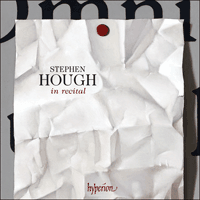 |
george1977 正式會員 210.xxx.xxx.97 |
2009-03-05 11:39 |
| [#9695] STEPHEN HOUGH review by Stanley Fefferman The effect of Stephen Hough’s performance brings to mind one of William Blake’s “Proverbs of Hell”: ENOUGH OR TOO MUCH. Taut as a cable Hough sits erect and still at the keyboard, his hands flat, elbows tucked in: the music flows out of his fingers commanding attention to the power, the precision and the finely nuanced feeling of it. Mendelssohn’s 18 part “Variations serieuses, Op. 54” is rendered in high contrast: delicate right-hand melodies dance above formal Bachian progressions; melodies sparkle like sunlight on water dividing above the dark chiaroscuro stones of a mountain brook; chromatic suspended harmonies rush as if chased through a thundering gorge and resolve into a pool of tranquil reflection and peace. The opening twelve-tone series of Anton Webern’s “Variations, Op. 27” are hesitant half-sounded notes, demi-phrases suspended like the footsteps of a paranoid dwarf tiptoeing into the darkness of an unfamiliar cave. By the third movement, Hough has moved us into a jazzy, bluesy, cool, spare, private, intimate space suspended in time. Hough’s performance of Beethoven’s “Piano Sonata in C Minor, Op.111” left no room to doubt his sincerity: he was taking no prisoners. The first movement is tragic in tone. At Beethoven’s thunderous forge, the first three-note theme is heated, hammered and articulated into a protean sequence of shapes. The second movement modulates to C Major. Though tranquil and reflective, the high register, somewhat dissonant melodies, often rippling over high register trills, seem to be played directly on the nerves. The effect is hypnotic, entrancing. Hough uttered the concluding pianissimo chord and with his posture held a long silence that no one dared to intrude on with applause, until he gave a sign. The programme after intemission lightened up the mood with a selection of waltzes by von Weber, Chopin, Saint-Saens, Chabrier, Debussy, and Liszt. Oddly, I found Hough’s treatment of this salon music, especially the Chopin, a bit forceful. With Chabrier’s “Feuillet d’album” , the tenderness of mood of the subject and the ambiguous playing created a pleasing effect. Hough updated Debussy’s wry “La plus que lente” well as a kind of cool, urbane cocktail piano piece with touches of Gershwin, Rachmaninoff and Cole Porter. With this part of the programme, we were invited to enjoy Stephen Hough, the entertainer. Wittily, he concludes his programme with a piece by Liszt depicting the “diabolically virtuoso playing of Mephistopheles” entertaining a village crowd while Faust seduces a maiden. A ‘diabolically’ charming coincidence in a review of this extraordinary performance introduced about by a proverb from Hell: ENOUGH OR TOO MUCH. The audience demanded and got three encores. In the lobby a parting patron gave Stephen Hough this tribute: “He’s one slick dude in his green metallic shoes.” http://showtimemagazine.ca/blog/?p=97  |
george1977 正式會員 210.xxx.xxx.97 |
2009-03-05 11:46 |
| [#9696] Lessons in Counterpoint, Between the Compositions By Steve Smith @ New York Times Not every pianist offers a detailed prospectus of the works he means to play. But then not every pianist is Stephen Hough, who has won awards for his poetry as well as for his playing, and who regularly blogs about music, religion, hats and other topics for The Telegraph, the London newspaper. http://www.nytimes.com/2009/02/14/arts/music/14houg.html?_r=1&partner=rss&emc=rss “This recital is about counterpoint — not so much within the pieces (despite the two fugues), but between the pieces,” Mr. Hough wrote in the program for his Carnegie Hall performance, presented before a large, rapt audience on Thursday night. His essay, which identified a Parisian spirit and the great pianist Alfred Cortot as further leitmotifs, indicated a keen, idiosyncratic intellect, elegantly deployed. His playing confirmed that impression. He opened with Bach’s Toccata and Fugue in D minor (BWV 565) for organ in his own edition of Cortot’s piano arrangement. Dramatic flair, dazzling technique and pinpoint clarity in counterpoint thus established, Mr. Hough shifted gears with Fauré’s mellow, aqueous Nocturne No. 6 in D flat, Impromptu No. 5 in F sharp minor and Barcarolle No. 5 in F sharp. In these, and in the account of Franck’s Prelude, Chorale and Fugue that followed, Mr. Hough’s execution was scrupulous, his lines affectionately molded. But what impressed most was his quietest playing, a hush so bold that its gravitational pull took you deep inside his work. After intermission Mr. Hough offered a powerful account of Copland’s Piano Variations of 1934, a piece that reflects Copland’s youthful dedication to radical social politics and steely modernity. What Mr. Hough showed, through his incisive touch and sensitivity to dynamics, was that the sweeping prairies and stately arroyos of Copland’s maturity could already be glimpsed past the rivets and girders here, as long as you knew where to squint. After a mesmerizing account of Chopin’s Nocturne in B (Op. 62, No. 1), Mr. Hough neatly balanced architectural integrity with Romantic impetuosity in Chopin’s Sonata No. 3 in B minor. Mr. Hough’s fragile gait in the Largo verged on precious, and his blazing speed made the Presto feel breathless. Still, even when you questioned Mr. Hough’s choices, his convictions had a force to be admired. He played three encores, starting with “Evocación” from Albéniz’s “Iberia.” The second piece, a fiery miniature that had audience members guessing Albéniz and Falla, turned out to be Mr. Hough’s composition “On Falla.” Debussy’s “Girl With the Flaxen Hair” provided a dreamy conclusion. http://www.nytimes.com/2009/02/14/arts/music/14houg.html?_r=1&partner=rss&emc=rss  |
george1977 正式會員 210.xxx.xxx.97 |
2009-03-05 11:50 |
| [#9697] Hong Kong Lagoon @ Stephen Hough at Telegraph Could Hong Kong be the desert island immortalized by the long-running Radio 4 programme? I was driving in London recently in the company of a friend from Taiwan with a recording of Eric Coates' 'By The Sleepy Lagoon' on the CD player. "Ah, this is a Chinese song," he exclaimed, "Very popular in Taiwan. It's called 'Lover's Tears'". Of course we in the UK know it as the theme music of that cherished radio programme 'Desert Island Discs'. Created by Roy Plomley in 1942, it is a simple formula which provides constant fascination. A celebrity chooses the eight records he or she would take if stranded on a desert island, and these act as guideposts in a discussion of their life story. Decorated with added counterpoint of dubbed-in seagulls, the programme opens and closes with the wistful sweep of Eric Coates' winsome melody. After a little investigation, my friend sent me this clip of the song, words by Dei-Yi Chen, music by Min Yao. It's intriguing because the opening few lines really do sound like the Coates work, and the original 'Lagoon' in question obviously had an exotic-orientalist inspiration. So, Eric Coates was inspired by the Asian pentatonic scale, and in 1930 wrote his orchestral serenade; then, around 30 years later, it appears to have inspired a Chinese composer to write his song; and now the 'Sleepy Lagoon' sounds as English as Elgar, or indeed as Radio 4 itself. A trivial pursuit of Coates' private life finds a son, Austin writing extensively about Asia, and, even working for the Hong Kong government as Assistant Colonial Secretary and Magistrate in the New Territories from 1949 to 1956. I was playing in Hong Kong only a month ago and there are few places on earth less like a desert island ... until, driving out to the new, out-of-town airport, you see the mountains, the water, the sandy shore. Believe it or not, this photograph is of Hong Kong - the so-called 'Italian Beach' on Cheung Chau island. So it is not difficult, only minutes beyond the pulsating metropolis, to imagine being isolated amidst the foliage, reaching for one of those eight recordings and wondering whether the luxury item selected was really the best choice. http://blogs.telegraph.co.uk/stephen_hough/blog/2009/01/05/hong_kong_lagoon  |
george1977 正式會員 210.xxx.xxx.97 |
2009-03-05 12:08 |
| [#9698] Johannes BRAHMS Piano Quintet Johannes BRAHMS (1833-1897) Piano Quintet in F minor, Op. 34 (1864) [40:10] String Quartet in A minor, Op. 51, No. 2 (c.1868-73) [33:11] Stephen Hough (piano) Takács Quartet: (Edward Dusinberre (violin I); Károly Schranz (violin II); Geraldine Walther (viola); András Fejér (cello)) rec. St. George’s, Brandon Hill, Bristol, 21-24 May 2007. DDD HYPERION CDA67551 [73:19] This is the second disc the Takács Quartet has recorded for Hyperion and also their second recording with Geraldine Walther as violist. Earlier they recorded the Schubert 13th and 14th quartets (see review). As readers will likely know, the original Takács Quartet, formed in 1975, was composed of four Hungarians with Gábor Takács-Nagy as first violin - hence the quartet’s name - and Gábor Ormai on viola. In 1993 Edward Dusinberre replaced Takács-Nagy and two years later Roger Tapping replaced Ormai. So, the quartet lost some of its Hungarian identity and became bi-national with the addition of the British members. In both of these earlier incarnations they recorded a broad repertoire for Decca. Their cycle of the Beethoven quartets received great acclaim. They also recorded the Brahms quartets and the quintet with András Schiff as pianist. In 2005, the American Geraldine Walther replaced Tapping as violist and the quartet became truly international. With this latest change in personnel, they switched recording companies and now record for Hyperion. Over the years they have remained one of the world’s premier chamber ensembles. That they continue to produce exciting music is witnessed by this latest release. There have been plenty of fine recordings of the Brahms Piano Quintet. My introduction to the work was with the venerable Budapest String Quartet and Rudolf Serkin. The recent competition includes a recording by the Emerson with Leon Fleisher (DG) and an even newer one by the Artemis with Leif Ove Andsnes. Michael Cookson (see review) found Fleisher’s performance rather leaden, but praised the Emerson in both the quartets and quintet. The Takács bring out the impetuosity of the work and treat it as the composition of a young composer that it is. At first glance, their timing may seem longer than normal; this is because they take the repeat in the first movement, which adds an extra three minutes. Overall, the tempos are in the normal range. However, Stephen Hough and the quartet have more flexible tempi and a greater dynamic range than, say, the excellent Kodály Quartet with Jenö Jandó on Naxos. Hough’s piano is well integrated in the recording and he plays as one among equals, without soloistic grandstanding. Like the Budapest of yore, the Takács are not afraid to sacrifice perfect intonation occasionally to their expressive ends. In the third movement Scherzo the music positively flies off their bows and they relax ever so slightly for the Trio. Their interpretation of the last movement also plays up the work’s contrasts and really takes off at the final Presto non troppo. This is as exciting a version of the work as is available and the disc is made all the more attractive by its coupling. The smoother performance by the Kodály should not be ignored, however, especially as it is accompanied by an equally good recording of the Schumann, a more usual disc-mate. Brahms’s Quartet No. 2 is for me the most approachable of his three works in the genre. It brings out his lyrical side more than the other two. Take, for example, the first movement’s second subject, the whole second movement and the third movement’s quasi-minuet main section. Here Brahms’s lyricism is given full measure. Then the finale contrasts with what has gone before; its energetic dance-like character ends the work with real vivacity. Geraldine Walther’s viola is particularly eloquent in this movement. Again the Takács play the first movement repeat, something that cannot be taken for granted. In many ways, this performance reminded me of the old Budapest Quartet recording form the 1960s, by duly emphasizing the lyrical while not neglecting the dramatic. It is a tremendous performance and one that sets the seal on a great disc. I assume the Takács will be recording the other two quartets in the near future. I had the privilege of hearing them perform the first quartet recently at the Barns at Wolf Trap in Vienna, Virginia. Judging from that white-hot account, their recording will be something to await eagerly. Leslie Wright http://www.musicweb-international.com/classrev/2007/Dec07/Brahms_Takacs_CDA67551.htm 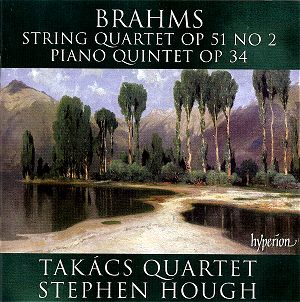 |
george1977 正式會員 210.xxx.xxx.97 |
2009-03-05 12:46 |
| [#9699] Sergei RACHMANINOV Piano Concertos Sergei RACHMANINOV (1873-1943) Concerto for Piano and Orchestra No. 1 in f-sharp minor, Op. 1 [26:02] Concerto for Piano and Orchestra No. 2 in g minor, Op. 40 [24:35] Rhapsody on a Theme of Paganini, op. 43 [23:44] Concerto for Piano and Orchestra No. 2 in c minor, Op. 18 [32:26] Concerto for Piano and Orchestra No. 3 in d minor, Op. 30 [38:23] Stephen Hough (piano) Dallas Symphony Orchestra/Andrew Litton Recorded live in concerts at the Eugene McDermott Concert Hall, Morton H. Meyerson Symphony Center, Dallas TX in May 2004. DDD HYPERION CDA67501/2 [74:41 + 70:54] In an era when performance practice issues, right down to careful research into the regional dialects used for vocal music, are all the rage, it seems rather unusual that the nineteenth and twentieth centuries have been left out of the fray. Andrew Litton and Stephen Hough have taken some steps to bring more recent music into the discussion with these enlightening performances of the concertante works by Rachmaninov, who despite his life-span, stuck firmly with romantic ideals. It has been the tendency in recent decades to over-sentimentalize Rachmaninov music, thus transforming passionate lyricism into syrupy languor. Not so these performances, available in the UK and due for release in the US on 14 October 2004. Hough has taken great pains to listen carefully not only to the composer own recordings, but also to those of artists that he most approved, specifically Josef Levhinne and Vladimir Horowitz. He and Litton have also meticulously corrected errant orchestral parts that have been so often used as to become canon. This is playing of the highest order both from soloist and orchestra. So often, with a new recording of such well-traveled works, it is the tendency of the cognoscenti to immediately dismiss the living performer as in no way capable of comparison to some famed corpse. I am here to tell you that Steven Hough can hold his own against any Horowitz, Richter or Rubinstein. His fleet playing, clarity of line and phenomenal technique shine like beacons. There are no studio tricks to cover mistakes; these are live recordings. Andrew Litton shapes the Dallas Symphony into a taut ensemble, playing with a unity of sound and an attention to the give and take of melodic line that would be the envy of any fine choir. This orchestra sings together with abandon. Most refreshing are the tempo choices, particularly in the more famous, often-overwrought second and third concerti. Gone are the layers of overt varnish. Mr. Hough never stretches a moment for his own sake, rather he concentrates on the lyricism and forward momentum that were the hallmarks of the composer own playing. I found these readings to be revelatory and refreshing. For the first time in a long time, I was actually riveted to the speakers, anxiously anticipating the unfolding story. Too often, a listener can simply take for granted that he knows what will happen next. What a treat to have a few surprises. And, lest one think that there is no romanticism here, start your exploration of this set with the famous "18th Variation" from the Paganini Rhapsody, and you will rest at ease. Mr. Hough plays this achingly lyrical line to absolute perfection. Program notes are peerless. The detail is meticulous and the writing style is captivating. The Dallas audiences, notorious for their noisiness and lack of decorum, (I can say that, I live here) are on their very best behavior, making for studio quality recording with Hyperion customary finesse. I could have lived without the applause at the end of each concerto, but that is a small complaint given the extremely high quality of everything else about this set. A must have. A revelation. Get it. Kevin Sutton http://www.musicweb-international.com/classRev/2004/Oct04/Rachmaninov_Hough.htm |
george1977 正式會員 210.xxx.xxx.97 |
2009-03-05 14:17 |
| [#9700] Tchaikovsky: Symphony No 5 @ Gustavo Dudamel Tchaikovsky: Symphony No 5; Francesca da Rimini Simón Bolívar Youth Orchestra of Venezuela, cond Gustavo Dudamel DG 477 8022, £12.72 Gustavo Dudamel, who joins the Philharmonia for a pair of concerts at London's Festival Hall this week, conducts his Simón Bolívar Youth Orchestra of Venezuela in a dynamic performance of Tchaikovsky's Fifth Symphony, recorded live last year in Caracas. The playing packs a passionate punch, the aching pangs of the first movement delivered with palpable anguish, the outbursts charged with hot-blooded fury. Dudamel's pacing of the andante slow movement might tax any solo horn-player's reservoir of breath, but the youngster allotted the part here takes it mellifluously in his stride. There is naturalness to Dudamel's phrasing and a well-developed palette. The symphony's shift from darkness to light in the waltz is beautifully done, even if the tricky string writing sounds cautiously tackled. The finale indulges too obviously in pyrotechnics, but both it and Francesca da Rimini reveal Dudamel's and the orchestra's dramatic strengths. Goeffrey Norris http://www.telegraph.co.uk/culture/music/classicalmusic/4612256/Classical-CD-reviews---Simon-Bolivar-Youth-Orchestra-James-Rhodes-and-more.html  |
george1977 正式會員 210.xxx.xxx.97 |
2009-03-05 15:24 |
| [#9701] Joshua Bell: The lad with the strad grows up By Peter Culshaw "Joshua Bell? He's the American Nigel Kennedy, isn't he?" said a friend. She had a point. Lose the bad language and the punk haircut, and Joshua Bell is a better-looking version of our Nigel, a serious million-selling violinist with a rock-star following, with fans sites dotted throughout the web. His last album was Kennedy's calling card of Vivaldi's Four Seasons. Too obvious a choice? "I like Kennedy's version, and I like the fact that both of us have brought a wider audience for classical music, but to say I shouldn't do The Four Seasons is like telling an actor they can't do a Shakespeare play because it's been done." I meet Bell in Beare's, purveyors of fine violins in London's West End, where he is getting a violin re-strung. "It's a dangerous place," he says. The day before, they laid out four violins, with a combined value of more than £10 million, for him to try. "I was tempted, but I liked none of them as much as the one I have. I've had it for seven years, so I think I've got the violinist's equivalent of the seven-year itch." The proprietor puts his head round the door and says cheerfully, "You can have a discount if you take all four." Bell's main instrument is a 1713 Stradivarius, from the great violin-maker's "golden period", variously called the Gibson or the Huberman after previous owners. But it could also possibly be called the Julian Altman, a New York café violinist who stole the instrument from Polish virtuoso Bronislaw Huberman backstage at the Carnegie Hall in 1936. For the next 50 years, while officially missing, it was played by Altman in a gipsy orchestra in cafés such as the Russian Bear in New York. His widow brought it to Lloyd's, the official owners who had paid out the insurance back in 1936, and claimed a finder's fee. After playing a few notes, Bell decided he had to have the violin. "I thought it was the most amazing instrument I'd ever heard. I instantly fell in love with it." Curiously, the story of his own instrument was as outlandish as the plot of the film The Red Violin, in which Bell played on the soundtrack. The film charted the intriguing tale of a violin and its varied owners for 300 years. The Oscar-winning film, released in 1999, first brought Bell to a wide audience in the States. Does he get nervous carrying around such a valuable instrument? "The analogy I like to use is of having a baby: there's no price you can put on it, it's irreplaceable. But you can't spend your life worrying you are going to lose it or break it." I mention that I met Yo Yo Ma shortly after he left his Strad cello in a taxi, which wasn't a good day for him. "Wasn't it? But think of the incredible publicity he got. And he got his cello back." Bell's most well known stunt was, at the urging of a Washington Post music critic, to go busking in the Washington DC Metro , earning a princely sum of $32. "The story went round the world. When I was ill with a 103-degree temperature in Ecuador, even the doctor knew all about it." He claims, not entirely convincingly, that he doesn't read critics, and has given up what he calls "ego surfing" on the web. "I rely on people I actually know to give me feedback, friends like the cellist Steven Isserlis, who I often play chamber music with and is very frank in his views." Bell and his two sisters grew up on a farm in Indiana – receiving his first violin at the age of four after his parents, both psychologists, noticed him plucking tunes with rubber bands he had stretched around the handles of his dresser drawers. By the age of 14, he was soloing with the Philadelphia Orchestra under Riccardo Muti, and he released his first recording at 19. Since then he has played most of the great concertos as well as glossy collaborations with pop stars such as Sting and Josh Groban. Next week at the Barbican he performs one of his favourites – Samuel Barber's violin concerto. Now 41, he says he is trying to be more "down to earth", and is currently refurbishing his Gramercy Park apartment in New York (complete with its own small concert hall for chamber concerts). A couple of years go he decided with an ex-girlfriend on the "unusual step" of having a child together, even though they are just friends and he remains single. "She thought with my nomadic lifestyle I wasn't husband material. It was the best decision I ever made." His son, now 15 months, "enriches my life and my playing. I'm still as nomadic as ever, but I think I'm finally growing up." http://www.telegraph.co.uk/culture/music/classicalmusic/4697555/Joshua-Bell-The-lad-with-the-strad-grows-up.html  |
george1977 正式會員 210.xxx.xxx.97 |
2009-03-05 15:33 |