兩聲道
CD機 | MD機 | SACD機 | DAC | CAS | 合拼擴音機 | 前級擴音機 | 後級擴音機 | 接線 | 喇叭線 | 揚聲器 | 耳機 | 耳機擴音機 | LP產品 | 膽機產品 | 開卷式錄音機 | 音響配件 | DIY音響 | 電源 | 家庭影院
電視機 | 投影機 | 錄影機 | DVD影碟機 | Blu-ray影碟機 | 多媒體播放器 | 機頂盒 | 多聲道擴音機 | 多聲道揚聲器 | 多聲道影音組合 | Mini音響組合 | 重低音揚聲器 | 輔助設備 | 同好會
同好會 | Accuphase | B&W | Burmester | Denon | Jadis | KEF | KRELL | Luxman | Marantz | Nuforce | OPPO | Pioneer | TEAC | WEISS | News
News | Blog | 其他
其他 | 所有 |
| 影音天地主旨 ﹝請按主旨作出回應﹞ 上頁 下頁 首頁 尾頁 | 寄件者 | 傳送日期
|
| [#10042] 累積 @ 楊照 3  |
george1977 正式會員 正式會員210.xxx.xxx.97 |
2009-04-27 15:11 | |
|
|
|||
| [#10043] 累積 @ 楊照 2  |
george1977 正式會員 210.xxx.xxx.97 |
2009-04-27 15:11 |
| [#10044] 累積 @ 楊照 1  |
george1977 正式會員 210.xxx.xxx.97 |
2009-04-27 15:12 |
| [#10045] 蔡克信,音樂.音響 4 http://www.audionet.com.tw/index.php/線上資料庫/名家專欄/2009-03-04-05-09-35.html  |
george1977 正式會員 210.xxx.xxx.97 |
2009-04-27 15:15 |
| [#10046] 蔡克信,音樂.音響 3  |
george1977 正式會員 210.xxx.xxx.97 |
2009-04-27 15:15 |
| [#10047] 蔡克信,音樂.音響 2  |
george1977 正式會員 210.xxx.xxx.97 |
2009-04-27 15:16 |
| [#10048] 蔡克信,音樂.音響 1  |
george1977 正式會員 210.xxx.xxx.97 |
2009-04-27 15:16 |
| [#10049] 似是故人來,莫札特:鋼琴協奏曲第20、27號 鋼琴:Clifford Curzon 指揮:Benjamin Britten 復刻製作:大間知基彰 錄音:Kenneth Wilkinson 錄音地點;Snape Maltings, 1970年九月 母帶處理:杉本一家 編號:Esoteric ESSD 90014 代理:勝旗 數年前在曹永坤先生家中,我與Esoteric社長大間知基彰先生一同聽著曹先生播放Curzon的Decca錄音,當時對那鋼琴的透明清澈、空間殘響的完美呈現留下深刻印象,回家後立刻買了CD聽,並且在「主筆的CD」單元中介紹過。幾年過去,曹老已溘然仙逝,而我播放起由大間知基彰所主導重刻的同一張Curzon唱片,往事歷歷在目。不同的是,此片的重製效果比起當年那張,真是有著長足的進步! Curzon是出了名的「龜毛」藝人,常常有錄音過後因為他自己認為還不夠完美,而把唱片發行計畫擱置的壞紀錄。與布列頓合作的這套莫札特鋼琴協奏曲演出之甜美動人,只怕連他自己聽了都找不到可挑剔的地方吧!親密、充滿靈性的靈巧鋼琴演奏,加上背後英國室內管弦樂團適時完美的伴奏,讓這個詮釋始終列為唱片收藏家們心目中的首選。 第一流的音樂獻給樂迷 對於音響迷們來說,錄音大師Wilkinson在1970年於Snape Maltings的錄音,以簡單的Decca Tree完美的將此歷史名演留存在類比母帶上,更是這張唱片收藏價值極高的原因。不過,以往這個錄音僅在Decca以一般CD格式重發,在大間知基彰的心目中,則只有SACD才是最完美的音樂格式。在我去年訪問他時,他就很興奮的告訴我,將會開始重刻Decca名盤的計畫。當時我也問了:既然要發片,重新錄製音樂不是更容易些嗎?大間知基彰的答覆是:如果不能找到第一流的演奏家,那麼錄製的唱片就算音效再好,也缺乏收藏聆聽的意義,Esoteric希望能夠帶給音響迷們的,是一些真正值得珍藏的音樂寶藏。 第一批的唱片張張都是經典名演,包括克爾提斯指揮的「新世界交響曲」以及安塞美指揮的「三角帽」。不過以這張Curzon的莫札特打頭陣,不知是否也有向曹先生致敬之意?下次見面,一定要問問他這個問題。 以Esoteric器材製作 由於原版類比母帶不可能由英國坐船到日本,Esoteric取得的是96/24的數位母帶。也許有人會想:96/24母帶規格不如SACD,這樣製作有意義嗎?當然有意義,因為這是比CD好上許多的高解析母帶,轉為SACD後,可以保存原本數位母帶中所有的訊息,不會有任何流失。更可貴的是,Esoteric請來了 JVC XRCD錄音室的第一把交椅杉本一家來負責重刻工作,在重刻過程中也大量的使用Esoteric機器,包括G-0Rb時鐘訊號產生器與D-01vu數位類比轉換器等等。就連線材,也請錄音室換上了Esoteric自家的Mexcel線材,徹底實踐以Esoteric器材融入唱片製作的精神。 結果呢?我敢保證,就算你只聽CD層,也可以聽出這個重新刻製的版本比起原始的Decca版CD要更清晰、更透明,演奏時現場的各種騷動更為明確、鋼琴的顆粒感也更為明顯。其實有這種結果不難想像,因為重製過程中使用的都是一般錄音室不會採購的高檔產品,加上杉本一家本來就負責過許多XRCD的母帶處理,對於如何能在CD規格中塞入最多的正確訊息可說是最瞭解的人了。 如果你還沒有收藏這個名演,那麼這張SACD當然是極佳選擇。就算你已經有這套CD,我也歡迎你找個時間比較一下這張SACD版本,你將會發現,原來母帶處理的藝術境界如此之高,可以讓同個錄音展現出完全不同的美好風貌。 (劉名振) http://www.audionet.com.tw/index.php/精彩軟體/SACD/2027.html  |
george1977 正式會員 210.xxx.xxx.97 |
2009-04-27 15:27 |
| [#10050] 似是故人來,莫札特:鋼琴協奏曲第20、27號 This is a great album! I was lucky enough to get the old W. Germany version at 幾草野 some years ago! For No.20, I also like Haskil/Fricsay and Michelangeli/Rossi. |
wal 正式會員 202.xxx.xxx.5 |
2009-04-29 11:52 |
| [#10051] Dvorak Got this a few days ago and looking forward to hearing its 'authenticity'! I like No.8 so very much. 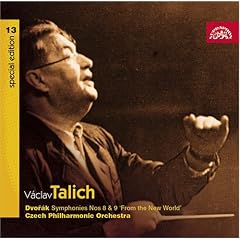 |
wal 正式會員 202.xxx.xxx.5 |
2009-04-29 11:58 |
| [#10052] RECORDING OF THE MONTH Peter Ilyich TCHAIKOVSKY (1840-1893) Symphony No.5 in E Minor, Op.64 [48:04] Francesca da Rimini, Op.32 [25:33] Simón Bolívar Youth Orchestra of Venezuela; Gustavo Dudamel rec. January 2008, Caracas, Centro de Acción Social por la Música, Sala Simón Bolívar. DDD DEUTSCHE GRAMMOPHON 4778022 [73:37] The Simón Bolívar Youth Orchestra (SBYO) of Venezuela has become a resounding success, the fruits of amalgamating music with politics. It is an orchestra most countries would love to establish. What better investment is there than to nurture the young who may turn out to be leaders of our future? The SBYO is a product that began 34 years ago in a garage in Caracas, Venezuela. “El Sistema” is a system by which young Venezuelans – the majority of them disadvantaged in living conditions defined by drugs and crime - are given intensive classical music education for as much as six afternoons a week. The result is a catalogue of youth orchestras that span more than a quarter of a million young musicians. Gustavo Dudamel is the charismatic conductor close to the centre of this initiative. "[Dudamel is] the most astonishingly gifted conductor I've ever come across," according to Simon Rattle. A vibrant youth, now aged 28, the Venezuelan will be taking charge of the esteemed Los Angeles Philharmonic in September 2009. This latest Deutsche Grammophon recording captures Dudamel and the Venezuelan youths in a programme devoted to Tchaikovsky’s most revered orchestral works. “Tchaikovsky is part of our culture, even though Venezuela is far from Russia”, Dudamel comments in the liner-notes for this disc. Dudamel's approach to Tchaikovsky is filled with dynamism, introspection and heart-lifting emotional surges. The Fifth Symphony’s opening Andante, serves as the dark curtain-raiser and provides the platform for a major dramatic event. The tension is further developed by a bold horn solo from Elvis Romero. It shines with luster and is answered sweetly by the oboe and bassoon principals (Frank Giraldo and Gonzalo Hidalgo, respectively). The subsequent interplay of strings, harp, and winds in the Andante cantabile invests the melodic lines with a moving beauty. Dudamel then takes the Valse movement at a brisk tempo, playing it as a quasi-surreal balletic entr'acte which dances with intimate candle-lit splendour. The Finale provides the big drama of the piece and Dudamel has to square up to the grand traditions of Golovanov, Koussevitzky, Mravinsky, and Stokowski. Dudamel’s maestoso, revels in the bass tones and serpentine woodwind lines with plenty of bite and vigour. The Symphonic Fantasy Francesca da Rimini is one of the Russian composer's most personal expressions. Dudamel throws himself into the challenge, bringing out a sense of New World remaking, rejuvenating Old traditions with a firm contemporary voice. It is a frantic depiction of Hell. Equally the love music has never sounded more tender. Wringing out the notes from his string players, Dudamel coaxes a wonderfully controlled clarinet solo (by David Medina) in the slower music. The tempest swirls the final pages with heightened drama flooded with weighty high velocity percussion. The sound of the tam-tam is obliterated by wild applause. The recorded sound of these live performances from January 2008 is bright but the Sala Simón Bolívar also draws out a sonic richness in the lower channels that audiophiles will also enjoy. DG recording engineers Rainer Maillard and Wolf-Dieter Karwatky have wrought marvels. One wonders what is brewing next in the pipelines from Dudamel, the SBYO and Deutsche Grammophon. Patrick P.L. Lam http://www.musicweb-international.com/classrev/2009/Apr09/Tchaikovsky_Dudamel_4778022.htm 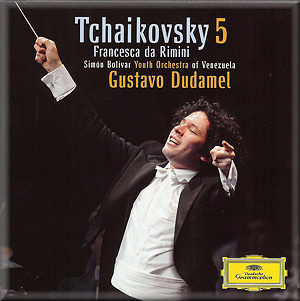 |
george1977 正式會員 210.xxx.xxx.97 |
2009-04-29 14:09 |
| [#10053] RECORDING OF THE MONTH Johannes BRAHMS (1833-1897) CD 1 Symphony No. 1 in C minor, Op. 68 (1876) [42:52] Symphony No. 3 in F major, Op. 90 (1883) [34:29] CD 2 Symphony No. 2 in D major, Op. 72 (1877) [43:59] Variations on a Theme by Haydn, Op. 56a (1873) [16:55] Tragic Overture, Op. 81 (1880/1) [13:11] CD 3 Symphony No. 4 in E minor, Op. 98 (1885) [39:24] Academic Festival Overture, Op. 80 (1881) [9:30] Nänie, Op. 82 (1881/2) [13:10] Rhapsody for Alto, Chorus and Orchestra, Op. 53 [13:18] CD 4 Ein deutsches Requiem, Op. 45 (1868-9) [72:28] Helen Watts (contralto) [CD3]; Agnes Giebel (soprano), Hermann Prey (baritone) [CD 4] ; Chœur de la Radio Suisse Romande; Chœur Pro Arte de Lausanne L’Orchestre de la Suisse Romande/Ernest Ansermet rec. Victoria Hall, Geneva, Switzerland, February 1963 (Symphonies, Haydn Variations, Overtures), October 1965 (Rhapsody), June 1966 (Nänie, German Requiem). ADD. Booklet with notes but no texts. Decca Eloquence 480 0448 [4 CDs: 77:32 + 74:26 + 75:44 + 72:28] I’d forgotten that Ansermet had recorded so much Brahms, a composer with whom I don’t normally associate him. I started by listening to the First Symphony and immediately realised why I hadn’t made the association; everything is in place and the playing of the OSR, though there are rough edges in places, notably from the brass, perfectly acceptable, yet I never really became emotionally involved in the performance. Ansermet opens the first movement at a good, steady, pace but later pulls the tempo about in places in order to try to achieve an affective response from the listener, yet the whole effect seems curiously detached. Even the ‘big tune’ in the finale comes off less well than in most performances, including the roughly contemporary version by Klemperer: EMI 5 67029 2, with Tragic Overture and Alto Rhapsody or a 3-CD set, 5 62742 2, with all the symphonies. I should add, however, that Christopher Howell was less impressed with Klemperer’s Brahms than I am, though he agrees with me that the Third Symphony comes off very well – see review. It isn’t so much that Ansermet’s tempo in the finale is too brisk for the ‘big’ tune to have its full effect – he’s actually half a minute slower overall than Klemperer, not known for his velocity – so I’m not quite sure why his account just fails to come off. I’m not normally a great Klemperer fan but I’m happy to make an exception for his performance of Beethoven’s Eroica symphony and for his Brahms, especially the third and fourth symphonies, where he is unequalled in my opinion in works which are much more difficult to bring off than is usually acknowledged. The first should be the least problematic, but I was recently surprised to find myself liking Marin Alsop’s Naxos performance of this symphony (8.557428) less than I expected – see my October, 2008, Download Roundup. But see Peter Lawson’s review for a hearty endorsement of this Alsop performance, with links to three other Musicweb reviews. Puzzled at my failure to engage with Ansermet’s performance of the first, I checked with Trevor Harvey’s review of the LP back in 1964, and found that he had almost exactly the same reservations, though he praised the quality of the recording, which still sounds more than respectable, after all these years, though it’s a bit lacking in top. The contest in the Third Symphony used to be between Bruno Walter and Otto Klemperer, with partisans fervently arguing the case for one or the other. When Ansermet’s account first appeared, it seemed to many to be an ideal compromise between the two approaches so, with my clear preference for Klemperer here, or Karajan’s 1964 and late-1970s recording - distinguished runners-up - I wondered if the compromise would work for me. On the whole it did: I found this much more acceptable than the first though, with slightly faster tempi than Klemperer, I missed the granite hardness of his performance. Karajan (1964) polishes off the opening movement of the third in 9:44 and gets away with it, but Ansermet’s 11:51 and especially Klemperer’s 13:04 seem much more to the point. Elsewhere Karajan’s tempi are much closer to both Ansermet’s and Klemperer’s To the original coupling of the Second Symphony and the Tragic Overture, CD2 adds the ‘Haydn’, or St Anthony, Variations. The symphony receives an effective, straight performance; you wouldn’t complain if you heard something of this calibre in a concert, though you might wonder if there might not be an extra dimension that had been missing, such as you might find in Beecham’s version of this work. That wonderful show-stopping early-1960s EMI recording of the only Brahms symphony that Beecham regularly conducted seems not to be currently available but there is a good substitute, coupled with Beethoven’s Second Symphony, on BBC Legends BBCL40992. At the time of the original issue of the Ansermet, I remember that I was perfectly content with Pierre Monteux’s account of this symphony with the Vienna Philharmonic, reissued on the RCA Victrola label the previous year, so I can’t recall Ansermet’s version making much of an impact. I’m sure it’s not just the golden glow of memory, but I recall the VPO strings under Monteux, even in mono and on the fairly rudimentary system that I had then, sounding richer than those of the OSR here. Either the recording or their inherent quality – probably a combination of the two – makes them sound a little under-nourished throughout. Nor does Ansermet’s account of the finale, albeit that it’s lively, bring the house down in the way that Beecham famously did, but few do. Once more, it’s in the finale that I feel the greatest disappointment with Ansermet – again, he’s almost as slow as Klemperer here, without the benefits which Klemperer’s tempi bring. How Beecham worked such magic with his fairly minimal rehearsal regime remains one of the great mysteries. EMI really should bring his version back – but without the photograph of Beecham in that awful all-purpose suit that he seems to have worn for all his EMI publicity shots, which ‘graced’ the LP reissue, please. Karajan (1964) seems livelier than either Ansermet or Klemperer in the finale of the second – in fact, he’s only seconds faster overall, but I prefer his approach. This BPO/Karajan account of the second and third symphonies used to be excellent value on the budget Privilege label; with 73 minutes’ playing time, it’s still good value at mid-price (477 7159). DG’s ADD sound is as good as the Ansermet and better than the Klemperer. As well as his recordings of the second, for RCA/Decca and Philips, Monteux made a famous recording of the St Anthony Variations, coupled with Elgar’s Enigma, the reissue of which on SPA121 remained my preferred version until the end of the LP era. Ansermet’s version is not quite in that league but it is very acceptable and I didn’t notice the same thinness in the strings as in the Second Symphony. On the third CD Eloquence add Nänie to the original coupling of the Fourth Symphony and the Academic Festival Overture. The two purely orchestral works receive some of the best performances in the whole set. In my experience, the fourth is the most difficult of the symphonies to bring off, with Klemperer’s version still heading the list for me, closely followed by James Loughran on Classics for Pleasure, now available in a box set – see below. There used to be a very decent performance on the budget-price IMP label with the Hallé Orchestra under Stanislaw Skrowaczewski (PCD897); second-hand copies would be well worth looking out for, and someone ought to reissue this recording, preferably with a more generous coupling than the three Hungarian Dances which brought the time up to a mere 49 minutes. Ansermet’s tempo for the second movement is slower than Klemperer’s and he is not much faster in the other movements; the use of slowish, steady tempi is what, for me, makes this performance the most acceptable of the whole set; it didn’t raise even one serious critical hackle. In the Academic Festival Overture again, a fairly steady tempo pays dividends. Neither Ansermet nor Klemperer is bacchanalian in this music, but their performances are certainly not joyless, either. Marin Alsop’s Academic Festival Overture, the coupling for that First Symphony which I’ve mentioned, is actually slower overall than either. The comparative rarity Nänie receives a persuasive performance and the excellence of Helen Watts’ singing in the Alto Rhapsody is sufficient to quell any small doubts which I had about the performance – a gloriously work, convincingly performed. These two performances were reissued earlier by Eloquence, coupled with John Shirley-Quirk in the Four Serious Songs, Op.121, and Five Songs, Op.94; Jonathan Woolf thought that a recital characterised by integrity, musical wisdom and deep understanding (461 245 2 – see review, apparently no longer available). Only the Schicksalslied, or Song of Destiny, of the vocal and choral works, is missing from both collections; if that is essential for you, you need Gerd Albrecht on Chandos CHAN10165, which Michael Cookson deemed an essential purchase for all lovers of classical music – see review. The German Requiem, Alto Rhapsody and Nänie originally took up two premium-price SET LPs. I have to admit that the Requiem is not my favourite Brahms work; though I wouldn’t go so far as George Bernard Shaw, who declared that the work could be borne only by a corpse, my copy of the 2-CD Philips Duo recording with Sawallisch (438 760-2, no longer available) rarely gets an outing, even for the orchestral works on the second CD, so I approached Ansermet’s version, with its reputation for dullness, even among lovers of the work, with caution. After all, it’s three minutes longer than Klemperer (EMI), five minutes longer than Rattle (also EMI 3 65393 2 – see review), six minutes longer than Gardiner (Philips), Herreweghe (Harmonia Mundi), Previn (LSO Live) or Bernius (Carus) and seven longer than Equilbey (Naïve V4956, chamber version – see review) or Cleobury (EMI 3 66948 2 – see review; not currently available). But it’s also a minute shorter than Hickox (Chandos), four minutes shorter than the classic Kempe (EMI mono) and five shorter than Karajan (DG, CD and DVD). In the event, I didn’t find the performance as dull as I’d expected; in fact, listening on a quiet Sunday morning I quite enjoyed it. Agnes Giebel and Hermann Prey make fine soloists and they are well supported. There are moments of real insight, such as the quiet reverence of the opening and the soaring passages of Denn alles Fleisch, but it didn’t convert me to like the work any better than before. It’s at least as good as the Sawallisch, though it’s four minutes longer, but I need to move on from Sawallisch to a more inspirational account – I think it has to be Klemperer again. I’ll also try out some other versions; keep an eye on future Download Roundups for the results. If nothing else, the new set is excellent value, four CDs for less than £11 direct from Australia. When the first symphony was released on LP in 1964, with no filler, that disc cost 37/6, which must equate to at least £40 in 2009 terms, making the equivalent value for the whole set at least £200. The starting salary that year for a teacher with a good honours degree and a PGCE was just over £800 and a 2-bedroom house in Outer London cost around £4,000, so you can check the comparative values yourself. Even the mid-1970s reissues on Decca’s budget World of label (SPA) of the orchestral works on four LPs at £1.50 each represent poor value by comparison, when that £1.50 is converted to present-day equivalents. So no-one need feel short-changed in the monetary sense. You wouldn’t feel short-changed metaphorically, either, by the quality of the performances; there’s nothing revelatory here, but there’s little that merits anything like serious criticism. With recordings which still hold their own and an informative booklet of notes – but no texts – it deserves a recommendation. The text of the German Requiem, from Luther’s Bible, is readily available online; those of Nänie and the Alto Rhapsody less readily. The obvious competitor to Ansermet in this price category comes from James Loughran’s 4-CD set of the four symphonies, the Violin Concerto, ‘Haydn’ Variations and Overtures on Classics for Pleasure 5 75753 2, available for around £15, or even slightly less. Ian Lace was right to ask ‘why pay more?’ – see review. That CFP set would be my preference, especially in the light of the fact that Loughran’s version of the Fourth Symphony is the only one seriously to challenge Klemperer’s, in my opinion. They’re not strictly comparable because the Ansermet set includes the German Requiem and Alto Rhapsody which you’re less likely to have in your collection than the Violin Concerto; ultimately, coupling may well prove the decisive factor. There’s an odd typo in the Eloquence booklet: the opening section of the Requiem is listed as Selig sind, die da Lied tragen – blessed are those who sing, rather than those who suffer (Leid tragen). In section VI, wie haben should be wir haben: no doubt this error was caused by thinking ahead to the archaic hie for hier later in the title. More seriously, the assertion that Brahms was a reluctant symphonist is open to challenge; he was, in fact, keen to write his first symphony but delayed doing so until he was secure enough of his reputation as a composer of large-scale orchestral works not to be accused of plagiarism from Beethoven – and, even then, several critics referred to his first symphony as Beethoven’s Tenth. You just can’t win, but he got his own back by saying that any donkey could see the similarity. Brian Wilson http://www.musicweb-international.com/classrev/2009/Feb09/Brahms_ansermet_4800448.htm 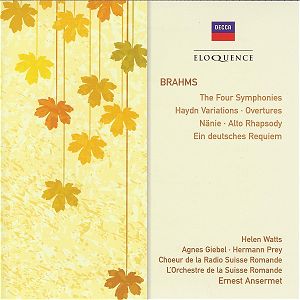 |
george1977 正式會員 210.xxx.xxx.97 |
2009-04-29 14:21 |
| [#10054] RECORDING OF THE MONTH Ludwig van BEETHOVEN (1770-1827) Symphony No. 3 in E flat, Op. 55, Eroicaa (1803) [49:18] Leonore Overtures: No. 1 in C, Op. 138b (1805) [8:34]; No. 3, Op. 72ac (1805) [13:40] Philharmonia Orchestra/Otto Klemperer rec. Kingsway Hall, London, 5-6 aOctober, 17 December 1955; b17 November 1954; c18 November 1954 NAXOS HISTORICAL 8.111303 [71:33] The question that nags away whenever Klemperer’s Eroica is discussed is whether one favours this 1955 recording or the one made in stereo in 1961. The essence is similar, the same sense of power, the weighty architecture, the care taken over the delineation of the wind choirs – one of Klemperer’s most astute qualities as an orchestral balancer - as well as the sectional balance between the strings. The main differences occur in the second movement – considerably slower in 1961 – and in the finale where opinions certainly differ. Some find the granitic linearity of Klemperer’s conception better realised in the later performance but I’ve always favoured the 1955, where one feels the finale’s spine is better maintained and the sense of tensile control is just that bit more gripping. Certainly one can argue that the 1961 recording incarnates a different kind of tension – an argument that I think is reasonable – but if one has to decide as definitively as one can then the case for the 1955 traversal is the more unarguable. The brass is on especially fine form, as are the famed winds. The Philharmonia’s bass line is more strongly etched than most British orchestras of the day as well. Those for whom the slow movement moves at a slower tempo will perhaps favour the 1961 reading which lasts around 17 minutes to the 14:40 of this one, a tempo taken at a rather faster clip even than Weingartner’s legendary 1936 Vienna recording, also on Naxos. I find it eloquent and powerful in both Klemperer performances and the establishment of a significantly slower tempo only a few years apart does attest to a certain redefinition of the contours of the movement in its symphonic context. That may be something of an index for those who have yet to hear either recording. Admirers of the conductor will have the luxury of comparing and contrasting both performances, augmented by such live concert or broadcast material as emerges. The 1955 Eroica has been out before, incarnated most recently in EMI’s GROC series, in a transfer I’ve not yet heard [5677402 – coupled with the Leonore overtures 1 and 2]. This Naxos offers the overtures Nos 1 and 3 in performances that marry theatrical dynamism with effective dynamic nuance and colour. The transfers are unproblematic and attractive. Jonathan Woolf http://www.musicweb-international.com/classrev/2009/Apr09/Beethoven3_klemperer_8111303.htm 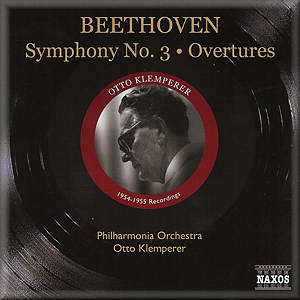 |
george1977 正式會員 210.xxx.xxx.97 |
2009-04-29 14:24 |
| [#10055] RECORDING OF THE MONTH Maurice RAVEL (1875-1937 L'enfant et les sortilèges (1925) [45:49] Shéhérazade (1903) [18:30] L’Enfant - Julie Boulianne (mezzo) Maman, La Libellule, L’Ecureuil - Geneviève Després (mezzo) La Tasse chinoise, Un Patre, La Chatte - Kirsten Gunlogson (mezzo) La Theiere, Le Petit Vieillard, La rainette - Philippe Castagner (tenor) L’Orloge comtoise, Le Chat - Ian Greenlaw (baritone) Le Fauteuil, Un Arbre - Kevin Short (bass-baritone) La Princesse, Le Chauve-souris - Agathe Martel (soprano) Le Feu, Le Rossignol - Cassandre Prévost (soprano) La Bergère, Une Pastourelle, La Chouette - Julie Cox (soprano) Members of the Chicago Symphony Chorus, Chattanooga Boys Choir, Members of the Nashville Symphony Chorus Nashville Symphony Orchestra/Alastair Willis Julie Boulianne (mezzo) (Shéhérazade) rec. 5 December 2006 (L'enfant et les sortilèges) and 17 June 2007 (Shéhérazade) NAXOS 8.660215 [64:19] 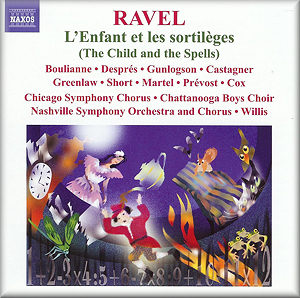 |
george1977 正式會員 210.xxx.xxx.97 |
2009-04-29 14:35 |
| [#10056] RECORDING OF THE MONTH Maurice RAVEL (1875-1937 L'enfant et les sortilèges (1925) [44:22] Ma Mère L’Oye [28:29] L’Enfant - Magdalena Kožena Le Feu, La Princesse, Le Rossignol - Annick Massis Une Pastourelle, La Chauve-souris, La Chouette - Mojca Erdmann La Bergère, La Chatte, L’Ecureuil, Un Patre - Sophie Koch Maman, La Tasse Chinoise, La Libellule - Nathalie Stutzmann La Theriere, Le Petet Vieillard, La Reinette - Jean-Paul Fouchécourt L’Horloge Comtoise, Le Chat - François Le Roux Le Fauteuil, Un Arbre - José van Dam Berlin Radio Choir Berlin Philharmonic Orchestra/Sir Simon Rattle rec. 24-28 September 2008, Philharmonie, Berlin EMI CLASSICS 2 64197 2 [72:58] Once upon a time, when I too was a child, I used to enjoy fiddling around under the bedclothes with a small FM radio which had become redundant after the purchase of some sturdy brown 1970s Hi-Fi. I shall never forget the moment when, quite by accident, I stumbled across that moment at the start of Part II of L'enfant et les sortilèges, where the tremolo strings cast their nocturnal spell in the moonlit garden, the slide whistle conjures an owl, and the piccolo a nightingale. That moment haunted me for ages, living like an invisible musical imp on one shoulder, telling me to be a composer in a language I didn’t yet understand. Not knowing what it was I had been hearing however, it became something of a holy grail, eternally to be sought and cherished once rediscovered. The magic of that passage and the strange operatic events which surround it came alive once again rather later than I care to admit, when I was introduced, or rather re-introduced, to the truly potent recording of L'enfant et les sortilèges with Lorin Maazel on the Deutsche Grammophon label. Here indeed was my musical Holy Grail. Made in 1961, this recording still sounds fresh as a daisy, and is filled with all of that richly anarchic playing which was once a significant feature of French orchestral character. Filled with apparent risk-taking, the performance is of course a magical circus act, superbly well prepared, but carrying a timelessness and potency born of a palpable sense of fun and creative spontaneity. Knowing in advance that these two new recordings of L'enfant et les sortilèges were on their way, I have had a few very pleasant sessions re-acquainting myself with the Maazel R.T.F. recording and wondering how on earth anyone could do better. It seems to resist all comers, and to my mind has certainly yet to be topped until now. In fact, there are surprisingly few recordings of this marvellously entertaining and delightfully inventive and compact opera in the catalogue at the moment. Now we have two all at once; and hurrah for that. L’Enfant et les Sortilèges is a one-act opera, the music written on a libretto by the French novelist Colette. Classic elements of other famous fairytales can be found in the story, in which a little boy, made to stay his room by his mother, takes out a petty revenge on his furniture and fittings only to see them spring indignantly to life. After some exhausting confrontations, encounters with the animals in the garden and struggles with mental arithmetic, the child is eventually redeemed by his own suffering, his change of heart and the bond of love between him and his mother. I’m going to start with Alastair Willis conducting his American forces on Naxos. This release has of course the benefit of economy on its side, and an admirable secret weapon which I shall come to later. The opening is not entirely promising however, with the character of the child taken in rich, fruity and full-frontal operatic style by Julie Boulianne. Yes, this is grown-up opera, but compared with the realistic and believably testy expression of Francoise Ogéas on Maazel’s DG disc it’s hard to imagine this portrayal as having anything much child-like to offer. There are very many good things about this recording, and I don’t want to harp on about the negatives when, taken in isolation, this disc would probably be welcomed with fewer complaints. My problem is that, whenever I thought, ‘this is good’, it was Ravel who was providing the interest – musically or in terms of orchestration, while the cast are fairly consistently operatic. By this, I mean that all of the stereotypical operatic vocal styles are expertly present, without very much deviation from standard technique in order to bring the characters truly to life. Kevin Short, for instance, has that fine, wide vibrato which makes you wonder which notes he is really singing, but it is the orchestration which has to make up for a lack of woodiness in his Armchair – or is that over-woodiness. Kirsten Gunlogson goes a little further, but while her Chatte is very cat-like, you realise that her earlier Tasse chinoise was also quite cat-like – her rather thin mezzo sound suiting both very well, but not showing a great deal of breadth when it comes to character range. Ian Greenlaw’s Chat has a disturbing little chuckle in the voice, but again seems more concerned with maintaining nice tone than convincing us of real cat-ness. There are a few stars in this firmament, and I very much like Cassandre Prévost’s lighter sound but clear message as the fire which warns the child to ‘Get back! I warm the Good!’ Julie Cox is another fine singer, but her Shepherdess is too sophisticated and refined to my ears, unless it is the fantasy Fragonard version one has in mind. I can’t really tell her apart from the Princess, also very ably sung by Agathe Martel. No, what this recording lacks in genuine character it would probably make up for in visual clues during a staged version. The orchestra is very fine, but doesn’t quite have that sense of acidic penetration and anarchic abandon that I admire in the Maazel. The choirs are good enough, though a little recessed in the recorded mix. The frogs are a bit dull, and you can hear the Chattanooga Boys Choir hanging on by the skins of their teeth in the technically demanding Deux robinets… moment. I am reluctant to be too down on this Naxos L'enfant et les sortilèges. There is nothing really weak about it, and both performances and recording are technically of a very high order. There is no libretto in the booklet, but the notes are extensive and include a detailed track by track description of the action which more than adequately makes up for the absence of the actual sung words. Where this to be the only recording available then it would be an instant operatic hit, but this is also its Achilles heel – as opera it ticks all the boxes, but as food for the imagination: humorous, chilling and even frightening, or filled with the kind of wonder and delight which has the tears welling up, it steadfastly refuses to stand up and elbow aside our comfortable preconceptions about what ‘good opera’ should be. For this reason, the final choral apotheosis transports us effectively up the ‘stairway to heaven’, but, I’m sorry to say, doesn’t have me reaching for the Kleenex. What this disc does have however, is a very fine recording of Ravel’s Shéhérazade. In the last couple of seasons I’ve been playing this piece in an arrangement for the Netherlands Flute Orchestra with Roberta Alexander as soloist, so I know every note like the pores in my pinky. There are numerous distinguished recordings which will always retain classic status in this work, but Julie Boulianne’s singing is gorgeously expressive, filled with the tensions and moments of resignation and contrasts of joy and tragedy in each of the three songs. This, coupled with a suitably opulent orchestral sound from the Nashville Symphony Orchestra, makes for a version of this piece to which I would happily listen; long and often. Moving on to the EMI disc, the programme on Sir Simon Rattle’s recordings is that of the same cast and forces as with the production as seen and very positively reviewed by Mark Berry. As a recording, the Berlin Philharmonie offers a grander stage for both singers and musicians, and the musical canvas seems to give the impression of wider swings between chamber-music effects and the grander gestures: there is certainly a deeper sonic perspective than with the Naxos disc. Detail is excellent in the recording without sounding unnatural, but being actually able to hear clearly the melodic line in the double-bass harmonics in the opening for instance is a very nice way to start. Singers aside, the Berlin musicians seem to be enjoying themselves much more than the Nashville players. They find more schwung in the burlesque moments of the first half, almost running the delightful risk of turning Ravel into Weill on occasion. This is not the first time Simon Rattle has conducted this opera, with one of his early career successes being a production in Liverpool in 1974 when he was only nineteen. Ravel’s sense of Gallic fantasy might not be the kind of genre which you would initially expect to be meat and drink to a heavyweight orchestra such as the Berlin Philharmonic, but the sparkle and swagger everyone brings to this performance is if anything the entire opposite of Teutonic stodge. Having criticised Julie Boulianne of un-childlike and over-operatic tendencies in this opera, Magdalena Kožená can’t really be said to be much less so. She can however bring a level of tenderness to the role which helps suspend our disbelief, and such arias as Toi, le coeur de la rose are restrained and deeply touching. The surrounding characterisations are in a different league to those on the Naxos recording, risks sound as if they are being taken, extremes are run for and hit hard, the singers play for the audience rather than for the microphones. The cat duet is breathtakingly menacing, the tree and supporting other trees are superbly lugubrious, birds chatter and sing with eccentric vocal gestures, and frogs and ducks are fantastic anthropomorphic creations which set the imagination popping. Nathalie Stutzmann, Sophie Koch, François le Roux and José van Dam form a very strong cast indeed, but you rarely have the feeling of anything other than a powerful sense of teamwork and ensemble, and never the sense of a bunch of solo stars jostling for pre-eminence. Ma Mere L’Oye is an equal success, and, as a piece which inhabits a similarly child-based world to the opera, is a not entirely unexpected coupling – indeed, André Previn and the London Symphony Orchestra on Deutsche Grammophon did the same not so very long ago. Sir Simon Rattle’s conducting draws an almost analytical sense of dynamic detail from the orchestra; which shimmers, sparkles and oozes romantically with inch perfect discipline. The Berlin Philharmonic’s superb qualities are given free reign, and the instrumental solos are taken with great sensitivity and a thankful restraint and sympathy in terms of vibrato and timbre. Casually playful virtuosity contrasts marvellously with the velvety richness the entire orchestra can create in such languorous movements as the final Le jardin féerique, and this is a stunning recording which can stand among the best on record. To conclude: is that glorious old 1961 classic on DG with Lorin Maazel now finally deposed? The answer has to be a resounding non, but only in the sense that it can and should always happily co-exist with any recording we can come up with now and in the future. Playing it once again I still find it is the version which would have me rolling on the floor with laughter and tears were I inclined, or had the space so to do. The furniture smashing scene early on has a Tom & Jerry madness which has yet to be beaten, and as I go on I find it still wipes the floor with all comers at just about every point of comparison – How’s your mug? for instance – ah, they knew how to act then, something I do miss with most performances or recordings these days. If you can find a copy don’t be put off by the short playing time – it’s a straight transfer from the original LP release and has no further coupling, but every second is sheer musical gold. The Berlin Philharmonic EMI recording comes a close second, with plenty of wow factor in both the sound quality and the performance. While losing out to the sheer élan of the elderly DG recording the singers and players do come up with a valid new alternative which is both immediately enjoyable and durable, and if you didn’t know the Maazel, you certainly wouldn’t feel sold short with this recording. Returning to the U.S. based recording on Naxos with Alastair Willis I stand by my position, placing it in a firm third, but certainly not discounting it as a contender at budget price. Certainly the presentation beats EMI which, while having the complete libretto, has fairly brief booklet notes. You will also note in the header to this review that the voice types are not given for the EMI disc – which is the case on the release, as are there no biographies of the singers. The EMI disc also has rather fewer access points – Naxos has 25 to EMI’s 8. These and the extended synopsis are an excellent study tool and a definite plus point to Naxos. My real reason for treasuring this disc is however the delicious Shéhérazade, to which for me the opera is a rather extravagant bonus. Dominy Clements http://www.musicweb-international.com/classrev/2009/Apr09/Ravel_L%27enfant_2641972_8660215.htm 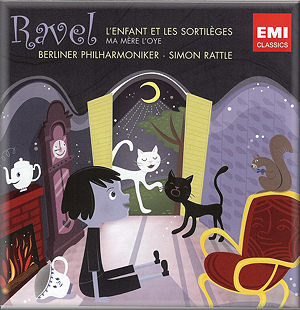 |
george1977 正式會員 210.xxx.xxx.97 |
2009-04-29 14:36 |
| [#10057] RECORDING OF THE MONTH Franz SCHUBERT (1797-1828) Piano Quintet in A, D667 The Trout (1819) [34:36] Antonín DVOŘÁK (1841-1904) Piano Trio in E minor, Op. 90 Dumky* (1891) [32:19] Jörg Demus (piano); Schubert Quartet (Anton Kamper (violin); Erich Weis (viola); Ludwig Beinl (cello); Josef Hermann (double bass)); Josef Suk (violin)*; Milos Sadlo (cello)*; Jan Panenka (piano)* rec. Herkules Saal, Munich, September 1959 (Schubert); Beethoven Saal, Hanover, June 1958 (Dvořák). ADD DEUTSCHE GRAMMOPHON ELOQUENCE 4800489 [67:00] The Vienna Konzerthaus Quartet was formed by members of the Vienna Philharmonic in 1934. It consisted of violinists Anton Kamper and Karl Maria Titze, violist Erich Weis and cellist Franz Kvarda. The Quartet gave concerts throughout Europe under the auspices of the Wiener Konzerthausgesellschaft (Vienna Concert House Society). After the Second World War in 1945, it toured internationally and was regarded as one of the first quartets to establish an extensive LP discography. In the early 1950s, members of the Konzerthaus Quartet joined forces with pianist Paul Badura-Skoda and Vienna Philharmonic bassist Josef Hermann for concert performances and a recording of the Schubert ‘Trout.’ The result be equivalent to a ‘grand slam’ by today’s standard and went to the top of the then classical charts. In 1957-1958 health reasons forced Kvarda to step down to be replaced by Ludwig Beinl. Two further recordings of the ‘Trout’ made a lasting impression in the ensuing years. One of these was with the British pianist Denis Matthews. The other was this present DG recording. Kamper, Weis, Beinl and Hermann were scheduled for a recording session in Munich with the then thirty-one year old Austrian pianist, Jörg Demus. According to Tully Potter’s liner-notes, the string members had to hide behind the pseudonym ‘Schubert Quartet’ for contractual reasons. The resulting recording went through several LP editions and a brief CD release in 1992 as part of DG’s “Compact Classics” series. This Trout is a musical treat with a life-enhancing outdoors quality. Demus shows no signs of nervousness, and all five players rise to a thrilling climax towards the end of the opening Allegro. The ruminative and brooding Andante at times builds to an intensity that gives the impression one is listening to a full string ensemble rather than four players. Demus takes more of a supporting role here, and the Quartet's tonal colours and dynamic range soars. The next two movements make the listener very much aware of the double-bass. Josef Hermann’s instrument finds the lilt and melody behind the grand-fatherly sound. Balance within the group alternates amongst the members with finely judged skill; the ear is logically drawn to whoever is leading the critical musical idea right up to the spiritedly exciting conclusion. This is indeed a true marriage of minds. According to Potter, this performance of the ‘Dumky’ owes its existence to a brief recording session that took place in June 1958. At this time, two of the finest Czech string players, violinist Josef Suk and cellist Milos Sádlo, and the esteemed pianist Jan Panenka made up the Suk Trio. Their interpretation of the ‘Dumky’ has come to be regarded as the definitive version; thanks to Eloquence, newcomers can begin to understand why. The players balance control and passion to integrate the work’s Bohemian rhythms, folksy melodies, pungent harmonic progressions and Beethovenian conflagration. Suk’s affecting tone in the Lento pierces the heart, whereas Sádlo’s lovely burnished tone in the Adagio remains irresistible. The crystalline Allegretto scherzando shimmers and ripples. Throughout Panenka is vital yet introspective. He strikes a just balance with the expressive voices of his colleagues. His are skilled hands, capable of a wide spectrum of power and inflection. If I could take just one Dvořák disc to a deserted island this would be my top choice. Patrick P.L. Lam http://www.musicweb-international.com/classrev/2009/Apr09/Schubert_Dvorak_4800489.htm 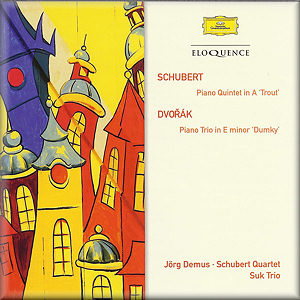 |
george1977 正式會員 210.xxx.xxx.97 |
2009-04-29 14:39 |
| [#10058] RECORDING OF THE MONTH Dmitri SHOSTAKOVICH (1906-1975) CD 1 Symphony No.1 in F minor, Op.10 (1923-5) [31:52] Piano Concerto No. 2 in F major, Op. 102 (1957) [20:20] String Quartet No.8 in C minor, op.110 (1960) [22:58] CD 2 Violin Concerto No.1 in A Minor, op.77 (1947) (rev. 1955 as op.99) [37:08] Cello Concerto No.1 (1960) [28:47] Jazz Suite No.1 (1934) [8:18] Tahiti Trot (Tea for Two) (1928) [3:31] Performance details at end of review rec. 1970-2006 EMI CLASSICS 2376862 [75:27 + 77:57] Have you noticed how feature films are being pushed out on DVD sooner than ever these days after appearing in a cinema near you. In much the same way we see relatively recent classical music releases increasingly to be worth waiting for in budget compilation form. True, many of the recordings here are of older and even distinguished vintage, but it used to be a sign of ‘a certain age’ in a reviewer when releases re-appeared somewhere down the line. It seems like only yesterday when I was listening to the Cello Concerto version which now appears in this twofer. Both this, the String Quartet No.8 and the Violin Concerto No.1 found here are still very much available at full price. I hope EMI haven’t started over-fishing their catalogue in an attempt at the kind of ‘quantitative easing’ which will see us all out of a job in a few years time. With the two or three-ish aforementioned separate concerto/quartet discs in one hand and this compilation in the other, I can see the dollar signs ringing up behind your eyes already. With this release’s bargain credentials already established, it only remains to see if the performances are in fact really worth having. I quite enjoyed the Symphony no.1, though wouldn’t consider it the most exciting I’ve ever heard. The quality of playing by the Berliner Philharmoniker is very good as one might expect, but the recording is surprisingly light in the bass. Those meaty low lines in the gorgeous Lento sometimes are often covered by the rest of the orchestra, and I miss the toothsome welly and impact which the basses and low brass can give here and elsewhere. As with the rest of the Mariss Jansons Shostakovich symphonic cycle, this is good, and in places very good indeed, but while serves well as an introduction it doesn’t set the world alight. What may well send your world into a different plane is the Piano Concerto No.2 as played in 1970 with John Ogdon. There is a little analogue tape hiss as you might expect from a recording of this age, but the quality is certainly no aberration on this otherwise digital disc, and in any case, the playing is such that all considerations of technology take last place. This recording has been available before of course, appearing together with Bartok’s 3rd Piano Concerto on a 2001 budget re-mastering. My favourite recordings of both of Shostakovich’s two piano concertos was for a long time that with Dmitri Alexeev on Classics for Pleasure, and I still consider that to be something of a desert island disc. If I could have his No.1 and Ogdon’s No.2 on one disc then I would be a happy camper indeed, though I’ve also kept Eugene List’s rough and ready 1975 recording with the USSRRSO conducted by Maxim Shostakovich pretty close to hand on an RCA/BMG release. Ogdon and the RPO are penetrating, fun, and deeply moving all at the same time, and with much better sound than that USSR Melodiya/RCA recording with Eugene List. The lively outer movements have a sardonic cold-war grit which seems to tug at Shostakovich’s superficial, typically nervy romps, simultaneously dancing and twitching, possessed as well as passionate. The slow central movement sails close to that Francophile sweetness we love in Ravel, but sustains a sense of barren melancholy which clings to the soul long after the music has stopped. Intonation is not always 100%, but who cares: this is a performance and recording which has classic status, and should be a part of every Shostakovich library. I hadn’t heard anything by the St. Lawrence String Quartet until now, but their disc with the 3rd, 7th and 8th quartets has been widely praised, and one can hear why with this sample of one of Shostakovich’s most famous string quartets. They give an impassioned and colourful tone to the thickest of textures, maintaining the intensity of a tight vibrato in even the driving Allegro molto, and the doom-laden dances and sheer deathly emptiness of the music elsewhere has rarely sounded so potent. It didn’t move me quite as much as the Hagen Quartett, but came close enough. On to disc 2, and I have heard criticism of the tempos in Sir Simon Rattle’s recording of the Violin Concerto No.1 with Sarah Chang. I’m not quite sure why this should be the case. His timings are certainly comparable with Jaap van Zweden’s 1996 recording on RCA with Edo de Waart, and Ruth Palmer with Benjamin Wallfisch certainly make more of a meal of the opening Nocturno, coming in at over a minute longer. It all sounds pretty good to me, through with the big acoustic of the Berlin Philharmonie seemingly more part of the picture than usual – it sounds a bit more like the Albert Hall than usual on this recording. I suspect the problem may be more one of technical brilliance over a real feel of engagement or emotional involvement. No matter how well everyone plays – and the technical standards are very high indeed – some of it sounds like one big intermezzo, to be hacked through before getting on to the next ‘good bit’ of the programme, or better still hitting the pub. If you want real soul in this piece you really have to go back to the David Oistrakh/Rostropovich team, which, once of CBS, can now be found on Sony. I’ve already given a pointer to my previous review of the Cello Concerto No.1, and what I wrote then still stands. What I can add however is that all of that ‘in your face’ white hot playing has become increasingly hard to live with, and I can’t say I’ve played this much since 2006. To be fair, we reviewers rarely get the time to play anything much for sheer pleasure, but listening again and I can appreciate the synergy and sizzling performance from Chang and Pappano, but am glad I have still hung on to my copy of Truls Mork on Virgin. The gorgeous Moderato still hits the spot however, and newcomers and seasoned collectors are unlikely to be disappointed. What do we have left? The Jazz Suite No.1 is given a satisfactory performance here with some nice touches, but is entirely eclipsed by that with Gennady Rozhdestvensky and the USSR Ministry of Culture Symphony Orchestra. If you are feeling blue, I urge you to seek this Melodiya/BMG recording out: the slide guitar solo alone is an instant cure for SADS. The Philadelphia players enter into the spirit of the piece with gusto however, and I like the richly laid-back saxophone tones throughout and the nicely placed slide trombone. For an American band the slide guitar towards the end is however lamentably low in the mix and a rather feeble ‘fourth man’. Tahiti Trot is a nice bonbon with which to finish the programme, but in this case is more Victor Borge/Mantovani than DSCH. To conclude, for well under a tenner this is indeed a rich bargain, full of wonderful music and remarkable performances. Yes, you may be able to do better with some of the pieces elsewhere, but this is always likely to be that case in such compilations, and most of us accept the tradeoffs along with the gems. None of the performances are intrinsically weak and many are among the last few years’ top selections for this repertoire. If you are only now dipping your toes into the thrilling waters of Shostakovich’s sound-world then you could do far worse that starting here. As a seasoned jewel-case clatterer you might think the bargain element was the clutch of recent EMI recordings found here via the back door, but the reason I shall be guarding this disc against thieves is the John Ogdon Piano Concerto No.2, that’s the real steal. Dominy Clements Performance details Symphony Berliner Philharmoniker/Mariss Jansons rec. 15-20 June 1994, Philharmonie, Berlin Piano concerto John Ogdon (piano) Royal Philharmonic Orchestra/Lawrence Foster rec. 21-22 December 1970, No.1 Studio, Abbey Road, London String quartet St. Lawrence String Quartet rec. 13-17 January 2006, Skywalker Sound Scoring Stage, Marin County, California Violin concerto Sarah Chang (violin) Berliner Philharmoniker/Sir Simon Rattle rec. 15-17 June, 16-20 September 2005, Philharmonie, Berlin Cello concerto Han-Na Chang (cello) London Symphony Orchestra/Antonio Pappano rec. 12 June 2005, No.1 Studio, Abbey Road, London Jazz suite, Tahiti Philadelphia Orchestra/Mariss Jansons rec. 8-9, 11 March 1996, Giandomenico Studios, Collingswood, New Jersey http://www.musicweb-international.com/classrev/2009/Apr09/Shostakovich_2376862.htm 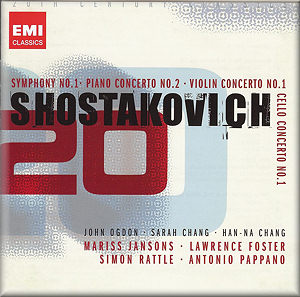 |
george1977 正式會員 210.xxx.xxx.97 |
2009-04-29 14:41 |
| [#10059] RECORDING OF THE MONTH Karol SZYMANOWSKI (1882-1937) Harnasie, Op. 55 (1935) [35:47] Mandragora, Op. 43 (1920) [27:04] Prince Potemkin, Incidental Music to Act V, Op. 51 (1925) [10:26] Wieslaw Ochman (tenor); Alexander Pinderak (tenor); Ewa Marciniec (mezzo) Warsaw Philharmonic Orchestra and Choir/Antoni Wit rec. Philharmonic Hall, Warsaw, June, September 2007. DDD NAXOS 8.570723 [73:17] This latest release in the Naxos Szymanowski series covers the composer’s music for the theatre. It focuses on his ‘ballet-pantomime’ Harnasie, coupled with two lesser known works: the short ‘pantomime’ Mandragora, and incidental music for Act V of Prince Potemkin, a play by the poet Tadeusz Miciński. The Harnasie represented here packs a bold punch, with the Warsaw Philharmonic and conductor Antoni Wit faithfully tracing the work back to its roots in the folk sounds and dance rhythms of the Tatra mountains. The playing throughout has an intense, even threatening, muscularity which is well placed in this tale of peasant robbers and bridal kidnap. The brass section in particular plays with a sense of strident menace, while the woodwind excel in the archly seductive passages, which so clearly link this ballet with the lush, exotic sound world of Szymanowski’s opera King Roger, completed a few years earlier. The best example of this comes towards the end of the first tableau, with the Tatra Robbers’ Dance (track 5), leading to the rousing wedding scene at the start of the second tableau (track 6), where the Warsaw Philharmonic Choir make a forceful entry alongside shimmering percussive effects. Also worthy of note is the beautiful, yearning tenor solo in the final epilogue, accompanied by solo violin. The effect, however, would be all the more satisfying if sung texts were provided with the sleeve-notes. These, the notes explain, are absent due to ‘copyright reasons’, despite being included for Simon Rattle’s 2006 EMI recording of Harnasie with the City of Birmingham Symphony Orchestra and Chorus. The Naxos recording also lacks some clarity. The intricate details of the score are sometimes lost, and the deep orchestral sonorities, so key to Szymanowski’s exoticism, are rather dulled. Certainly this is a less technically polished version than Rattle’s – both in terms of its recording technology and standards of playing. But it is a gutsier, more virile reading, and in that sense closer to the ballet’s folk origins. The middle piece in the recording, Mandragora, is a slight, divertimento-style work. Composed as an interlude for Molière’s Le Bourgeois Gentilhomme, it shows the influence of Stravinsky. Persistent, alternating rhythms and driving percussion (including piano) are reminiscent of Petrushka, while the inclusion of a florid, Italianate tenor solo and light dance movements recall Pulcinella. Unfortunately, the omission of texts or even a synopsis of Mandragora’s three scenes does nothing to enhance our understanding or appreciation of this minor work. The final, shortest, piece in the recording is a revelation. The ten-minute incidental music to a play based on the life of Prince Potemkin is much closer to the sound world of King Roger. Again, the absence of a full explanation of the music’s role in the play in the sleeve-notes fails to place it in context. However, the piece can be listened to on its own as a short, intense tone poem. Brooding strings and plaintive woodwind invoke a dark, threatening mood, while distant trumpet-calls hint at a military theme. A hypnotic chorus and mezzo solo further deepen the rich tonalities of the piece, but without texts or a synopsis, the listener is left a little too mystified. John-Pierre Joyce http://www.musicweb-international.com/classrev/2009/Apr09/Szymanowski_Harnasie_8570723.htm 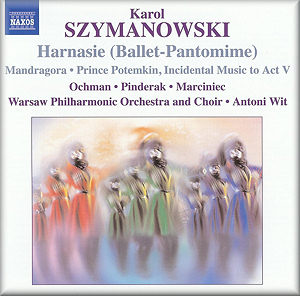 |
george1977 正式會員 210.xxx.xxx.97 |
2009-04-29 14:45 |
| [#10060] RECORDING OF THE MONTH Johann Sebastian BACH (1685-1750) Violin Concertos Concerto for Two Violins in D minor, BWV 1043 [14:46] Concerto for Violin in A minor, BWV 1041 [13:22] Concerto for Violin in E major, BWV 1042 [16:28] Concerto for Oboe and Violin in C minor, BWV 1060 [14:06] Julia Fischer (violin) Alexander Sitkovetsky (violin, BWV 1043); Andrey Rubtsov (oboe, BWV 1060) Academy of St Martin in the Fields rec. St Paul’s Deptford, London, 2-4 June 2008 DECCA 4780650 [58.51] I first read about this album in one of Norman Lebrecht’s articles. Bemoaning the apparent ‘death of Decca’, he describes the soloist’s sound and the general production as “poorly balanced and over-bright ... firmly in the lower leagues. Decca in its heyday would not have passed this product.” Elsewhere, the disc has received almost universal plaudits and has become an immediate bestseller both as hard copy and download. So, what’s all the fuss about, and who is right? With innumerable rave concert performances and numerous successful releases on the Pentatone label, Julia Fischer has not only been establishing a name for herself as a performer of stature in core repertoire for the violin, but has also already shown her skill and commitment to the works of J.S. Bach, winning the Yehudi Menuhin competition and winning praise for her playing of that composer at a very young age. Pentatone has a niche market specialising in SACD recordings, and Julia Fischer appears on nine of their current releases with more in the pipeline. Even such an array of musical calling cards, combined with the marketing strength possessed by sexy young violinists in a line from Anne-Sophie Mutter in the 1980s to Janine Jansen and others in the naughties doesn’t guarantee mass popularity and success when transferred to a label with the long tradition and reputation of Decca. While I’m prepared to bet my Woolworths shares that it does help, it has to be the intrinsic quality in the performance and recording which gives such a release real legs. These are some of my favourite pieces of all time, let alone favourite works by J.S. Bach, and I’m sure there are many of the same opinion. The sheer upbeat nature of many of the outer movements and the sublime beauty of the middle movements make the best of these pieces a guaranteed winner on any desert island, and in such circumstances you are going to want recordings to which you can listen time and time again, without losing all that fresh energy and moving emotion on repeated hearings. My long-term favourite in these works has been that with the father and son team of Igor and David Oistrakh in the double concerto, David Oistrach a soloist in the BWV 1041 and two concertos, with the Royal Philharmonic Orchestra conducted by Sir Eugene Goossens, and not forgetting the impeccable George Malcolm helping everything along on harpsichord continuo in the double concerto. This Deutsche Grammophon recording has less of a chamber-music feel than this new release from Decca, but the sheer beauty of texture in the orchestra and emotion in the solo playing is something which has always brought me back. There are a few others from the ‘non-authentic’ stable which I still have kicking around: the rather nasty sounding early digital Gidon Kremer multi-tracking the double concerto on Philips, Yehudi Menuhin with the Bath Festival Orchestra in 1960 on EMI for instance which has rather more pleasant memories, and that with Josef Suk and the Suk Chamber Orchestra on a 1980s Supraphon disc which now seems terribly heavy and lugubrious when compared to the shafts of sunlight projected through our speakers from Julia Fischer and the ‘conductor-less’ Academy of St Martin in the Fields. To my ears, the pacing of each movement is well nigh perfect on this new disc. The opening of the Concerto for Two Violins in D minor, BWV 1043 invites the listener in with bright energy and fleet lightness of touch. The soloists are in fact not as far forward in the balance as many other recordings I could name, and this means that the solo/ripieno effects of the concerto grosso legacy from which this style of work derives work very well. The soloists can almost disappear into the orchestral texture during tuttis, and soar majestically when the accompaniment takes on a secondary role. The famous Largo ma non tanto moves along with elegant grace rather than cloying sentimentality, but the sighing downward motifs are allowed plenty of space to develop, and the contrapuntal layers are beautifully balanced. Alexander Sitkovetsky matches Julia Fischer well in terms of tone and expression, and it is often hard to tell the two apart. They both play Guadagini violins of similar 18th century vintage, so this is no great surprise. The final Allegro swings along with maximum élan, but still with a delightfully understated undertow from all concerned, placing all the notes where they belong rather than succumbing to a headlong tumult which compresses and distorts. The two solo concertos have similar qualities. The pace of the faster movements is brisk and light, the interaction between soloist and orchestra is close and intimate, a cultivated conversation rather than authoritarian dictation from one to the other. Is the Andante of BWV 1041 a bit on the heavy side? It might seem so in the beginning, but as the extended arches of each harmonic progression take hold and the solo line sings above I can entirely follow the logic of this interpretation. It has the feel of Bach’s great forefather and example in this genre, Vivaldi, and one can almost feel bathed in the lazy summer heat of one of the ‘Four Seasons’. The final Allegro assai of this concerto is irrepressibly bouncy, and Fischer has great fun with the technical leaps, as well as retiring into the background when Bach’s sparing brushstrokes serve only to highlight what is going on in the orchestra. BWV 1042 opens attractively, with maximum dynamic contrast bringing everything to life. One of the highlights of any such set of these concertos has to be the sublime Adagio from this concerto, and Fischer does us desert island residents proud. The bass line has plenty of that tear-jerking pathos we need from this music, and the whole thing has all of the quiet drama of the most moving scene in the most devastatingly beautiful opera you could imagine, but without the ‘fluitketel’ soprano to spoil it all with her wobbly vibrato. The gentle central section builds from a moment of profound silence at 2:30, spanning over to the minor climax of the quiet return of the opening theme at 4:40, and allowing room for the major but oh-so-brief climax at 5:33, ushering in a coda of intense dignity and softly unassuming power. The Concerto for Oboe and Violin in C minor, BWV 1060 might seem a bit of a filler after the previous violin masterpieces, but its warm good humour feels like a gift from a benign deity. Andrey Rubtsov’s oboe tone is mellow and attractive, and its lines sometimes lead the rest of the strings as if attached to its notes like the strings of a puppet in the opening Allegro. Transparency of texture characterises the Adagio, with Fischer’s violin taking second place to the oboe, and the jaunty final Allegro, with nicely done echo effects, provides a fittingly animated close to this excellent programme. I have no agenda when it comes to reviewing this or any other CD which comes my way, and I hope you will trust my objective point of view in stating that this release is a delight from start to finish. I have listened to this CD on numerous systems and, while the recording is bright, this goes hand in glove with the nature of the performances, and for once I am overjoyed to hear a violin soloist who doesn’t sound louder than the entire orchestra when in full cry. ‘Full cry’ is not a term I would apply to this performance in any case, for while the dynamic range has plenty of width, there is always a sense of energy and power in reserve – the refinement and subtlety of Bach’s compositions coming a long way before technical muscle in the playing. If I haven’t mentioned phrasing or vibrato it is because the question never arose: there is plenty of evidence of ‘historically informed performance practice’ having rubbed off here, but not to the extent of unnatural excision of vibrato and addition of improvisatory improvisation. Expression, vibrato, line and length of delivery are all in the service of the music, something which to my mind transcends both taste and cricketing metaphor. My only criticism of this release is in the presentation. We get no fewer than nine different pictures of Ms Fischer and not a single one of the other soloists, which I know will be down to some marketing expert somewhere, but might lead an innocent public to imagine that the other players are too upsettingly ugly to appear, which I’m sure cannot be true. The notes are a bit sketchy as well, but do give some insights into Fischer’s relationships to the pieces, and that with her fellow musicians. All in all, if there were any remaining doubts you can drop them in the litter bin on your way out of the record shop. I sincerely hope this release does not signal the death of Decca, and will in fact stand for its turnaround into a gloriously creative and profitable future. Either way, for a modern instrument performance of these great works, this is now the one to beat. Dominy Clements http://www.musicweb-international.com/classrev/2009/Mar09/Bach_Fischer_4780650.htm |
george1977 正式會員 210.xxx.xxx.97 |
2009-04-29 14:59 |
| [#10061] RECORDING OF THE MONTH Ludwig van BEETHOVEN (1770-1827) Complete Piano Concertos CD 1 [62:44] Concerto for Piano and Orchestra No.1 in C Major Op.15 (1795) [33:21] Concerto for Piano and Orchestra No.2 in B Flat Major Op.19 (1793-5) [29:18] CD 2 [74:20] Concerto for Piano and Orchestra No.3 in C Minor Op.37 (1797-1803) [37:33] Concerto for Piano and Orchestra No.4 in G Major Op.58 (1806-1808) [36:41] CD 3 [41:48] Concerto for Piano and Orchestra No.5 in E Flat Major Op.73 “Emperor” (1809) [41:48] *All Cadenzas by Beethoven Evgeny Kissin (piano) London Symphony Orchestra/Sir Colin Davis rec. 4-6, 26 September and 9-10 October 2007; No.1 Studio, Abbey Road, London. DDD Booklet with notes in English, French and German EMI CLASSICS 2063112 [3 CDs: 62:44 + 74:20 + 41:48] In this latest set of Beethoven’s piano concertos EMI presents Russian pianist Evgeny Kissin in his first complete cycle. This is timely and can be seen as a natural progression from their Mozart/Schumann Piano Concertos disc in 2007. Perhaps by the end of 2009 or early 2010, we will also have the Brahms Piano Concertos. Recent public concerts, notably at The Barbican, left audience opinion divided about Kissin. There were those who snarled about his indulgence in lyrical decoration and sapped momentum (see review). On the other hand the faithful remain touched by his approach - even as an accompanist (see review). For others he can do no wrong (see review). For those hoping to find a complete set of Beethoven Piano Concertos, this is a bargain choice, offered at 3 CDs for the price of 2! Completists will bemoan the leaving out of the Triple Concerto. Wouldn’t this have been an excellent addition, rather than leaving the “Emperor” standing gallantly alone on CD 3 with marginally over 40 minutes playing time? Kissin and the LSO major on crisp articulation, attention to detail and impeccably-moulded phrasing. The orchestra’s carefully applied vibrato gives this cycle an almost period instrument feel. In addition two overarching factors elevate these recordings above the hum-drum. First they have a red-hot intensity and drama with a twist of illumination around every corner. Second, particularly in the earlier Concertos, they radiate a kind of quirky humor on which many performers have turned their backs. Some may recall Kissin’s Berliner Phil/Abbado Choral Fantasy which he made at the age of twenty. Eighteen years later Beethoven continues to draw Kissin out of his introversion. The first two concertos are revelatory while Kissin conveys a more heroic conception for the last three. Grandiose expression and elegance are never far away. His own brand of athleticism is heard to great effect alongside the romanticism of the slower second movements of the Fourth and “Emperor” Concertos. Kissin’s partnership with this orchestra and conductor is like that of old friends. By way f illustratiion there are some particularly memorable chamber-like moments in the Third Concerto to set alongside the Herculean flames of the First Concerto’s exhilarating finale. Kissin’s “Emperor” swirls together intricacy, playfulness, impeccable maturity and imperial energy. Yet he vies with Kempff in the lyrical Fourth Concerto of which the third movement Rondo is memorable for its high-spirited finesse. Kissin took his Beethoven concerto cycle on tour during the 2005-2006 concert season to major cities like Chicago and Toronto. This was two years before heading to the recording studio. This concert preparation bears poetic and heart-driven results in these recordings. Despite Sir Colin’s countless performances there is not a trace of routine about this cycle. When Beethoven roars the LSO react with fire and glory, without ever compromising their lustrous sound and tonal colour. Kissin achieves overall a very warm tone that benefits from the Steinway grand at Abbey Road Studios. Set against that a few moments where too great a liberty is taken with tempo. Even so, having some years ago recorded the Second and “Emperor” concertos with James Levine, Kissin here shows a more mature approach. This presents an enigmatic mix of intelligence and curiosity. His skilful turns of phrase and sensitive lyrical decoration hold the attention throughout. This EMI release is a great library choice and can safely be placed alongside your own favorite Beethoven sets. It will illuminate your admiration for Beethoven. EMI recording engineer Arne Akselbery and post-production engineer Tom Martyn maintain a pleasing acoustic balance. If you have not yet been won over by Kissin do try this highly rewarding set. Patrick P.L. Lam http://www.musicweb-international.com/classrev/2009/Mar09/Beethoven_Kissin_2063112.htm 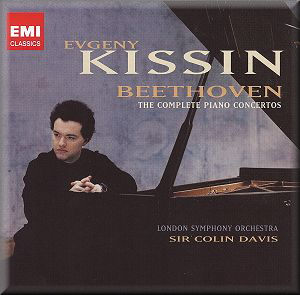 |
george1977 正式會員 210.xxx.xxx.97 |
2009-04-29 15:03 |