兩聲道
CD機 | MD機 | SACD機 | DAC | CAS | 合拼擴音機 | 前級擴音機 | 後級擴音機 | 接線 | 喇叭線 | 揚聲器 | 耳機 | 耳機擴音機 | LP產品 | 膽機產品 | 開卷式錄音機 | 音響配件 | DIY音響 | 電源 | 家庭影院
電視機 | 投影機 | 錄影機 | DVD影碟機 | Blu-ray影碟機 | 多媒體播放器 | 機頂盒 | 多聲道擴音機 | 多聲道揚聲器 | 多聲道影音組合 | Mini音響組合 | 重低音揚聲器 | 輔助設備 | 同好會
同好會 | Accuphase | B&W | Burmester | Denon | Jadis | KEF | KRELL | Luxman | Marantz | Nuforce | OPPO | Pioneer | TEAC | WEISS | News
News | Blog | 其他
其他 | 所有 |
| 影音天地主旨 ﹝請按主旨作出回應﹞ 上頁 首頁 | 寄件者 | 傳送日期
|
| [#21] Best books about HiFi - compling a list? A very innovative 'movable' absorption panels found in Hong Kong recording studio - anyone knows where it is?  |
zbigniew821 正式會員 正式會員219.xxx.xxx.224 |
2009-01-19 20:09 | |
|
|
|||
| [#22] Best books about HiFi - compling a list? This is another book I have. It's not strictly HIFI book. None of the chapters focus on hifi. But it does have a chapter on Hall Acoustics, which is very interesting. You can read this chapter and ponder where to buy tickets next time :) One chapter is about 'the history of acoustics', it's brief, but interesting to see how we can listen today have a history of intellectual efforts.  |
zbigniew821 正式會員 219.xxx.xxx.224 |
2009-01-19 20:12 |
| [#23] Best books about HiFi - compling a list? The history bits ... 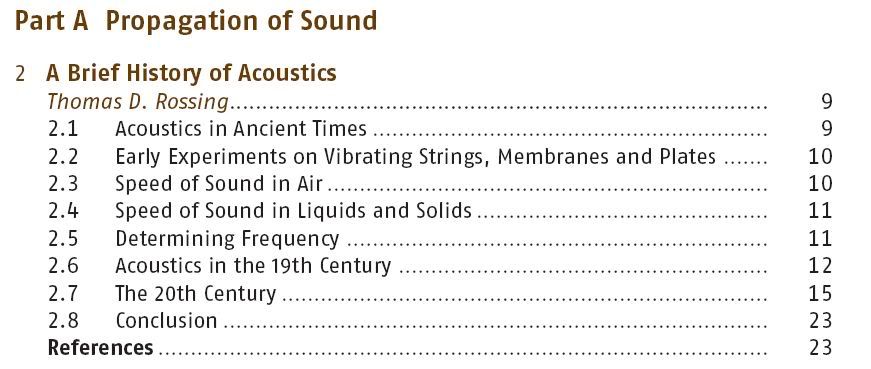 |
zbigniew821 正式會員 219.xxx.xxx.224 |
2009-01-19 20:13 |
| [#24] Best books about HiFi - compling a list? The hall acoustics bits 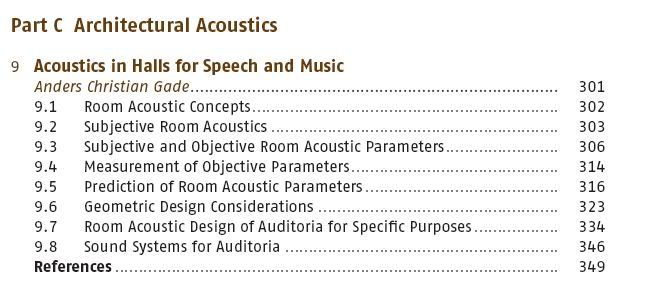 |
zbigniew821 正式會員 219.xxx.xxx.224 |
2009-01-19 20:13 |
| [#25] Best books about HiFi - compling a list? Other relevant and interesting chapters 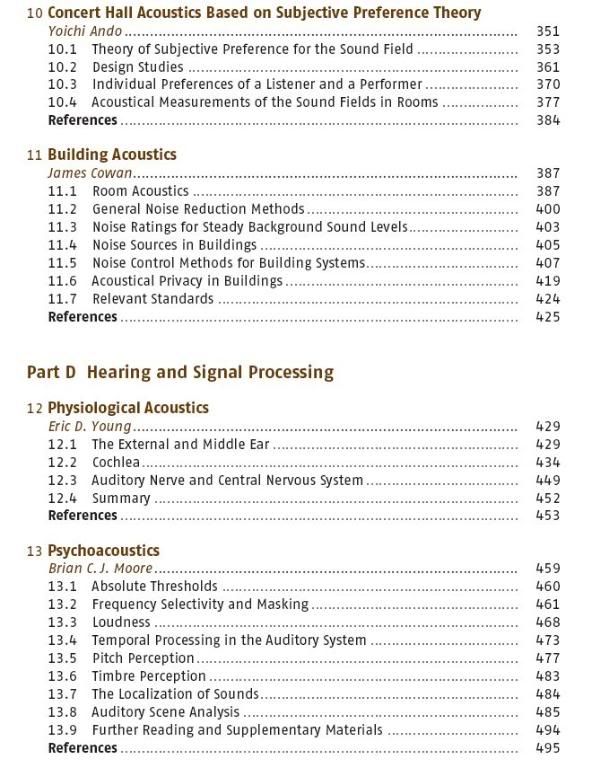 |
zbigniew821 正式會員 219.xxx.xxx.224 |
2009-01-19 20:14 |
| [#26] Best books about HiFi - compling a list? The best article about Hifi |
ttvfwong 正式會員 210.xxx.xxx.98 |
2009-01-22 12:21 |
| [#27] Best books about HiFi - compling a list? attach again |
ttvfwong 正式會員 210.xxx.xxx.98 |
2009-01-22 12:21 |
| [#28] Best books about HiFi - compling a list? The article is pdf and cannot link. Please look up: http://www.theaudiocritic.com/downloads/article_1.pdf |
ttvfwong 正式會員 210.xxx.xxx.98 |
2009-01-22 12:22 |
| [#29] Best books about HiFi - compling a list? To revive this post ... an interesting list of vocabulary of sounds. Not from a book but from a site: 9.14 What do they mean when they say "It sounds warm?" There are many subjective terms used to describe slight differences in frequency response, distortion, noise, etc. Thanks to Bruce Bartlett and Pro Audio Review, we present this Sound Quality Glossary. This glossary puts a meaning behind many different, common terms. There is no guaranty that people mean the same thing when they use these terms. However, these definitions give insight into why a system sounds the way it does and may also help bridge the communications gap. Airy: Spacious. Open. Instruments sound like they are surrounded by a large reflective space full of air. Good reproduction of high-frequency reflections. High-frequency response extends to 15 or 20 kHz. Bassy: Emphasized low frequencies below about 200 Hz. Blanketed: Weak highs, as if a blanket were put over the speakers. Bloated: Excessive mid-bass around 250 Hz. Poorly damped low frequencies, low-frequency resonances. See tubby. Blurred: Poor transient response. Vague stereo imaging, not focused. Boomy: Excessive bass around 125 Hz. Poorly damped low frequencies or low-frequency resonances. Boxy: Having resonances as if the music were enclosed in a box. Sometimes an emphasis around 250 to 500 Hz. Breathy: Audible breath sounds in woodwinds and reeds such as flute or sax. Good response in the upper-mids or highs. Bright: High-frequency emphasis. Harmonics are strong relative to fundamentals. Chesty: The vocalist sounds like their chest is too big. A bump in the low-frequency response around 125 to 250 Hz. Clear: See Transparent. Colored: Having timbres that are not true to life. Non-flat response, peaks or dips. Crisp: Extended high-frequency response, especially with cymbals. Dark: Opposite of bright. Weak high frequencies. Delicate: High frequencies extending to 15 or 20 kHz without peaks. Depth: A sense of distance (near to far) of different instruments. Detailed: Easy to hear tiny details in the music; articulate. Adequate high-frequency response, sharp transient response. Dull: See dark. Edgy: Too much high frequencies. Trebly. Harmonics are too strong relative to the fundamentals. Distorted, having unwanted harmonics that add an edge or raspiness. Fat: See Full and Warm. Or, spatially diffuse - a sound is panned to one channel, delayed, and then the delayed sound is panned to the other channel. Or, slightly distorted with analog tape distortion or tube distortion. Full: Strong fundamentals relative to harmonics. Good low-frequency response, not necessarily extended, but with adequate level around 100 to 300 Hz. Male voices are full around 125 Hz; female voices and violins are full around 250 Hz; sax is full around 250 to 400 Hz. Opposite of thin. Gentle: Opposite of edgy. The harmonics - highs and upper mids - are not exaggerated, or may even be weak. Grainy: The music sounds like it is segmented into little grains, rather than flowing in one continuous piece. Not liquid or fluid. Suffering from harmonic or I.M. distortion. Some early A/D converters sounded grainy, as do current ones of inferior design. Powdery is finer than grainy. Grungy: Lots of harmonic or I.M. distortion. Hard: Too much upper midrange, usually around 3 kHz. Or, good transient response, as if the sound is hitting you hard. Harsh: Too much upper midrange. Peaks in the frequency response between 2 and 6 kHz. Or, excessive phase shift in a digital recorder's lowpass filter. Honky: Like cupping your hands around your mouth. A bump in the response around 500 to 700 Hz. Mellow: Reduced high frequencies, not edgy. Muddy: Not clear. Weak harmonics, smeared time response, I.M. distortion. Muffled: Sounds like it is covered with a blanket. Weak highs or weak upper mids. Nasal: Honky, a bump in the response around 600 Hz. Piercing: Strident, hard on the ears, screechy. Having sharp, narrow peaks in the response around 3 to 10 kHz. Presence: A sense that the instrument in present in the listening room. Synonyms are edge, punch, detail, closeness and clarity. Adequate or emphasized response around 5 kHz for most instruments, or around 2 to 5 kHz for kick drum and bass. Puffy: A bump in the response around 500 Hz. Punchy: Good reproduction of dynamics. Good transient response, with strong impact. Sometimes a bump around 5 kHz or 200 Hz. Rich: See Full. Also, having euphonic distortion made of even-order harmonics. Round: High-frequency rolloff or dip. Not edgy. Sibilant. "Essy" Exaggerated "s" and "sh" sounds in singing, caused by a rise in the response around 6 to 10 kHz. Sizzly: See Sibilant. Also, too much highs on cymbals. Smeared: Lacking detail. Poor transient response, too much leakage between microphones. Poorly focused images. Smooth: Easy on the ears, not harsh. Flat frequency response, especially in the midrange. Lack of peaks and dips in the response. Spacious: Conveying a sense of space, ambiance, or room around the instruments. Stereo reverb. Early reflections. Steely: Emphasized upper mids around 3 to 6 kHz. Peaky, nonflat high-frequency response. See Harsh, Edgy. Strident: See Harsh, Edgy. Sweet: Not strident or piercing. Delicate. Flat high-frequency response, low distortion. Lack of peaks in the response. Highs are extended to 15 or 20 kHz, but they are not bumped up. Often used when referring to cymbals, percussion, strings, and sibilant sounds. Thin: Fundamentals are weak relative to harmonics. Tight: Good low-frequency transient response and detail. Tinny, Telephone-like: Narrowband, weak lows, peaky mids. The music sounds like it is coming through a telephone or tin can. Transparent: Easy to hear into the music, detailed, clear, not muddy. Wide flat frequency response, sharp time response, very low distortion and noise. Tubby: Having low-frequency resonances as if you're singing in a bathtub. See bloated. Veiled: Like a silk veil is over the speakers. Slight noise or distortion or slightly weak high frequencies. Not transparent. Warm: Good bass, adequate low frequencies, adequate fundamentals relative to harmonics. Not thin. Also excessive bass or midbass. Also, pleasantly spacious, with adequate reverberation at low frequencies. Also see Rich, Round. Warm highs means sweet highs. Weighty: Good low-frequency response below about 50 Hz. Suggesting an object of great weight or power, like a diesel locomotive. |
zbigniew821 正式會員 58.xxx.xxx.36 |
2009-04-08 02:10 |
| [#30] Best books about HiFi - compling a list? http://www.amazon.com/These-Halls-Could-Talk-Historical/dp/1598631411 Looks interesting  |
zbigniew821 正式會員 58.xxx.xxx.202 |
2012-01-08 00:44 |