兩聲道
CD機 | MD機 | SACD機 | DAC | CAS | 合拼擴音機 | 前級擴音機 | 後級擴音機 | 接線 | 喇叭線 | 揚聲器 | 耳機 | 耳機擴音機 | LP產品 | 膽機產品 | 開卷式錄音機 | 音響配件 | DIY音響 | 電源 | 家庭影院
電視機 | 投影機 | 錄影機 | DVD影碟機 | Blu-ray影碟機 | 多媒體播放器 | 機頂盒 | 多聲道擴音機 | 多聲道揚聲器 | 多聲道影音組合 | Mini音響組合 | 重低音揚聲器 | 輔助設備 | 同好會
同好會 | Accuphase | B&W | Burmester | Denon | Jadis | KEF | KRELL | Luxman | Marantz | Nuforce | OPPO | Pioneer | TEAC | WEISS | News
News | Blog | 其他
其他 | 所有 |
| 影音天地主旨 ﹝請按主旨作出回應﹞ 上頁 下頁 首頁 尾頁 | 寄件者 | 傳送日期
|
| [#421] Benchmark DAC2 Fans Club How's going batmanamesIA. 話咁快就完功了. 部DAC一體化(其實變咗部music player), no more USB cable, HDMI cable and external power supply. A Raspberry PI was hosted inside the PCM1704 DAC. The only external cable is for LAN access. Three SD cards have been prepared :- 1) Squeezelite (to emulate a squeezebox device); 2) MPD to access music on NAS; 3) SD card player (MPD to access the music stored on the 128GB SD card itself). 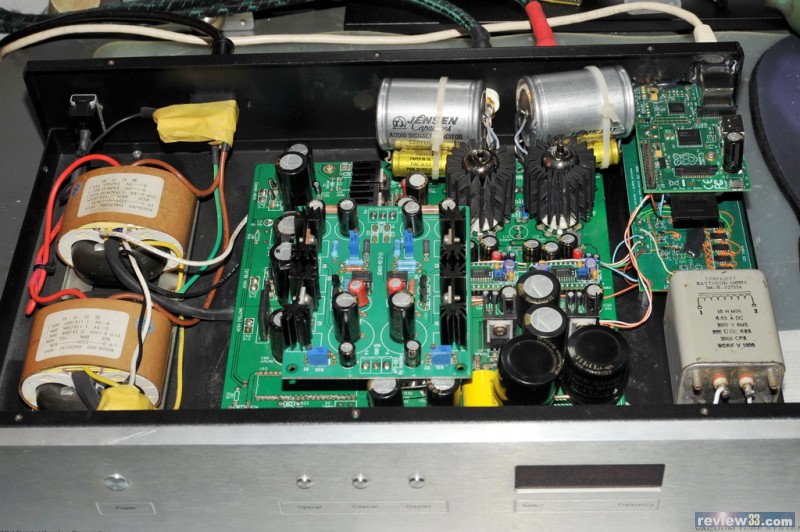 最後修改時間: 2013-08-29 18:51:52 |
steveha 正式會員 正式會員112.xxx.xxx.99 |
2013-08-29 18:44 | |
|
|
|||
| [#422] Benchmark DAC2 Fans Club 玩大D, 裝多張有Display嘅xmos based DDC落部PCM1704. 一部DAC玩齊 USB2.0, DS AUDIO, MPD and Squeezebox. 原來PCM1704行NOS好好聲!!! It can support all the way up to 192KHz. 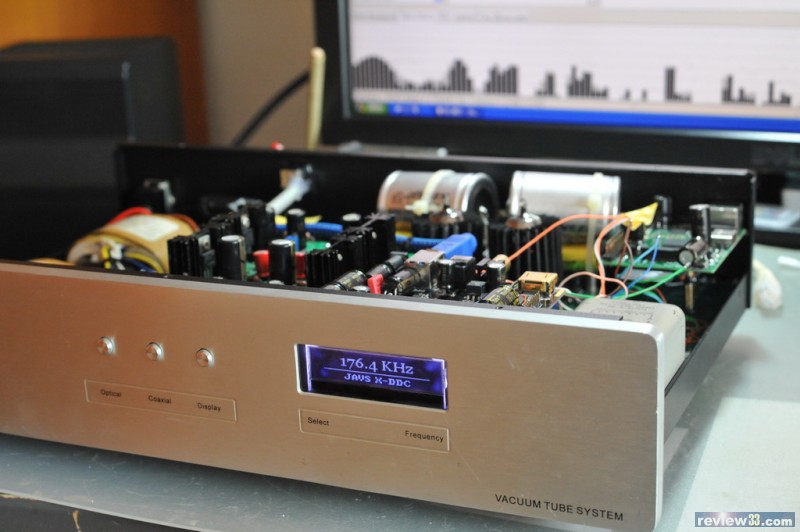 |
steveha 正式會員 42.xxx.xxx.40 |
2013-09-02 17:48 |
| [#423] Benchmark DAC2 Fans Club I like PCM1704UK. One of the best DAC so far. 最後修改時間: 2013-09-02 19:52:14 |
jimmyihv 正式會員 118.xxx.xxx.132 |
2013-09-02 19:51 |
| [#424] Benchmark DAC2 Fans Club 放假又可以mod吓部 Lite DAC50. 今次加了塊 TPA OTTO-II to switch between the two I2S sources. 連部 Raspberry PI 都upgraded with Black Gate (i.e. capactors after 3.3v and 1.5v regulators). USB, composite video, audio jacks have been removed. 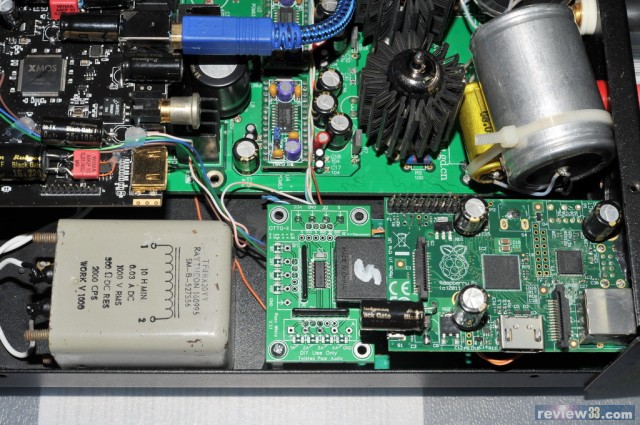 最後修改時間: 2013-09-20 22:33:40 |
steveha 正式會員 112.xxx.xxx.30 |
2013-09-20 22:28 |
| [#425] Benchmark DAC2 Fans Club 夠環保, 過十年部舊DAC都有齊latest USB and LAN interface. The center switch is used to select USB AUDIO 2.0 or Raspberry PI. 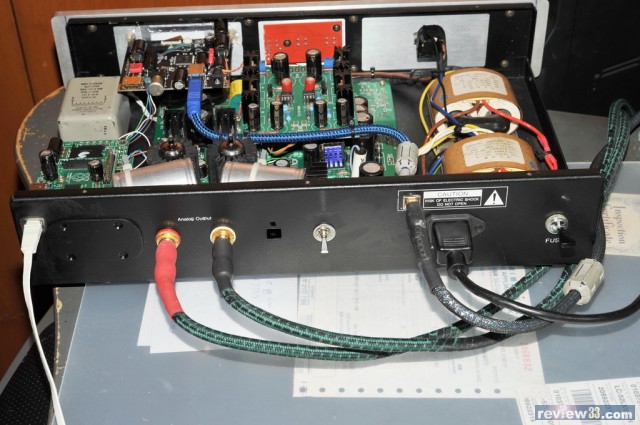 |
steveha 正式會員 112.xxx.xxx.30 |
2013-09-20 22:39 |
| [#426] Benchmark DAC2 Fans Club pcm1704 and ad1853 my favourite chipsets |
batmanamesIA 正式會員 135.xxx.xxx.47 |
2013-09-21 11:08 |
| [#427] Benchmark DAC2 Fans Club BatmanamesIA ching 未玩過AD1853! Any recommendation (hopefully existing DAC) using this chip ? |
steveha 正式會員 112.xxx.xxx.30 |
2013-09-21 22:40 |
| [#428] Benchmark DAC2 Fans Club the Benchmark DAC1, the latest parasound ZDAC and parasound halo CD1 still using AD1853 ( analog device legency chipset) AD1853 seems musical than sabre |
batmanamesIA 正式會員 38.xxx.xxx.20 |
2013-09-22 05:34 |
| [#429] Benchmark DAC2 Fans Club |
batmanamesIA 正式會員 38.xxx.xxx.20 |
2013-09-22 05:36 |
| [#430] Benchmark DAC2 Fans Club Benchmark DAC2 VS Benchmark DAC1 HDR http://theaudiocritic.com/plog/ "Benchmark DAC2 HGC peteraczel | 20 August, 2013 15:49 PCM and DSD D/A Converter with Line-Level Preamp and More Benchmark DAC2 HGC Benchmark Media Systems, Inc., 203 East Hampton Place, Suite 2, Syracuse, NY 13206-1633. Voice: (800) 262-4675 and (315) 437-6300. Fax: (315) 437-8119. E-mail: sales@benchmarkmedia.com. Web: www.benchmarkmedia.com. DAC2 HGC stereo preamplifier with PCM and DSD D/A converter, headphone amp, and asynchronous USB, $1995.00. Tested sample on loan from manufacturer. [For better pictures than I can reproduce here, please go to the website indicated above.] The super D-to-A converter with line-level preamp capabilities is a relatively recent format, although scattered examples of it have been around for a number of years, such as the Benchmark DAC1 HDR (reviewed here in July 2009). Lately a number of high-end boutique companies have seen an opening and announced some insanely overdesigned models at astronomical prices. I haven’t had my hands on any of these (and never will), but it baffles me what they can do that the new Benchmark DAC2 HGC, at a fraction of their price, can’t. The latter has such a complete set of features and capabilities, and such amazing specifications, that I can’t see how any outrageously costly unit could trump it. The Design What is required to design a super DAC/preamp in the second decade of the 21st century is no mystery. You start with the best DAC chip that money can buy, the world champion ESS Sabre³² Reference 32-bit 8-channel audio DAC, and use all 8 channels for stereo, 4 per side. In that deployment, the digital noise reduction spec is 133 dB and the total harmonic distortion (THD) is –120 dB (0.0001%). You can’t do any better; that’s what Benchmark has in the DAC2 HGC, and that’s what the megabuck high-enders have in their models, also. As for the analog section, you go with the Texas Instruments (formerly National Semiconductors) LME49860 operational amplifier, which has a specified voltage noise density of 2.7nV/√Hz and a THD of 0.00003% (–130.5 dB). Low enough for you? Once you build your device around electronic components with numbers like that and keep the construction quality high, as Benchmark does, there isn’t much headroom for improvement, nor much reason for a higher price than $1,995.00. And that’s just for starters; the DAC2 HGC goes well beyond the DAC1 HDR (which is still an “A-team” contender) with a large number of new features, such as native DSD conversion and a hybrid gain control (HGC). The latter is capable of active analog, 32-bit digital, and passive analog attenuation, thus ending all debates about tradeoffs. I am not willing to list and explain all these new technicalities because you can go to http://www.benchmarkmedia.com/dac/dac2-hgc and read all about them in full detail. (Have you noticed that about 50% of the usual equipment review consists of a restatement of the manufacturer’s information? In the age of the Web?) You can even download the 68-page instruction manual from http://www.benchmarkmedia.com/sites/default/files/documents/DAC2%20HGC%20Manual%20-%20REV%20D.pdf and pretend you already own the DAC2 HGC. Since I have no doubt about the state-of-the-art status of the unit’s electronic signal paths, I’ll only discuss matters that Benchmark does not. For example: Despite 16 LED status indicators on the unit’s front panel, you can’t tell whether the DAC2 HGC is in standby mode or totally shut off. Yes, when you first put it in standby mode, the red Dim/Mute LED keeps flashing for a while, as does the blue LED of the muted input, but they stop after a short while, and the panel then looks the same as in power-off mode—no lights at all. This is a bit annoying when you want to listen to something and don’t remember whether the unit should be unmuted or powered up. It’s best to leave it in standby mode at all times when not in use, especially since powering it off sends a 0.15-volt dc pulse through the audio chain, which can result in a serious pop from the loudspeakers if the power amplifier is still on. These minor annoyances don’t in any way constitute a deal breaker for the prospective purchaser but merely illustrate the learning curve necessitated by the unit’s control functions. The latter are not intuitive; the remote control’s buttons are not quite the same as those on the front panel, and there are quite a few press-twice and press-two-together protocols to activate certain functions. I am sure there are geeks who will relish these secret handshakes, but I would have preferred a brilliantly engineered state-of-the-art device to have beautifully simple controls. In case that’s not doable, my total endorsement remains unchanged (actually, I am a little geeky myself). The Measurements If your interest has been stimulated to the point where you actually downloaded the instruction manual from the link indicated above, you will have found, in the back of the manual, sixteen Audio Precision graphs illustrating the incredible perfection of the DAC2 HGC’s electrical response. I have no reason to question, or try to verify, the accuracy of these graphs, especially since I no longer have on extended loan the same instrument they were produced with, the Audio Precision SYS-2722. If I still had it, I would have obtained the same results. Yes, some manufacturers “cook the books,” but Benchmark does not. The measurements are basically what you would expect in view of the specifications of the ESS Sabre³² Reference and the TI LME49860—state of the art. (There are no mysteries in electronics, only in the minds of certain tweako audio reviewers.) There is, however, an issue that needs to be cleared up. The measurements of the DAC1 HDR are almost equally perfect, lagging only by a dB here and a couple of dB there—not enough to make a difference in real-world performance. I am not talking about the DAC2 HGC’s many additional features but actual differences in the basic audio signal path and the perceived sound. As I have repeatedly proclaimed in The Audio Critic, there is no such thing as an effect without a cause, and I see nothing in the two designs to cause them to sound different. The human ear is not as sensitive as the Audio Precision SYS-2722, which shows only tiny differences between the two, and my 87-year-old ears are certainly not as sensitive. Of course, some subjective reviewers have already heard huge differences, but anyone can assert that without objective proof, such as an ABX double-blind test. Fortunately, there is now a fairly new objective test, which is not only less laborious and time-consuming (not to mention controversial) than the ABX but also even more sensitive and more specifically targeted. I’m talking about the Audio DiffMaker by Liberty Instruments. The Sound The Audio DiffMaker is definitely a sound comparison test, but not in the conventional sense. Instead of listening to sounds A and B, and trying to determine if there is a difference, you listen only to B minus A, which is the objective and unquestionable difference between the two. If B–A is silence, there is obviously no difference between A and B, since silence can be objectively ascertained. This is of course an oversimplified explanation of a very sophisticated test, the brainchild of a clever technologist named Bill Waslo, but you can see why it is necessarily more sensitive than ABX; even if there is a small audible difference signal, you may not be able to hear it listening to full-blown A and B, but if the difference is silence, that’s ironclad proof that A and B are sonically identical. For more details, see http://www.libinst.com/Audio%20DiffMaker.htm. Unfortunately, the DiffMaker program has a rather steep learning curve. There are many, many settings and adjustments to achieve optimum results, and the interface with various soundcards is quite problematic. As a novice user, I was able to extract a difference signal between the DAC1 HDR and the DAC2 HGC, but I don’t think that difference signal was at the lowest level obtainable with more sophisticated manipulation of the software. The level I was able to get was –47 dB (0.45%) with respect to the reference level, and that’s faintly audible when the difference signal is listened to by itself. Interestingly enough, the faintly audible signal was music, not noise or distortion products, indicating that I was unable to null the two DAC signals accurately because of tiny amplitude or phase differences. Even so, assuming that –47 dB is actually an accurate reading, that’s low enough to be completely masked by normally loud music levels in an ABX comparison. I don’t think I would have heard a difference even with my 20-year old ears (retrieved by time machine). As I said, the DiffMaker is the most sensitive and objective A/B test known to me—although I suspect it was primarily intended to debunk “differences” that don’t exist, such as coloring the edge of a CD with a green felt pen, in which case the difference signal would be silence. Conclusion The Benchmark DAC2 HGC represents a new reference standard in the category of “DAC with line-level preamp” (excluding mysterious megabuck products designed to meet voodoo criteria). I refer you again to the links above if you wish to explore the unit’s awesome feature set, with any and all digital or analog signal sources, be they audio components or computer. Its sound is what any non-voodoo reviewer would expect on the basis of the Audio Precision measurements: the exact sound of the signal source, nothing more and nothing less. Yes, the user interface is not as intuitive as it perhaps could be, but even that I can’t say with certainty given the complexity of the design. And yes, in my own main system, I am switching from the DAC1 HDR (even though it sounds the same) to the DAC2 HGC! " |
batmanamesIA 正式會員 171.xxx.xxx.120 |
2013-12-08 04:51 |
| [#431] Benchmark DAC2 Fans Club 近來無嘢好玩,最得意喺部smallest JLSounds USB 2.0 PCM/DSD Dac. It can solely diven by USB 5v power. The DAC is using XMOS and AKM4396. It supports all the ways up to 384Khz and DSD128. 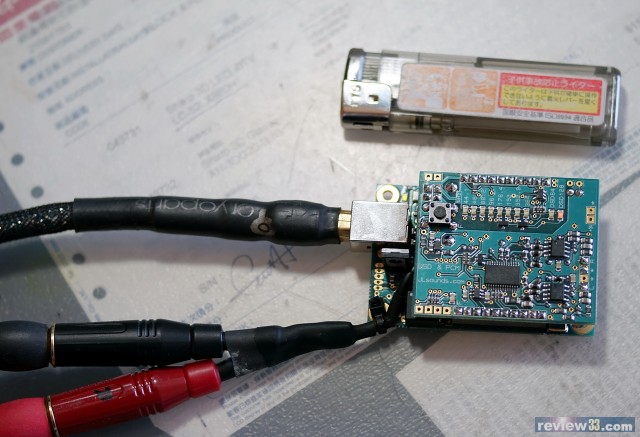 最後修改時間: 2014-02-20 13:26:55 |
steveha 正式會員 42.xxx.xxx.100 |
2014-02-20 13:18 |
| [#432] Benchmark DAC2 Fans Club 近來無嘢好玩 my diy buffalo 3 dac not expensive , sure win any dac > 50000hkd 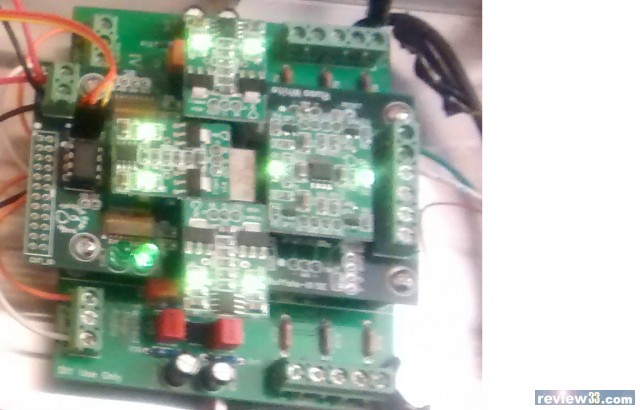 |
batmanamesIA 正式會員 209.xxx.xxx.91 |
2014-05-03 11:42 |
| [#433] Benchmark DAC2 Fans Club 放大假無嘢好做, 只好一邊睇波一邊Upgrade吓CAS. 試過PCM1704後, 發覺啲R2R舊DAC玩CAS仲好鬼好聲. 的起心肝砌番部AD1865 NOS. its only input is via HDMI-I2S. Believe it or not, it can support PCM all the way up to 384Khz. 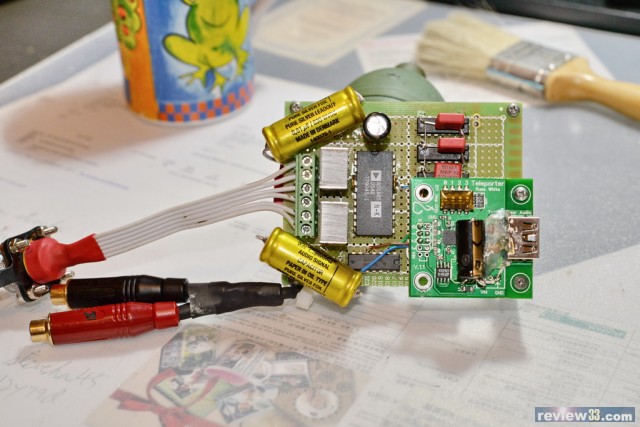 |
steveha 正式會員 112.xxx.xxx.242 |
2014-07-17 17:31 |
| [#434] Benchmark DAC2 Fans Club 跟手將部Squeezebox V3 改番正由left-justified to Standard I2S. In my opion, V3 is more musical than Squeezebox Touch. 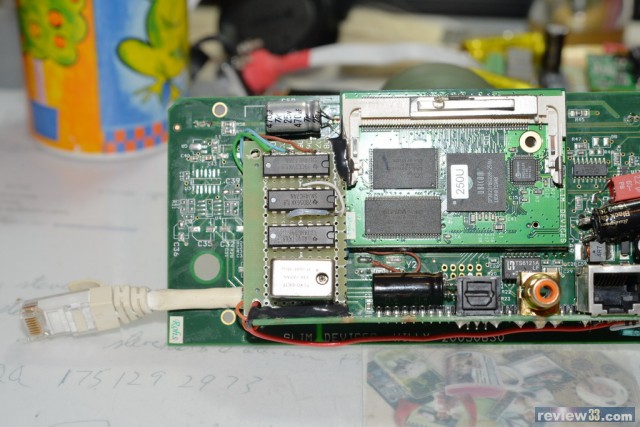 |
steveha 正式會員 112.xxx.xxx.242 |
2014-07-17 17:44 |
| [#435] Benchmark DAC2 Fans Club 至於server side, 起番部Original Intel Fanless行Daphile. 試過最好聲喺用internal harddisk而吾喺用NAS.  |
steveha 正式會員 112.xxx.xxx.242 |
2014-07-17 18:03 |
| [#436] Benchmark DAC2 Fans Club 部Intel Fanless仲要底底面面加番十幾粒Black Gates先至合格. 2TB Samsung Harddisk was installed into it. Up to now, I feel the best Daphile version is still '14.05-b140907-x86_64'.  最後修改時間: 2014-07-17 18:18:15 |
steveha 正式會員 112.xxx.xxx.242 |
2014-07-17 18:16 |
| [#437] Benchmark DAC2 Fans Club 至於部JLSounds AKM4396, 最弱喺本身嘅I/V. 最後都喺要改用external power supply 同加番份I/V.  |
steveha 正式會員 112.xxx.xxx.242 |
2014-07-17 18:34 |
| [#438] Benchmark DAC2 Fans Club 最後放完大假前仲得閒可以玩ECS LIVA. 部機要一定boot from UEFI. 而Daphile喺唔support UEFI. 暫時我裝了Ubuntu 14.04 and mpd 18.11. 新手就唔好玩ECS LIVA, 不過可以用5V external power supply 同好鬼好聲  |
steveha 正式會員 112.xxx.xxx.242 |
2014-07-17 18:54 |
| [#439] Benchmark DAC2 Fans Club How stupid is ECS LIVA !!! You must connect a monitor before it can be booted. For me, I just made a VGA adapter with some resistors to cheat ECS LIVA that a VGA monitor has been connected. On ubuntu, you must disable GUI and enable text mode. At a later stage, I will try LMS(with DSD support) and Squeezelite on ECS LIVA under ubuntu 14.04.  最後修改時間: 2014-07-17 19:18:18 |
steveha 正式會員 112.xxx.xxx.242 |
2014-07-17 19:07 |
| [#440] Benchmark DAC2 Fans Club What will be the next ? You should go for Beaglebone Black. The required software and hardware supporting RAW DSD via I2S should be ready in near future. It took me months to order a Beaglebone Black. 最後修改時間: 2014-07-17 22:30:56 |
steveha 正式會員 112.xxx.xxx.242 |
2014-07-17 22:29 |