兩聲道
CD機 | MD機 | SACD機 | DAC | CAS | 合拼擴音機 | 前級擴音機 | 後級擴音機 | 接線 | 喇叭線 | 揚聲器 | 耳機 | 耳機擴音機 | LP產品 | 膽機產品 | 開卷式錄音機 | 音響配件 | DIY音響 | 電源 | 家庭影院
電視機 | 投影機 | 錄影機 | DVD影碟機 | Blu-ray影碟機 | 多媒體播放器 | 機頂盒 | 多聲道擴音機 | 多聲道揚聲器 | 多聲道影音組合 | Mini音響組合 | 重低音揚聲器 | 輔助設備 | 同好會
同好會 | Accuphase | B&W | Burmester | Denon | Jadis | KEF | KRELL | Luxman | Marantz | Nuforce | OPPO | Pioneer | TEAC | WEISS | News
News | Blog | 其他
其他 | 所有 |
| 影音天地主旨 ﹝請按主旨作出回應﹞ 上頁 下頁 首頁 尾頁 | 寄件者 | 傳送日期
|
| [#4525] QUAD ESL speaker Second photo  |
george1977 正式會員 正式會員203.xxx.xxx.94 |
2007-09-13 12:09 | |
|
|
|||
| [#4526] QUAD ESL speaker HQD is near extinct now, either because sales were poor all the way, or because the system as a whole caused more problems than its merits might reasonably justify. Anyway George, it’s nice to have one more knowledgeable ESL bloke here. Welcome aboard! |
limage 正式會員 203.xxx.xxx.98 |
2007-09-13 12:14 |
| [#4527] 試音碟--British Music on Lyrita from Quad Lyrita公司向來出品的錄音都得到很高的評價TAS榜更是常客。這張《British Music on Lyrita from QUAD》是Lyrita公司2英國發燒音響品牌QUAD(國都)出品的一張試音碟, 碟中收錄的都是Lyrita出品的英國音樂選段,其中包括如Holst,Parry,Walton,Aronld,Bantock等一些音樂家作品,演奏樂隊分別有鼎鼎大名的倫敦交響樂團、倫敦愛樂樂團、愛樂樂團等,而且不少作品是由名指揮家Boult指揮,水平必有保證。據QUAD老闆Ross Walker 透露,由於Lyrita 錄音靚聲,QUAD自七十年代以來每當參加展覽時必用Lyrita LP示範,而2了將就聽F,示範時會儘量選播一些效果特別迷人搶耳的精簡樂段,故此製作成試音碟! 這張專輯於1993年面市。專輯共15首78分鐘(選自14張Lyrata出的CD),是Lyrita的精選。整張都好聽,特別是第10首充滿蘇格蘭原野風味。 冷 門 的 英 國 音 樂 : L y r i t a ── 薛偉文 和Mercury一樣,Lyrita也是*TAS才維持著一定的聲名,不過近來也已經大不如前了。說它冷門是因2英國音樂的風格都太過接近以及這些作曲家較2人不知所致。倒不是說英國音樂難聽,嚴格來說還很好聽呢。在Lyrita2數不多的大約一兩百來張中,全部清一色是英國作曲家的東西(老闆還真是愛國啊!),所以如果要買Lyrita的唱片,認識作曲家就變成了比認識標簽還更重要的事。 Lyrita的唱片沒什蝦陏惜W的選擇問題,只有一個比較值得注意的是,早期的壓片是交由DECCA所負責,一般來說質量也比較受到推崇(價錢也比較貴)。晚期由NIMBUS刻制的東西,一樣還是有很不錯的水平。或陰z可以不用堅持這點,但你還是可以由LP上*近標簽的週邊上找到蛛絲馬龤A有ZLY編號的是DECCA刻制的,而有NIMBUS字樣的當然是NIMBUS的#品。 Lyrita的唱片因2老闆的堅持(堅持LP的聲音比CD好多了,所以一直不想轉錄成CD),直到很晚期才發行了很少一部份的CD,所以有很多東西,您還是只有LP可以買,這可以算是LP迷最大的福音了。Lyrita曾經上TAS榜的唱片不少,以下是比較值得注意的。 曲目: 1. A Winter Idyll -- LPO, Atherton 2. An English Suite: Frolic (vii) -- Boult LSO 3. Music For Children: Trumpet Tune (x) -- LPO, Walton 4. Piano Concerto No.2 in C minor Op.126: Allegro Molto (iii) -- Malcolm Binns, piano: LSO, Braithwaite 5. Rout For Orchestra and Soprano -- Rae Woodland, sop: LSO, Bliss 6. Piano Concerto No.5 in F minor: II - A Stroll Through The Meadows -- Malcolm Binns, piano: Philharmonia, Braithwaite 7. Symphony No.4 Op.53: excerpt from (iii) Allegro Maestoso -- Philharmonia, Del Mar 8. Serenade For Strings Op.12: (i) Vivace -- LPO, Berkeley 9. Mediterranean -- London Philharmonic Orchestra, Sir Adrian Boult 10. Scottish Dances Op.59: (iii) Allegretto -- LPO, Arnold 11. Suite: The Three Men - The Man From The Sea -- LPO, Wordsworth 12. Russian Scenes: (i) At The Fair -- LPO, Wordsworth 13. En Voyage: (iv) Paris Soir (City Lights) -- RPO, Joly 14. London Fields: (iv) Hampstead Heath (Rondo for Roundabouts) -- LPO, Wordsworth 15. Dynamic Triptych for Piano and Orchestra Op.88: (iii) Dynamic Rhyth -- Howard Shelley, piano: RPO, Handley  |
george1977 正式會員 203.xxx.xxx.94 |
2007-09-13 12:20 |
| [#4528] QUAD ESL speaker george1977, Many thanks for your postings and the links. We welcome anyone who is interested in ESL here and I'm particularly glad you are onboard as you are so well verse with classical music which in my humble opinion, is the real strength of the Quad. Unfortunately like most articles in the Stereo Sound, the 2 articles you referred to are mostly chatty chatty, devoid of any real substance and nothing like your intelligent comments on the various classical pieces. |
cpsjj 正式會員 219.xxx.xxx.124 |
2007-09-13 12:43 |
| [#4529] QUAD ESL speaker Today we celebrate the birthday of Clara Schumann, a most talented lady who has been deprived of the opportunity of more vigorous composing. "I once believed that I possessed creative talent, but I have given up this idea; a woman must not desire to compose — there has never yet been one able to do it. Should I expect to be the one?" —Clara Schumann at 20.  |
cpsjj 正式會員 219.xxx.xxx.124 |
2007-09-13 12:48 |
| [#4530] QUAD ESL speaker George, You won’t be surprised to find one or two alumni here. Richard, Dennis, Dr. King were all UK educated except perhaps CP, who was kept “kicked out” by every other institute of higher education, had to tour around the globe to at long last attain what should be rightly called “World Class Education”. Me? I am perfectly home-grown, inside out! |
limage 正式會員 203.xxx.xxx.98 |
2007-09-13 12:50 |
| [#4531] QUAD ESL speaker limage, You are only half right. I was enrolled by basically all the institutes that I applied to but was literally kicked out by the immigrations of most countries as I kept repeating and imitating the famous statement of Oscar Wilde, whose iconoclasm I so admire, upon his first arrival at US customs : "I have nothing to declare except my genius." |
cpsjj 正式會員 219.xxx.xxx.124 |
2007-09-13 13:05 |
| [#4532] QUAD ESL speaker Was she Johannes Brahms's dream lady?? |
Gingers 正式會員 218.xxx.xxx.4 |
2007-09-13 14:16 |
| [#4533] QUAD ESL speaker cpsjj: Thanks for your compliment, indeed I am flattered! I am not very well-versed as you think, just wanna to share my feeling and thoughts, still I keep learning from Trollope, DJ, CKM, Limage, Lym, you and others! Thanks for your ongoing sharing and contribution indeed! What a pity that those chatty article from stereo sound could not help your guys to accomplish your ambitious project, should I find some substantial and technical article, I will share it online without hesitation and reservation. Just like these photos about Mark Levinson HQD, I am shocked to see it again after its birth 31 years ago! Almost forget to mention, I know a sifu who works in Sancore (ex-agent) and knows how to repair ESL, if you need technical advice and assistance, please sound and I will give him your number I do enjoy reading your thread, so constructive and positive! Well done! George1977 |
george1977 正式會員 203.xxx.xxx.94 |
2007-09-13 14:24 |
| [#4534] QUAD ESL speaker Gingers: As far as I know, Brahms got a crush on Clara Schumann from his first sight, yet Clara got married with Schumann (the best friend and mentor of Brahms) already. Even after Schumann died of Schizophrenia and Clara became a widow, Brahms never stepped into nor expressed his affection towards Clara, instead Brahms composed several piano pieces to express his love in a subliminal manner and to take care her as a friend. Brahms still remained single until his death coz Clara was actually his dream lady from start to finish. (what a typical Taurus man behaves!) I feel overwhelmed of their friendship and love story without affairs nor inappropriate conduct. George1977 |
george1977 正式會員 203.xxx.xxx.94 |
2007-09-13 14:37 |
| [#4535] QUAD ESL speaker George1977 I knew this story. This may be the reason why Brahms's music is always a bit in a "dark" side :-) John |
Gingers 正式會員 218.xxx.xxx.4 |
2007-09-13 14:51 |
| [#4536] QUAD ESL speaker Giners: Agreed! Brahms music seem to be more bitter, self-restrained and drak, no wonder some critic said that his music is suitable for "middle-aged man" George1977 |
george1977 正式會員 203.xxx.xxx.94 |
2007-09-13 15:10 |
| [#4537] QUAD ESL speaker Another HQD 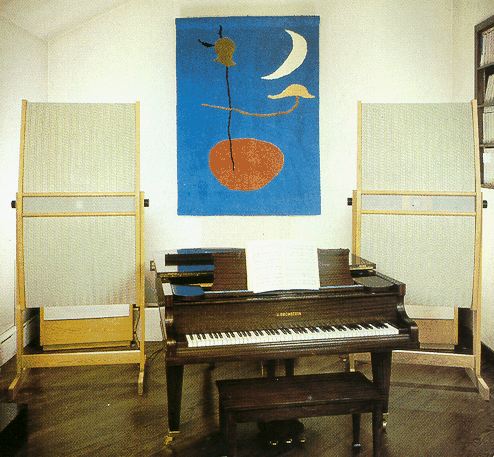 |
george1977 正式會員 203.xxx.xxx.94 |
2007-09-13 16:01 |
| [#4538] QUAD ESL speaker There is nothing better than a pair of the original Quad ESLs, except possibly two pairs... by Chris Beeching Doubly Essential: More On The ESL -------------------------------------------------------------------------------- Quad's original Electrostatic is still one of the most revered loudspeakers in hi-fi. Ever since its introduction in 1957, it has wooed many, and once you've lived with it, it s hard to get used to anything else. In a previous article ['The Essential ESL', Nov 93] I described some ideas for updates and minor mods which do not alter the basic of character of the speaker. But it is possible to take things a lot further! I would never pretend that the Electrostatic (now retrospectively designated 57 to avoid confusion with the current ESL-63) isn't flawed. But the speaker's inherent strengths outweigh by some considerable margin any weaknesses. In fact, if you ask a non-owner, or someone who hasn't listened to them you'll find the list of supposed 'weaknesses' long, and probably inaccurate. First to be mentioned is the speaker's dipole configuration, but it could be argued that this is one of the speaker's strengths. As with anything worthwhile, a little bit of effort is needed to get the best out of it, but it would be wrong merely to dismiss the panel's rear radiation as 'unwanted'. The diaphragm in the treble panel is often said to be too large to perform well. The bass diaphragms are not large enough, and not mounted rigidly enough, to couple effectively and efficiently with the air in the room at low frequencies. In general terms, to produce high volume levels at low frequencies a speaker diaphragm must be able to move a lot of air, which means that the cone or diaphragm must be large, or (as is the case with modern long throw drive units) must move back and forth quite a long way. In the case of the Electrostatic, there is a practical limit to the deflection of diaphragm as the perforated plates must be relatively close in order to exercise their charge over the whole surface of the diaphragm to get the thing to work. But the historical perspective is also important; the Electrostatic was designed and developed at a time when the bandwidth of audio replay systems was much more limited than it is today. In the 1950s, although hi-fi amplifiers could reproduce low frequencies cleanly, contemporary turntables produced relatively large amounts of rumble. If not filtered out in the amplifier, such unwanted very-low-frequency signals could cause speaker cones to flap uncontrollably, or, in the case of the Electrostatics, large movements of the diaphragm, which could cause arcing as the diaphragm came too close to the charged plates. Like other manufacturers, Quad designed its pre-amp (the 22) with limited low frequency extension, in order to protect the loadspeakers. A really extended upper frequency performance was not part of the design equation, either. Hi-fi systems of the time were limited at the extreme top end by the tracking abilities of pickups, and in any case a response to 15 kHz was regarded as ample. Thus, the Electrostatic's designed strength is in the mid-range, and its response extends typically from about 70 Hz to perhaps 17kHz. In valve days amplifier power was at a premium, with only about 20W available even from the more adventurous makers. With a sensitivity of around 86 dB, the Electrostatics could give good results from around 12W (Quad s matching 11 power amplifier was rated at 15W). Nonetheless, the Electrostatic was criticised for being less sensitive than contemporary conventional speaker designs. One early review commented that when the cat walked past for the first time while the Electrostatic was playing, its fur stood on end. This may have been a caused by the electrostatic charge: but it could have happened just because the speaker did (and does) have the ability to recreate uncannily accurate and lifelike sound images in the home. STACKING QUADS Some users, while appreciating the Quad's unbeatable realism, have attempted to overcome its limitations by stacking two pairs. This in effect creates a very large bass drive unit, and providing both speakers in each stack are driven by the same amplifier to ensure phase integrity, bass power and extension can be noticeably improved Also, by connecting them in parallel the overall impedance curve is considerably flatter, and hovers around 8 to 12 ohms rather than the 15-going-on-30ohm curve for a single panel. Over the years, the advocates of this approach have included many notables of the hi-fi world SME founder Alastair Robertson-Aikman, who over the years has striven to create the best possible replay system in his superb purpose-built music room, began with just one pair of Electrostatics, then used a stacked pair, and somewhere along the line used eight pairs per side, arranged in a continuous symmetrical arc. Mr Robertson-Airman's system now uses two pairs of Quad ESL-63s, again with one pair facing forward while the other pair are positioned outside these and facing across, facing across the room. The '63s have been modified to give better structural rigidity. On the other side of the Atlantic, one of the true luminaries of the American audio scene also experimented with Electrostatics. In the early 1970s, having just founded the company that bear his name, Mark Levinson built systems using stacked Quads. He appreciated the relaxed performance, utterly transparent midrange, and that window on the concert hall feeling. Despite all this, Levinson felt ultimately that the Electrostatic did have other failings which he could not tolerate. The siting limitations, limited dynamic range and sensitivity to high-power amplifiers (with possibly damaging results) eventually led him to abandon the Quads in favour of 'more rewarding' designs. The stacking idea survived, though: in 1986, when Mark Levinson developed the Amati speakers for his new company Cello, he used a special version of the Acoustic Research LSTs. Quad acknowledges that stacking Electrostatics can bring about performance gains, and has provided information on how it can be done. The side pieces are removed and replaced by a single taller frame, in which the two speakers are mounted one above the other. The lower speaker is upside down, the upper one being the right way up, so the connections are brought conveniently close together. Quad's connection diagram suggests communing the mains supply, and paralleling the speaker feeds from the amplifier. Room placement is a subject for experiment, as the low frequency cancellation effects will now occur at different points to those found with a single pair. Be prepared to spend time getting it right in the room. Once this is achieved, the imaging improves considerably too. As mentioned in the earlier article, removing the front grilles will also improve matters, but beware the dangerously high voltages laid bare. OTHER MODIFICATIONS Experimenters in search of the ultimate transparency have removed the hessian-type absorbent material behind the bass units, with mixed results Dick Olsher [writing in Stereophile, Aug 87] suggested that this produced a trade-off between transparency and bass control, but he warned against removing the felt padding behind the central treble unit. (Note that if this is removed, care should in any case be taken to insulate the exposed HT connections against possible shorting.) Writing three years earlier, when the ESL-63 had been launched bur the old Electrostatic was still in production ['Panel power' , HFN/RR, June 1984], Martin Colloms reported that he had achieved improvements by removing the padding behind all the units, provided the speakers were far enough (say 1.5 away) from the rear wall. The absorbent material is there to soak up at least some of the rear radiation from the panel, and this is necessary when the speakers are fairly close to a wall: otherwise, wall reflections will colour the sound. However, the material itself must produce some reflections, giving audible coloration and a loss of transparency. In the same article, Martin explored the largely beneficial effects of raising the Quads on stands somewhat higher than the standard small wooden feet. One improvement, not desperately expensive, is to power each panel with its own HT supply. Russ Andrews (RATA) can supply an upgraded single power supply with higher-quality components, or supplementary HT blocks. Once fitted with these, the speaker took on a completely new guise, being subjectively faster, more dynamic and with a greater degree of transparency. Overall sensitivity changes little, whilst becoming a little more amplifier friendly. For full information on RATA s Quad mods, call (0539) 823247. A completely new crossover unit, to be connected to the transformer in place of the original, has been on sale in the USA since 1979. This is The Quad Mod by John Koval of California. Koala claims that this gives a flatter frequency response through the mid/treble: the bass is not significantly extended, but it is said to be improved. The overall result is a brighter sounding speaker, which received favourable comment from Dick Olsher [again, Stereophile, Aug 87]. Sensibly, John Koval urges owners to make sure the speakers are working properly before making any mods. He can be contacted on (0101) 714-838 6555. Some owners have undertaken still more drastic alterations to the original design. There arose in Bristol a (notorious?) band who proceeded to strip down Electrostatics and rebuild them on more rigid frameworks. One enthusiast, Dave Park, even changed the orientation of the panels. He placed the bass ones horizontally and put the tweeter across the top [as illustrated in the Nov 93 article]. The timber framework was much heavier and more substantial than the original, and the panels were very rigidly mounted. Triangulation struts added further rigidity to the structure. Subjectively, the performance characteristics were now quite different to those of the standard model, and the speaker acquired a new get-up-and-go. Bass response, though probably no deeper, also had more weight, probably due to the increased rigidity of the frame which would allow the diaphragm to wholly drive the air and not end up moving the frame as well. Dave Park has experimented with many configurations of panels including the equivalent of two stacked speakers per side. He added a new dimension to he performance by the judicious application of (horror of horrors) a graphic equaliser in the system, just to tailor out a small hump in the response at about 2kHz. However, Dave has now settled on a different design. He has retained just two bass panels per side. This, he says, is to retain the clarity of the bottom end: with four bass panels the bass tended to become too overpowering in comparison, he says. The treble panels are doubled up, and face slightly outwards. The whole lot is bi-amped, with a modified Audio Research valve amp driving the treble panels, and a Quad 606 driving the bass. Each panel is separately powered by its own HT supply, and each has its own audio transformer too. The sound is quite unlike their (at this stage, crude) appearance, being lucid, dynamic and tremendously transparent and detailed. Dave still uses a graphic equaliser, just to tailor the 1-2kHz band by a single dB which certainly makes them perform well: if set to a flat response instead, they do lose just a vouch of 'involvement'. I felt that these are perhaps the cleanest pair of Electrostatics I have ever heard, and the bass, for once, has all the right perspective and weight: the slight but hanging in the air is that they will probably not sound as good in another room. Turning the other cheek, Dr. Mike Hopkins has a completely standard pair of stacked Electrostatics, stacked as per Quad s 201 Information Sheet. Hopkins found that stacked like this they become less sensitive to room dimensions and type, so this may be the answer for many. The reason for the apparent reduction in room-sensitiveness may be that the speaker is larger, and so, essentially, is more in control of the air in the room, the room, conversely, has less effect on the speaker. Thus, the speaker drives the room more than the other way round. But if ultimate performance is your holy grail, a compromise between minor modifications (as in 'The Essential ESL') and complete reworking as per Dave Park might be the best answer. No one should forget just how far ahead of its time the Electrostatic really was. Even since the introduction of the ESL-63 in 1981-2, the original speaker has risen in many people s estimation. Whether they are seeing it through rose-tinted spectacles just because it is no longer manufactured, I don t know. But it has a beguiling sound quality which many find superior to or should I say more acceptable, than that of the newer model. And of course, credit must go to Quad for continuing to supply most of the spares for this wonderful creation: at the time of writing, the only part you can t buy from Quad is the wooden frame. There seems to be some consensus among enthusiasts that the more than one pair approach is ultimately the best. Having now heard several pairs in various configurations, I have to agree: one pair is no longer enough on its own, but finding space for two pairs is currently beyond me. Never mind; when I move, I'll put a large enough room on top of the priorities list. If you can, listen to a stacked pair. You'll be in for quite a shock躐nd then there's no hope for you. 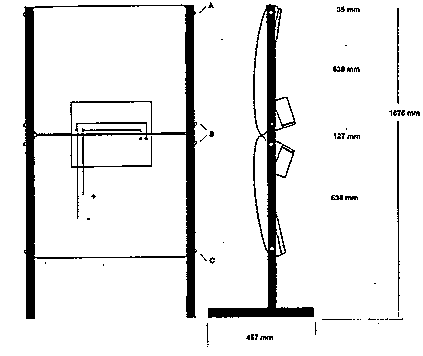 |
george1977 正式會員 203.xxx.xxx.94 |
2007-09-13 16:02 |
| [#4539] QUAD ESL speaker my i suggest a brief comment and a link to the original article least some one will chime in about copyright etc etc.... |
drwkng 正式會員 210.xxx.xxx.111 |
2007-09-13 16:05 |
| [#4540] QUAD ESL speaker King A URL for you :-) http://www.quadesl.com/articles/quad_stacking.html |
Gingers 正式會員 218.xxx.xxx.4 |
2007-09-13 16:08 |
| [#4541] QUAD ESL speaker Hl-FI NEWS & RECORD REVIEW NOVEMBER 1993 The Essential ESL by Chris Beeching This easy DIY service proves you can extend the life of your old Quad Electrostatics -------------------------------------------------------------------------------- Between 1957 and 1985, some 54,000 Quad Electrostatic loudspeakers were produced. Although it has limitations, and was criticised for being bass light, expensive and difficult to drive, the ELS is still revered today. In sonic terms, there is little to compare with an electrostatic for sheer transparency, effortlessness and ease of listening. One of the most surprising things on first hearing is that, no matter how near to, or far from the speaker you sit, the apparent volume of the sound doesn't change. With some boxloudspeakers, the nearer you get, the louder the sound becomes. The criticism of 'lacking bass' is also easily allayed. Two fundamental factors affect how much bass the speaker is able to radiate compared with conventional box speakers. The first is that the ELS's impedance rises as frequency increases (unlike many modem designs, where impedance falls as frequency rises), thus the amplifier is asked to work into a smaller (more difficult) load at the lower frequency end. The second, somewhat less directly related reason, is that when the ELS was developed turntable manufacture was of a high standard for the era, but many examples had a fair degree of rumble. Because very low frequencies require large cone or diaphragm excursions, a steep roll-off filter was incorporated into the Quad 22 preamp in order to protect the bass panels . A further 'minus' point was the height of the legs. No-one knew how much of an effect loudspeaker placement had on the ultimate sound spectrum produced by a speaker in the mid-to-late 1950s. With more investigation of things like room modes, phase responses and all the modern jargon connected with installing a speaker for best effect, we are now much better informed as to how to get improved performance from a modest box or panel. Had those short legs been extended to about 14in (35,5 cm), the ELS's performance would have improved considerably. They also seem to work best with high mass stands or stands which are very rigid. With the advent of the transistor amplifier in the mid 1960s, Quad was forced to devise a protection circuit to limit voltage to the treble panel; it had become clear that some over-zealous listeners had pushed the speaker beyond its intended operating limits with disastrous consequences. Now the audiophile fraternity seems to be polarising either towards high-power systems with highly inefficient speakers, or towards low-power systems with efficient speakers. A 'difficult' load in its infancy, the ELS is now quite respectably efficient compared with many current designs, and modem (and older) valve gear will produce astounding results. However, the problem arises, as it does with all older equipment, of deterioration of components over time. Capacitors go down, resistors decay and often go high, and age begins to get at both the panels and the connecting cables. Add to that a continued existence in a warm, dry environment and, if they've never been serviced, a horrific accumulation of dust in the insides - the fall-off in performance this combination will inflict is astonishing. All is not lost, however. As you will see, servicing the ELS is a relatively straightforward matter, and can be done in a day with some care and attention. SERVICING Before you start dismantling, make sure your speakers have been disconnected from the mains for a good while. Quad recommends at least two hours, but I would suggest overnight as a minimum. Some components can pass on a hefty belt if you choose to place two fingers on their contacts. Removing the grilles is quite simple: unscrew the three screws securing the side bars to the main frame. Put these to one side, noting which was fitted where. The front grille is removed once the nine small screws have been removed from under the front edge. There is also an earth connection held by a nut bolt small tag. Release the grille, but leave the nut and bolt attached to the tag to save losing them. Once the small screws are undone, gently pull the bottom of the grille upwards and away from the speaker, and ease the top rolled-over edge from the rear of the speaker frame. The rear grille is removed even more simply by undoing the screws and carefully lifting away. Any small dents in the front grille can now be pushed out carefully, restoring it to its former shape. As far as the interior is concerned, dust is the most difficult menace to remove, but it is also wise to replace the crossover (and other) components and wiring with modem highperformance substitutes. Dust is most easily removed with a lowpower vacuum and soft brush. Never use a high-power vacuum, or seal the nozzle against the dust cover, as damage will result. Because of the nature of the speaker, the treble and bass panels attract dust which adheres remarkably well to the dust covers over the panels. Years of accumulation are not easily removed, although the loose dust will eome away quite readily. For the 'ground in' deposits, a slightly damped J-Cloth is very effective, and will soon clean the surfaces. Be wary of detergents which may damage the dust covers. Having cleaned the panels, and vacuumed the internals, it is now possible to identify and replace the wiring and components. The first items to be replaced are the speaker connections. This is fairly straightforward, but requires the temporary removal of the input transforrner; make sure it is well supported, and does not strain the other connections or wiring. Carefully unsolder the original speaker terminals, and fit a pair of Michells (or similar). While the unit is 'free', you can also replace the set of resistors and capacitors which make up the crossover network and filter/protection circuit. Using quality resistors and capacitors will make quite substantial improvements, but more of that later. Although Quad's internal cabling was good enough in its time, not only will that have suffered deterioration, but more is now 'known' about cable directionality and other related effects. Rewiring the panels is relatively straightforward. However, one word of warning: the solder connection on the back of each panel is very fragile in relative terms. It is imperative that you do not allow the joint to get too hot, otherwise there is a danger of the dust cover starting to melt and allowing dust into the 'chamber' containing the plates and diaphragm. If this happens, the speaker will attract dust like it's going out of fashion, and performance will decline rapidly. The best way that I have found is to use a very hot soldering iron, and use the bare minimum of high quality solder. To unsolder each panel lead, gently pull each cable, and carefully touch each connection with the minimum of pressure from a very hot soldering iron. As soon as the cable comes away from its connecting post, blow hard on the exposed post to dissipate the heat. Soldering the new cable needs similar care; whatever you do, don't allows the hot iron to linger on the joint. As soon as the solder has melted, remove the iron and blow hard again. Although a repair kit is available from Quad for the covers, it is far better not to have to repair it in the first place. A quick word on cables. The crossover unit is quite simple, much of the signal division taking place mechanically as a result of the performance of the panels themselves. However, by selecting a mixture of solid core and stranded cables, you can further tune the speaker to the sort of tonal balance you might prefer. My own preference is for solid core on the bass, and stranded silver for the treble panels, but that won't suit everybody by any means. Insulation is also important when considering cables you'll get a much better sound if you use a cable with Teflon insulation. Replacing the resistors in the crossover network is also relatively easy. The crossover is situated beneath the audio transfonner, into the back of which the Ieads from the amplifier are connected. Make sure that any Ieads from the audio transformer are not stretched during this process; support the transformer, making sure it won't stray into the bass panel otherwise substantial damage could result. Ensure that all replacements are at Ieast of 2W power handling, are suitable for use with high voltages, and of a similar value to the original. There is little that can be done to the EHT unit and the rectifier; replacing the wiring with new is probably about the limit for most people. If it fails to work, then a new unit will be necessary anyway. However, it is possible, with a little judicious filework, to recut the 'mains in' socket hole to accommodate an IEC socket instead of the round 3-pin Bulgin more often found on the back panel. Always replace one wire at a time, whether audio, HT, mains or whatever. If by chance you should get two wires the wrong way round, at best the speaker will not work, at worst the speaker will be completely ruined, so take extra care. On reassembly, make sure that all connections are secure, none of the dust covers is perforated or tom, and that none of the wires will catch on a sharp solder tag, corner or metal bracket. Fasten down any long or trailing wires. TESTING Now connect the speaker to the mains, and switch on without an amplifier connected. Allow it a couple of minutes to warm up and voltages and new components to stabilise. Now place your ear close to each panel in turn. From the bass ones you should just hear a very faint hiss; from the treble, a higher pitched faint hiss. If that's the case, all is well, so far. Plug in the speaker Ieads from the amp, switch on and play a familiar track. All things being equal, it should sound superb. Now tum the volume almost right down and do the 'ear against the grille' test again with the track playing. You should hear each panel individually. Lastly, play the track at your normal listening level and check that both speakers produce roughly equal volumes. Some people have removed the acoustic matting on the rear grille claiming improved detailing and transparency. In a large room that may be true, but in my experience of medium-sized rooms, removing this matting tends only to allow more of the rearward sound to be reflected off the back wall with a consequent increase in time-smear effects, and ultimately a more confused presentation. My own preferred listening scenario would be with the speakers about five feet (1.5 m) apart with the outer edges about 2-3 feet (60-90 cm.) from the side wall, and slightly toed in. All the walls behind the plane of the speaker would be heavily curtained, with the rear curtain/wall some five feet (1.5 m) behind the speakers. I would also put the speakers up on MAF stands; these lift the speaker some 14in (35 cm) off the floor and really allow the speaker to sing. If it was safe to do so, I would also remove the front grille; it colours the sound slightly, giving some instruments a metallic "dead metal" feel. Normally you wouldn't notice it, but once you've heard a pair with the front grilles off you will understand what I mean. However, if there is any danger of anything (including you) falling into the speaker with a grille off while it's running, DON'T DO IT. If you have any doubts about your ELSs, and you don't feel confident or competent enough to rebuild a pair as above, let Quad do it for you. If the speakers haven't been touched for a while, you'll really hear the benefit of having them serviced. Apart from the actual woodwork itself, almost all the components are available from Quad as 'normal' stock. In fact, you could if you were feeling reckless, buy a pair of electrostatics as a 'kit of parts' and assemble them yourself on your own frame. Below are some prices for the more expensive parts: A treble panel costs 70, a bass panel about ?3, and a rectifier block around ?6. These prices exclude carriage. The Audio transformer costs ;75, and the crossover resistors between 45 and 55 pence each. Most spares are still available with the exclusion of the main carcass. For further information, phone Quad on +44 - 480 52561. |
george1977 正式會員 203.xxx.xxx.94 |
2007-09-13 16:09 |
| [#4542] QUAD ESL speaker While I acknowledge that the original Quad ESL has some limitations, to me these are vastly out weighed by the many good qualities this loudspeaker possesses. My first step in reducing the limitations was to stack the ESLs as others have done in the past. I used solid Meranti timber to make the inverted "T" stands. For strength the timber had a cross-section dimension of 70 mm x 32 mm and the total length of each stand was 1760 mm. The cross piece on the "T" had a section cut from it so that there was tight fit for the timber up-right which is glued and screwed in place. The cross piece was 420 mm long and this appears to be sufficient to provide the finished speaker with good stability. Before the speakers were secured to the timber up-right I fixed castors to the under side of the cross piece so that the finished speaker could be easily manoeuvred into position. The castors were 40 mm making the stands exactly 1800 mm high.The original timber side rails and the legs were removed in preparation for the final assembly. I found that the best way to assemble the speakers was to position each ESL so that they rest on one side, this allows easy alignment of units prior to securing a stand. When the screws were in place the whole structure was carefully inverted so that the second stand could be secured to the ESLs. So that the power and signal connections are tidy I made a special connection enclosure. http://users.chariot.net.au/~debpeter/quadcon.html During the first subjective test I was amazed by the difference. The improvement in bass response and high frequency vertical dispersion is dramatic while the rock solid stereo was maintained. If you like sound of the Quad ESL and have the opportunity to acquire two pair, you can't go wrong if you stack them. One word of warning, do not over drive the ESLs because the treble diaphragm can be damaged. While you can now once again source spare part replacement panels, like everything they come at a cost. If you need Quad ESL spare parts then contact Dr. Frank Hirsch of Quad (Germany). http://users.chariot.net.au/~debpeter/myquad.html  |
george1977 正式會員 203.xxx.xxx.94 |
2007-09-13 16:23 |
| [#4543] Double Quad Construction http://users.chariot.net.au/~debpeter/dblquad.html ---------------------------------------------- Quite informative and useful instruction!  |
george1977 正式會員 203.xxx.xxx.94 |
2007-09-13 16:25 |
| [#4544] Double Quad Construction Quote from Link: Link: http://users.chariot.net.au/~debpeter/quadpic5.html I don't know very much about these speakers but from the picture it appears that a new frame was manufactured to mount two sets of Quad ESL panels. The following text was the caption associated with this picture from Electronics Today International, November 1975. "The Radio People Ltd (Chatham Rd., Kowloon, Hong Kong) have sent us details of Double-Quad units that they have been building for a number of years. Power packs and input transformers are mounted in the base of the system to improve mechanical stability and to provide easy connection of mains and signal cables."  |
george1977 正式會員 203.xxx.xxx.94 |
2007-09-13 16:27 |